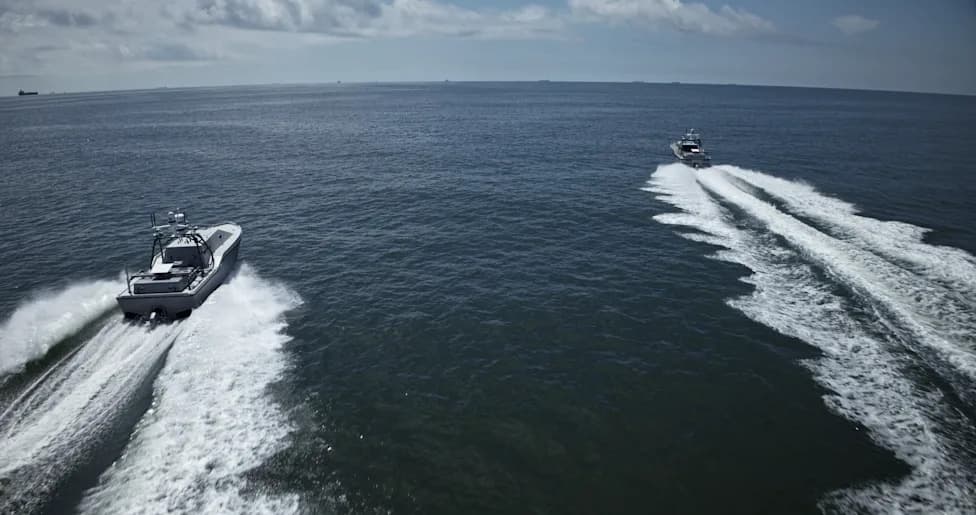
The Marine Corps is overhauling training and force design to confront future wars dominated by drones, constant surveillance and electronic threats. Commanders warn that a high operational tempo, fewer personnel (about 172,300 Marines today) and limited amphibious lift are eating into the time needed for repetition and mastery of new skills. New units and recurring Arctic commitments add strain, forcing leaders to manage risk carefully while pursuing modernization.
Marines Race to Prepare for Drone‑ and AI‑Driven Wars as Personnel and Time Run Short
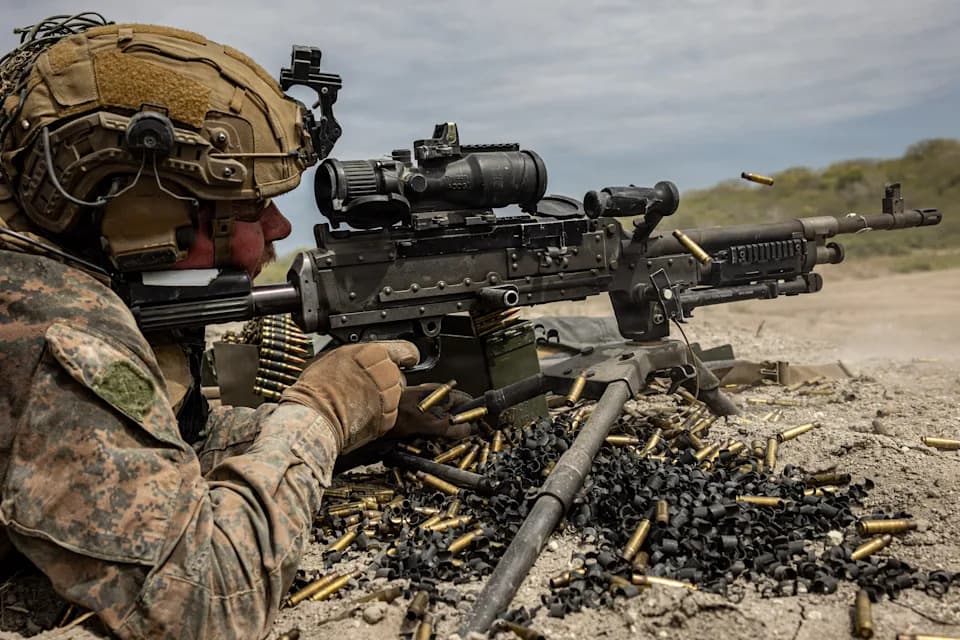
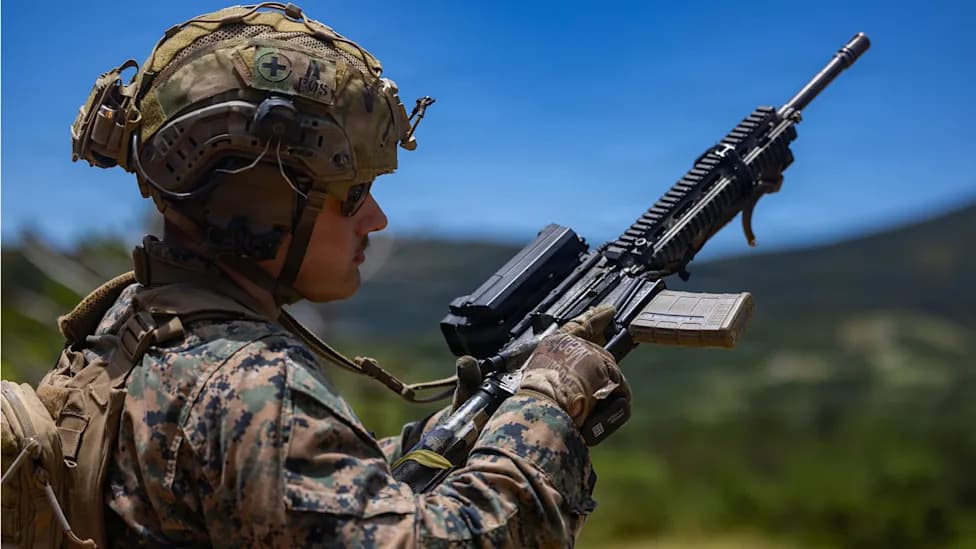
An infantry Marine with the 22nd MEU fires a machine gun during an exercise with Ecuadorean forces on Naval Base Jaramijó, Ecuador.Staff Sgt. Nathan Mitchell/US Marine Corps
The U.S. Marine Corps is reorganizing training, force design and tactics to confront future conflicts defined by constant surveillance, pervasive drones and new electronic threats. Division commanders warn that current global commitments, short-notice taskings and limited time for repetition are straining the Corps’ ability to develop the proficiency required for high‑end fights.
Why This Threat Is Different
Leaders say future battlefields will punish even small mistakes because adversaries will watch and exploit every electronic signature. Lt. Gen. Benjamin Watson, the Corps’ training chief, told the Modern Day Marine symposium in Washington, D.C., that being "always being watched" changes the risk calculus: visibility can mean being targeted and killed, and small lapses in skill or endurance will be far more consequential.
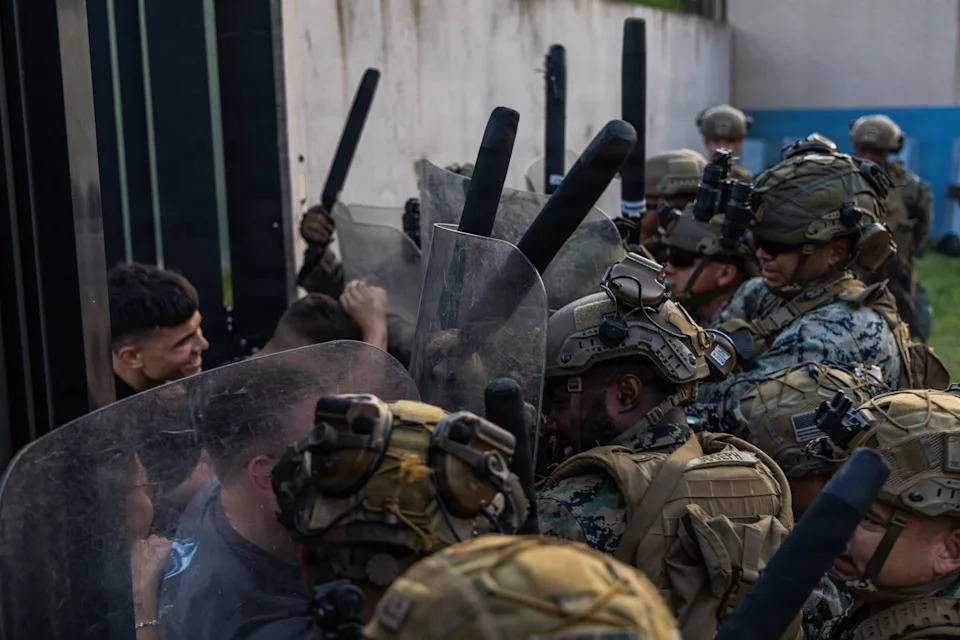
Marines with the 24th MEU train for the possibility of quelling protests at US embassies when they deploy, at Camp Lejeune, North Carolina.Lance Cpl. Payton Walley/US Marine Corps
Embedding New Skills Across the Force
Maj. Gen. Farrell Sullivan, commander of the 2nd Marine Division, said the Corps cannot rely on a few specialists in electronic warfare or signals intelligence to save units on the battlefield. Instead, signature management and electronic-warfare awareness must be taught early and broadly across the force. "On the future battlefield, your cellphone gets you killed," Sullivan warned, underscoring the need for cultural and training shifts.
Training, Modernization and Operational Tempo
Preparing Marines for combined-arms operations that integrate infantry, artillery, mortars, drones and electronic-warfare tools requires time, predictability and repeated practice. Commanders report those conditions are increasingly scarce as the Corps balances modernization with a high operational tempo around the globe.
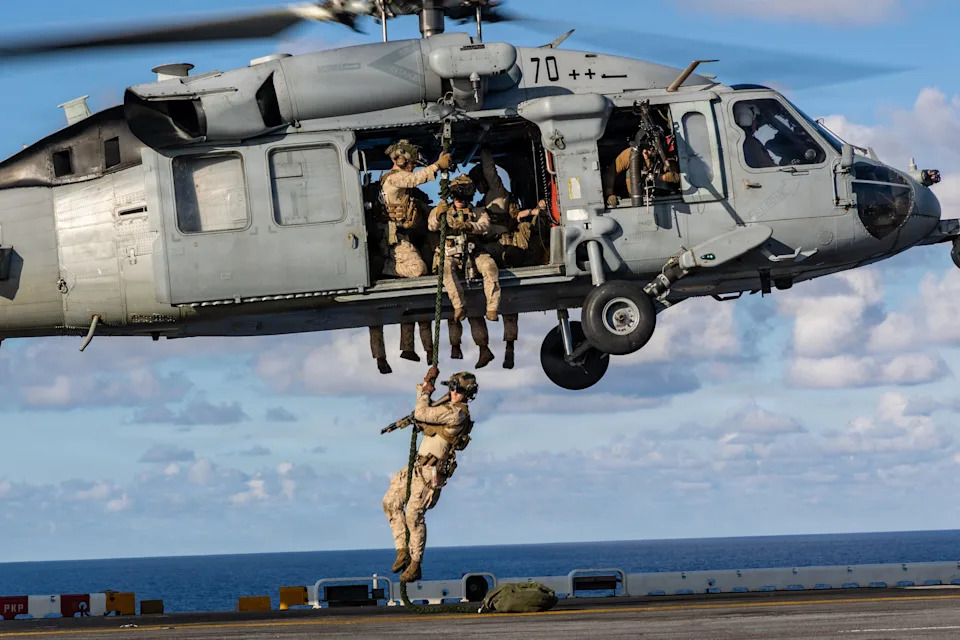
Marines with the 22nd MEU practice fast roping from a Navy MH-60S Sea Hawk helicopter while on the amphibious assault ship USS Iwo Jima in the Caribbean Sea.Cpl. Sharon Errisuriz/US Marine Corps
Numbers, Deployments and Logistical Limits
The Corps fields roughly 172,300 Marines today—about 30,000 fewer than at the height of the Global War on Terror—while operational demands have grown. Sullivan said parts of the force are busier than ever, with Marines assigned to missions from the U.S.–Mexico border to the Middle East, and training rotations across the Indo-Pacific, Europe, Latin America and elsewhere.
At any given time the Corps typically prepares two Marine Expeditionary Units (MEUs) for deployment; three are currently deployed. Combatant commanders have requested "well north of three" Amphibious Ready Group–MEU packages, Gen. Eric Smith, the commandant, said—requests the Navy currently lacks enough amphibious ships to fulfill. That mismatch magnifies pressure on personnel and unit readiness.
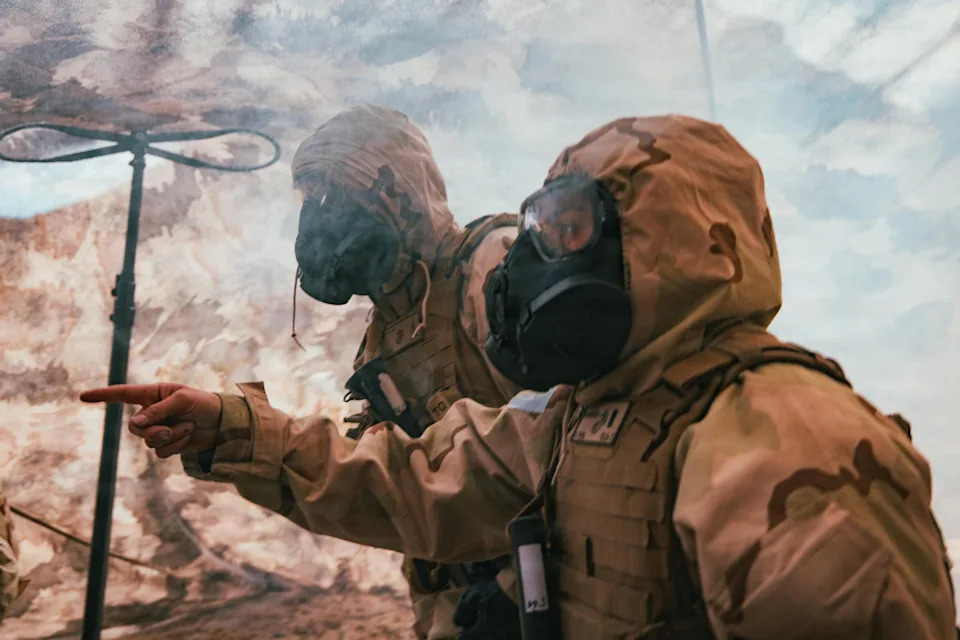
Logistics Marines respond to a simulated chemical attack during training at Twentynine Palms, California.Lance Cpl. Parker Peichel/US Marine Corps
New Units, Arctic Commitments and Risk Management
The Corps has stood up new formations such as the 12th Marine Littoral Regiment—an experimental mix of infantry, logistics and anti‑air capabilities tailored for Pacific contingencies—that are still reaching operational maturity. Maj. Gen. Kyle Ellison warned that deploying units "on their journey" to maturity risks reversing modernization gains.
Recurring Arctic deployments announced for Alaska add another layer of demand, and division commanders say overlapping missions force hard choices about risk and readiness. "We're not going to take our foot off the gas when it comes to modernization," Sullivan said, "but I have to look deep to make sure we're not going to drop any glass balls and put Marines in a position where they're deploying and they're not ready."
Commanders’ Concerns
“We are busy, and we're getting the things done we need to get done. But you just run out of people to do things,” Maj. Gen. Thomas Savage of the 1st Marine Division told Business Insider, warning that a new contingency layered on top of existing demands could force commanders to use units that are not fully manned or trained.
Retired Lt. Gen. Lori Reynolds noted that predictability helps maintain motivation and readiness: sudden or open-ended missions can "consume readiness," straining equipment, disrupting advanced training and taxing families. Commanders emphasize the need for deliberate unit life-cycle management and honest conversations about acceptable risk as the Corps balances near‑term obligations with preparation for a far more punishing future battlefield.
Read the original reporting on Business Insider.
Help us improve.