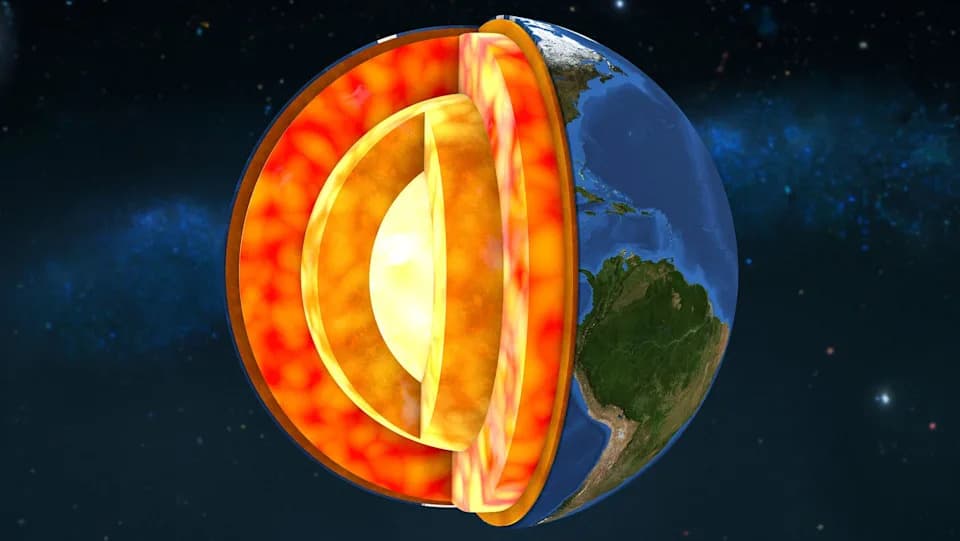
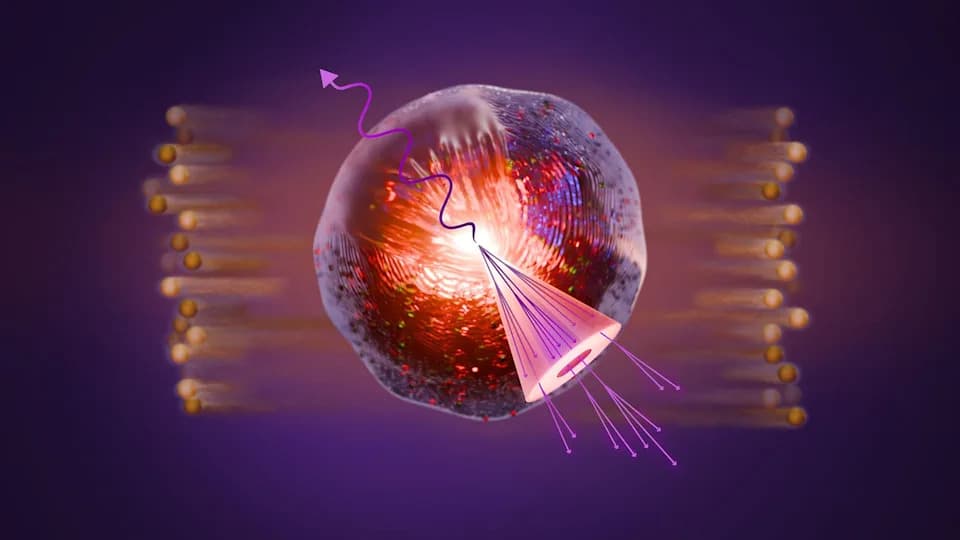
Using ultrafast X‑ray free‑electron laser pulses, researchers experimentally confirmed that supercooled water can exist as two liquid phases (HDL and LDL) that merge at a liquid–liquid critical point. The LLCP was located near 210 K (−63 °C) at about 1,000 atmospheres. This discovery helps explain many of water’s unique anomalies and could influence research in physics, chemistry, biology, geology and climate science.
Hidden State of Water Confirmed: Supercooled Liquid Reaches a Second Critical Point
Scientists Uncovered a Hidden State of WaterFlavio Coelho - Getty Images
Researchers have experimentally confirmed that water, when supercooled and placed under extreme pressure, can exist as two distinct liquid forms that merge at a second critical point far below freezing. Using ultrafast X‑ray pulses, a team led by Anders Nilsson and Kyung Hwan Kim captured the fleeting transition before the liquid crystallized, pinpointing the long‑suspected liquid–liquid critical point (LLCP).
What the Study Found
The experiment, published in Science, shows the LLCP for water occurs at roughly 210 K (−63 °C) under about 1,000 atmospheres of pressure. In the supercooled regime the team observed two distinct liquid states — a high‑density liquid (HDL) and a low‑density liquid (LDL) — that converge at the LLCP.
How They Did It
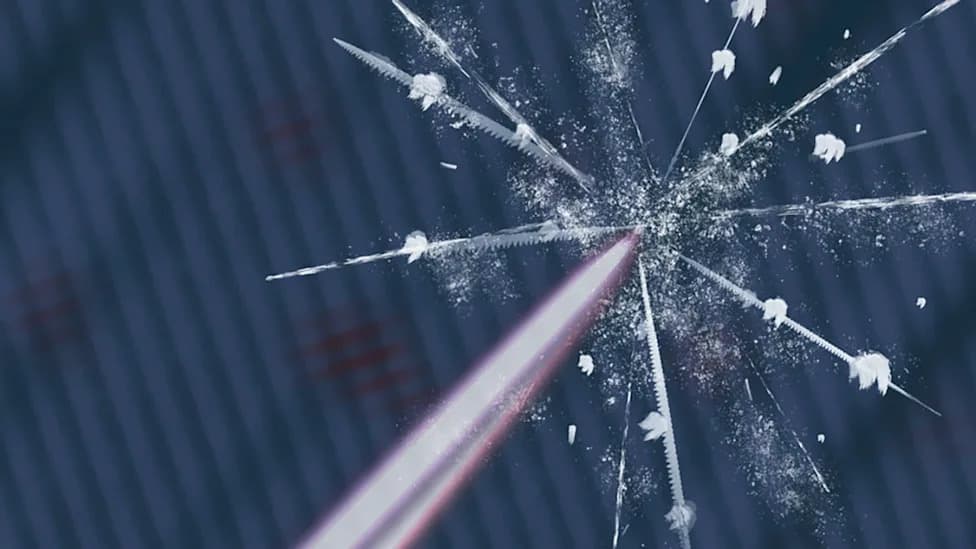
Water freezes so quickly when supercooled that conventional measurement methods cannot resolve the transition. The researchers overcame this by using an X‑ray free‑electron laser (XFEL) that delivers unimaginably brief pulses, allowing them to probe structural changes in the liquid before ice formed. The XFEL measurements captured how fluctuations between HDL and LDL vanish as the system reaches the critical point.
“What was special was that we were able to X‑ray unimaginably fast before the ice froze and could observe how the liquid–liquid transition vanishes and a new critical state emerges,” Nilsson said in a press statement.
Why This Matters
Water’s many anomalies — roughly 66 distinct properties that set it apart from typical liquids, including its maximum density at 4 °C and unusually high heat capacity and surface tension — may stem from fluctuations tied to this low‑temperature LLCP. Although the LLCP itself is only directly accessible at very high pressure, the influence of these phases may extend into ordinary conditions and help explain why water behaves so differently from other liquids.
Implications And Next Steps
Identifying the LLCP opens new directions across physics, chemistry, biology, geology and climate science. Possible impacts include improved models of atmospheric and planetary processes, insights into cryopreservation and biomolecular hydration, and refined understanding of water’s role in geological systems. The authors emphasize the challenge now is to trace how LLCP‑related fluctuations propagate into conditions relevant to natural and technological systems.
Background note: The idea of unusual behavior in water dates back to the 19th century when Wilhelm Röntgen and others first highlighted its oddities. This new XFEL work builds on earlier experimental and theoretical work — including 2020 results that showed supercooled water can adopt HDL and LDL structures — by directly locating the LLCP.
Help us improve.