The US has authorised $8.6 billion in expedited arms sales to Israel and Gulf allies as the Iran-related conflict depletes regional air-defence stocks. The State Department said it used emergency authorities to bypass the usual congressional review, calling the moves vital to US national security. Major items include APKWS precision rounds, Kuwait battle command systems, and nearly $5 billion to replenish Qatar's Patriot inventory. Analysts warn reduced US munitions levels could constrain responses to a future conflict with a peer adversary.
US Fast-Tracks $8.6bn Arms Sales To Israel And Gulf Allies Amid Iran Conflict
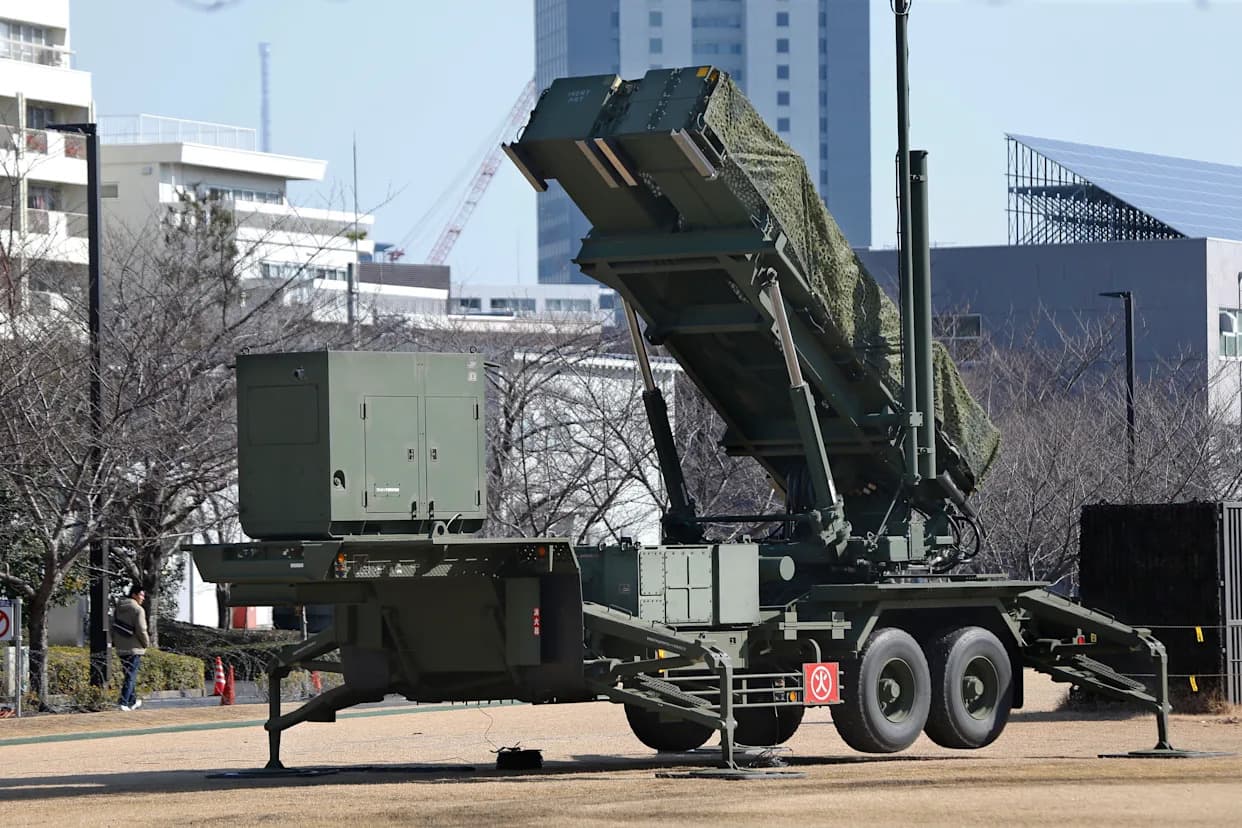
A man walks past a PAC-3 Patriot missile unit deployed for North Korea's rocket launch at the Defence Ministry in Tokyo on January 31, 2016 [Shizuo Kambayashi/AP]
The United States has approved $8.6 billion in expedited arms sales to Israel and Gulf partners as regional fighting with Iran strains allied air-defence stocks and munitions supplies. The State Department said it invoked emergency authorities to speed the transfers without the usual congressional review, citing US national security interests.
Details Of The Approved Sales
The package covers a mix of precision munitions, air-defence replenishment and battlefield command systems:
- Israel: An Advanced Precision Kill Weapon System (APKWS) and related equipment valued at about $992 million.
- Kuwait: Battle command systems to enhance radar-based air-defence detection, valued at $2.5 billion.
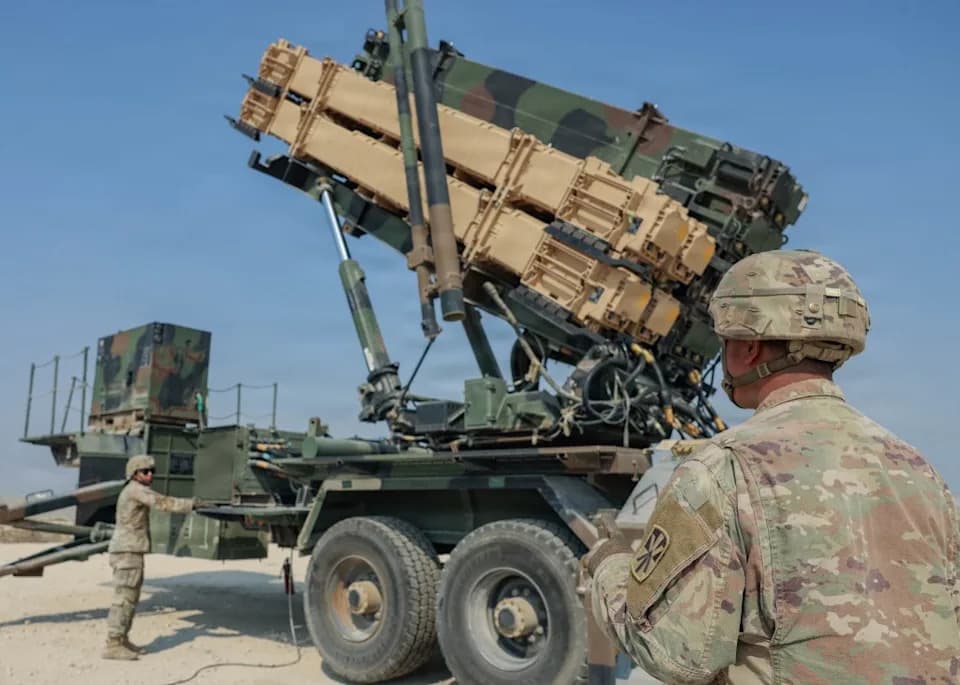
- Qatar: Approval to acquire APKWS rounds and nearly $5 billion to replenish Patriot air- and missile-defence inventories.
- United Arab Emirates: Clearance to purchase APKWS munitions for about $148 million.
Previous And Related Approvals
In March the State Department approved separate arms sales totaling $16.5 billion for the UAE, Kuwait and Jordan. Those earlier packages included drones, missiles, radar systems and F-16 aircraft for the UAE, and additional air- and missile-defence radar systems for Kuwait.
Why The Sales Were Accelerated
The State Department said it provided a "detailed justification" that an emergency existed and that the transfers were in the national security interests of the United States, allowing it to bypass the congressional notification period outlined in the Arms Export Control Act.
Strategic Implications
Patriot systems are among the most advanced US air-defence assets and are used to intercept incoming projectiles. The APKWS converts unguided rockets into precision-guided munitions, giving partners a cost-effective precision strike capability. Analysts have warned that heavy usage of US-supplied munitions in the Iran conflict may draw down inventories needed for other contingencies.
The Center for Strategic and International Studies recently concluded that while the United States currently has adequate stockpiles for the Iran conflict, those levels would be insufficient for a larger-scale fight against a peer adversary such as China: 'Prewar inventories were already insufficient; the levels today will constrain US operations should a future conflict arise.'
The State Department framed the expedited transfers as necessary to bolster partners' immediate defensive needs. Critics and analysts, however, say the moves highlight tensions between meeting urgent regional demands and preserving US deterrence capacity for other potential crises.
Help us improve.