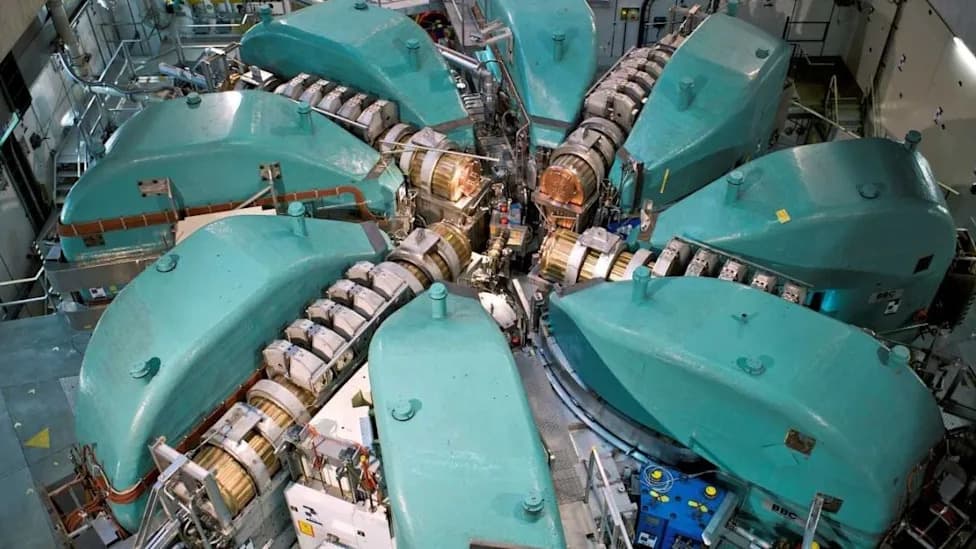
Researchers have for the first time shown that particle spin alignment survives laser–plasma acceleration. The team accelerated pre-polarized Helium-3 produced at Forschungszentrum Jülich using the high-power PHELIX laser at GSI and verified polarization retention with CR-39 detectors. This finding supports using compact laser–plasma accelerators for fusion research and polarized-beam experiments in fundamental physics.
World First: Particle Spins Survive Intense Laser–Plasma Acceleration — A Breakthrough for Fusion and Particle Physics
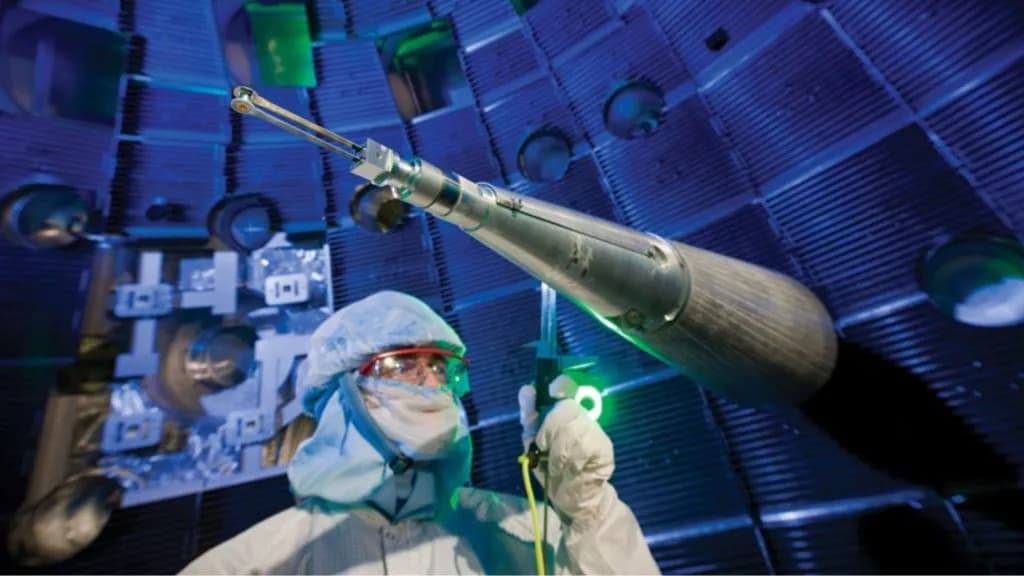
Researchers at Heinrich Heine University Düsseldorf, together with scientists from Forschungszentrum Jülich and GSI Helmholtzzentrum für Schwerionenforschung, have demonstrated for the first time that particle polarization is preserved during laser–plasma acceleration. This result opens new pathways for compact accelerator applications in controlled nuclear fusion and fundamental particle physics.
Why Polarization Matters
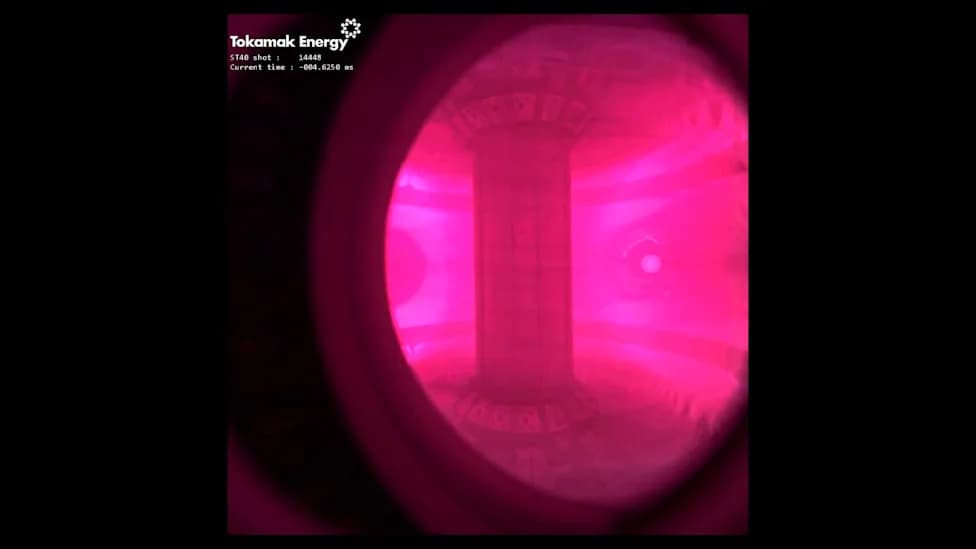
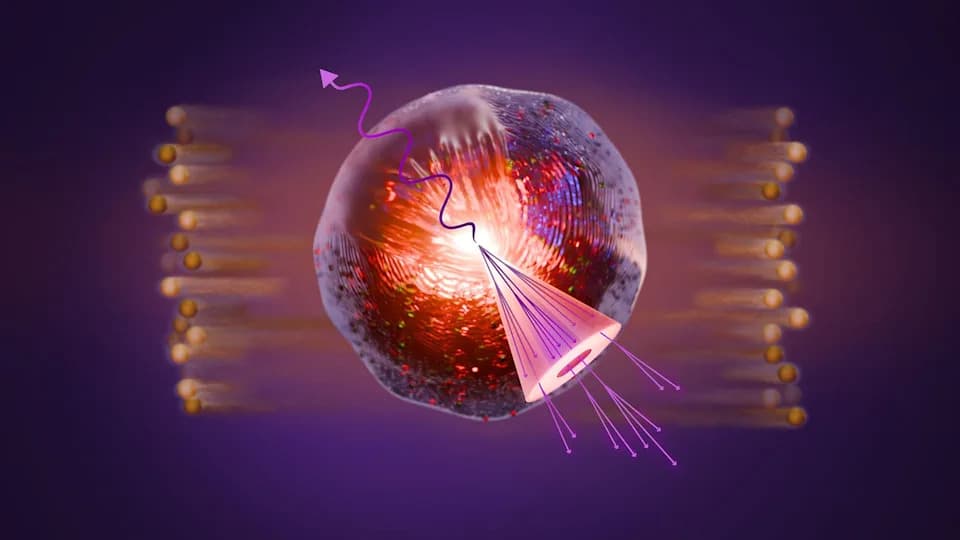
Polarization refers to the collective alignment of particle spins. When nuclear spins are aligned, the probability of certain fusion reactions can increase, which in principle can raise the reaction rate and improve energy yield in fusion experiments. Polarized beams are also a powerful tool in scattering experiments that probe the structure of matter and search for physics beyond the Standard Model.
Compact Accelerators With Intense Fields
Unlike conventional accelerators that rely on long arrays of magnets and radio-frequency cavities, laser–plasma accelerators offer a compact alternative capable of producing acceleration gradients roughly 1,000 times higher than conventional machines. The extreme fields involved raised the question whether such rapid acceleration would disturb the spin alignment of particles.
The Experiment
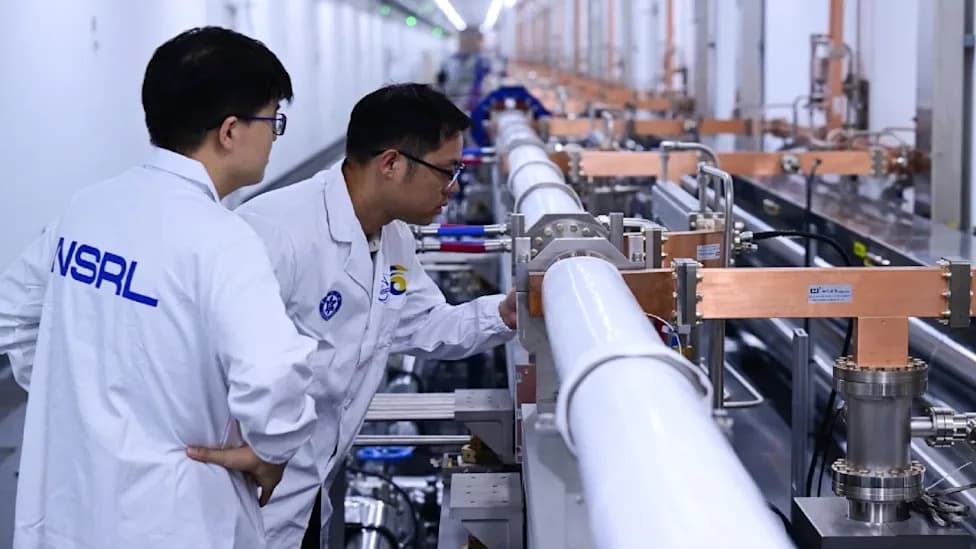
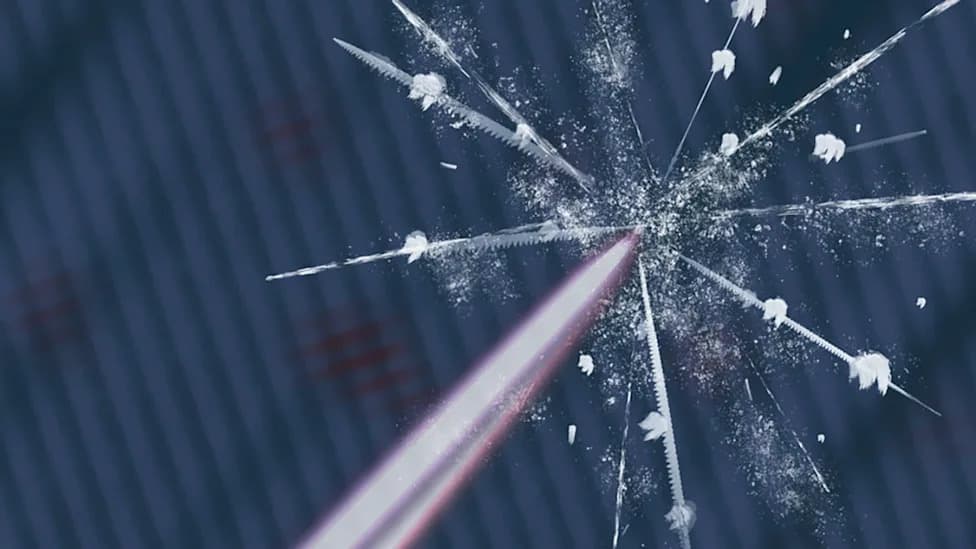
A team led by Professor Markus Büscher tested this directly using pre-polarized Helium-3 (3He). The 3He gas was prepared daily at Forschungszentrum Jülich, transported in specialized containers to the GSI facility in Darmstadt, and injected into the PHELIX high-power laser setup. After acceleration, the team analyzed the ions with CR-39 detector plates and other diagnostics to measure the retained polarization.
“We were able to show for the first time worldwide that the polarization of 3He particles is preserved during laser–plasma acceleration,” Professor Büscher said, calling the result an important milestone for applying compact acceleration technology across several research areas.
Implications and Outlook
The confirmation that polarization survives laser–plasma acceleration supports the use of compact accelerators for generating polarized beams of not only helium nuclei, but potentially also protons and electrons. Polarized electron scattering off protons and neutrons can yield precise insight into nucleon structure, and polarized beams may help in experiments searching for new particles such as axion candidates.
While preserving polarization does not by itself solve the many engineering challenges of practical fusion reactors, it removes a key concern about using laser–plasma techniques in fusion-relevant research and advanced particle-physics experiments.
Key institutions: Heinrich Heine University Düsseldorf, Forschungszentrum Jülich, GSI Helmholtzzentrum für Schwerionenforschung (PHELIX laser).
Help us improve.