Laboratory tests have successfully recreated a Draupner-style "freak wave," reinforcing that rogue waves are a genuine ocean hazard. The original Draupner event was measured in 1995 at the Draupner gas platform in the North Sea at about 83.9 feet, per ECMWF. Researchers, including teams at the University of Oxford, used synchronized paddles to force smaller swells to converge into a steep upswell and say such experiments could eventually improve prediction and warning systems for vessels at sea.
Lab Recreates Draupner 'Freak Wave' — Tank Demonstration Helps Scientists Study Rogue Swells
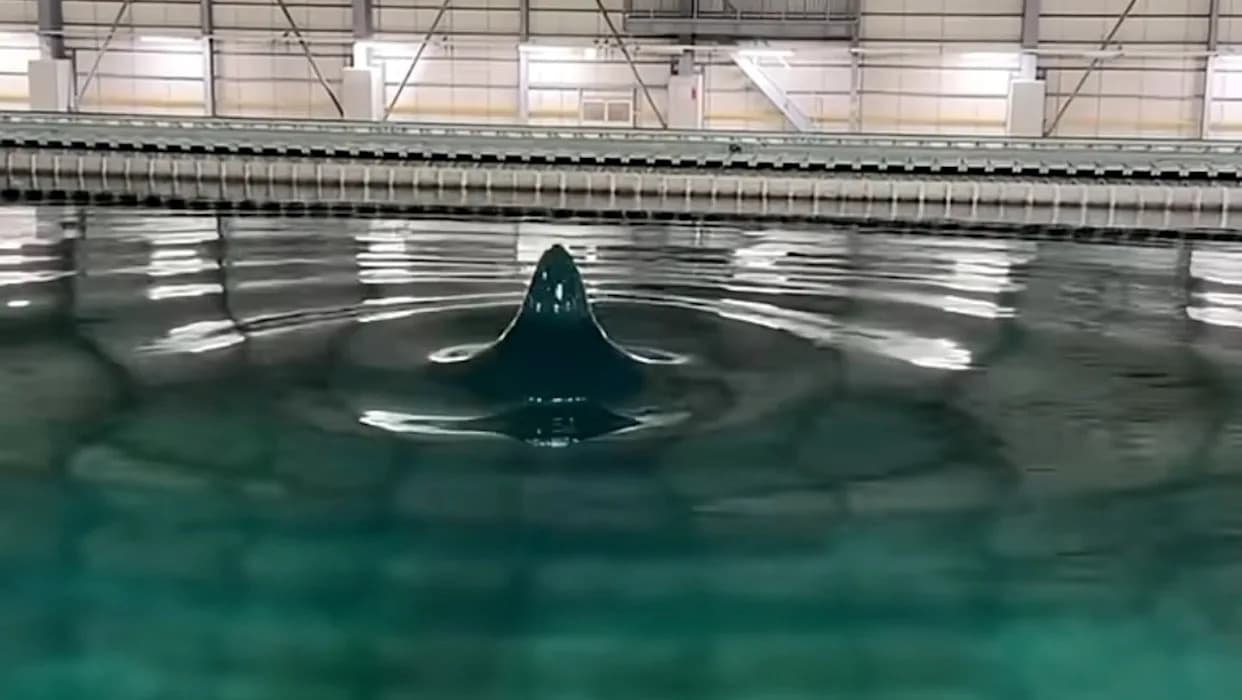
Photo Credit: YouTube
Laboratory experiments that reproduced the notorious Draupner "freak wave" are drawing fresh online attention and reinforcing that rogue waves are a real oceanographic hazard rather than maritime folklore. Researchers say these controlled recreations help clarify the physical mechanisms that cause extreme, sudden swells and could eventually improve warnings for mariners.
Surfer reported on a series of tank tests in which investigators recreated a Draupner-style wave under controlled conditions. The original Draupner event was recorded in 1995 at the Draupner gas platform in the North Sea and measured about 83.9 feet (25.6 meters), according to the European Centre for Medium-Range Weather Forecasts (ECMWF).
In the shared YouTube clip titled "Creating a Giant Freak Wave," synchronized wave paddles generate multiple smaller waves that converge and form a steep, nearly vertical upswell. Laboratory teams — including researchers at the University of Oxford — say the tank recreations reproduce the same type of wave-convergence dynamics believed to produce rogue waves in the open ocean.
"The measurement of the Draupner wave in 1995 was a seminal observation initiating many years of research into the physics of freak waves and shifting their standing from mere folklore to a credible real-world phenomenon," said Mark McAllister. "By recreating the Draupner wave in the lab, we have moved one step closer to understanding the potential mechanisms of this phenomenon."
Reports published on outlets such as Phys.org describe how researchers used precise wave timing and paddle motion to force smaller swells to meet and amplify. The lab-produced events also resemble historical photographs and artistic depictions — including the famous woodblock print "The Great Wave off Kanagawa" — that evoke the appearance of an exceptionally large, singular wave.
Why This Matters
Rogue waves can pose a severe danger to ships and offshore platforms because they arise suddenly and can far exceed surrounding wave heights. By isolating the mechanisms that create extreme localized amplifications, scientists hope to develop predictive models or early-warning techniques that improve safety at sea.
The demonstration clip provoked alarm and discussion online. Viewers described the spectacle as "terrifying" and expressed surprise that scientific acceptance of rogue waves only solidified after the 1995 Draupner measurement, despite centuries of sailors' accounts.
What Comes Next: Continued laboratory studies, field observations, and improved numerical models are needed to translate experimental insights into operational forecasting tools that could alert mariners to heightened rogue-wave risk.
Help us improve.