The Faroe Islands are a key natural laboratory for studying the Atlantic Meridional Overturning Circulation (AMOC). Researchers at the Faroe Marine Research Institute have kept a continuous ocean time series since 1993, revealing a stable local overturning pattern but also identifying an undersea pathway and warning signs such as warming deep water. Changes in the AMOC affect sea level and flooding on the U.S. East Coast — including Charleston — and could have broader climate consequences if the circulation weakens significantly later this century.
How Faroe Islands Research Reveals Ocean Currents That Could Shape South Carolina’s Future
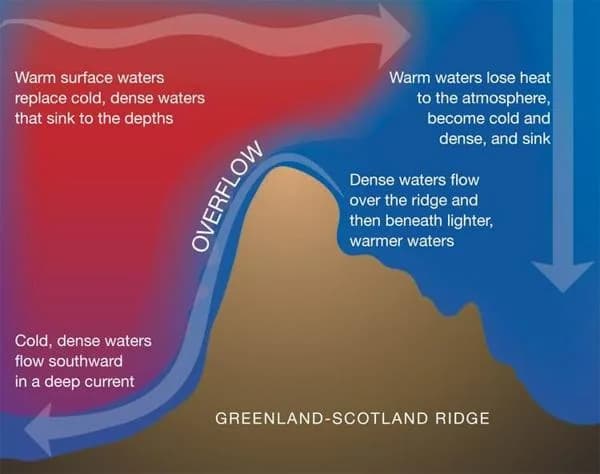
Illustration by E. Paul Oberlander, Woods Hole Oceanographic Institution
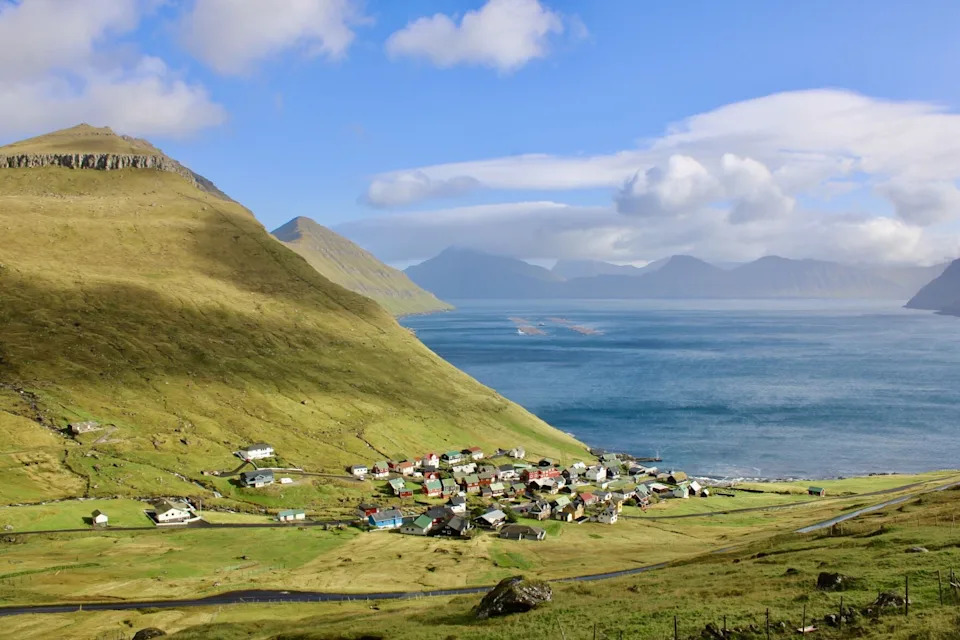
FAROE ISLANDS — Rising like emerald tents from the North Atlantic between Iceland and Scotland, the Faroe Islands are lashed by wind and rain more than 200 days a year. Turf-covered slopes drink up torrents that run to cliffs; gusts sometimes blow waterfalls back upward in long gray streamers. Beneath this dramatic coast, an even more powerful drama plays out in the water: ocean currents that are part of the Atlantic Meridional Overturning Circulation (AMOC), a planetary conveyor belt of heat and cold that helps shape climates from Northern Europe to the U.S. Southeast.
How the Faroes Feed the AMOC
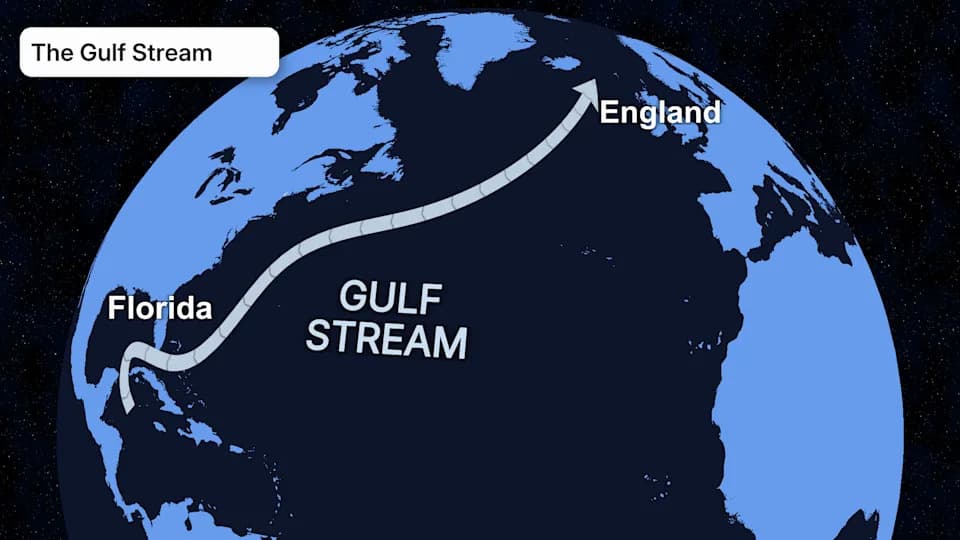
Warm, salty water linked to the Gulf Stream flows northward and spills over the Greenland–Scotland Ridge near the Faroes. As this water cools, it becomes denser and plunges into a deep basin in the Nordic Sea. When that basin fills, dense water spills back over the ridge and sinks again — an undersea overturning that helps drive cold currents southward as part of the broader AMOC system.
Researchers at the Faroe Marine Research Institute (Havstovan) helped identify a previously unrecognized undersea route between Iceland and the Faroes where dense water escapes, slipping beneath incoming warm water and plunging toward the seafloor. Between Iceland and Greenland these exchanges contribute to what NOAA has described as the Earth's largest underwater waterfall.
Long Time Series, Big Payoff
Havstovan has maintained a continuous time series of observations around the Faroes since 1993. Each spring through autumn, researchers deploy instruments from the institute's research vessel Jakup Sverri, measuring temperature, salinity and flow. Those repeated measurements provide the long-term records scientists need to separate natural variability from enduring change — though they are expensive to maintain and vulnerable to funding gaps.
What The Data Shows — Stability and Warning Signs
The Faroe time series shows that the core inflows and outflows over the Greenland–Scotland Ridge have remained broadly steady across the monitoring period, despite natural variability. That steadiness is visible in long-term plots that resemble a jagged EKG: lots of short-term wiggles but no clear long-term decline in the local measurements.
At the same time, other lines of evidence raise concern. Deep waters in the Nordic Sea are warming, paleo records from sediments and shells suggest the AMOC may be at its weakest in roughly 1,600 years, and other sections of the circulation south of the Faroes are showing change. Some studies warn the AMOC could approach a tipping point later this century.
Local And Regional Impacts
Changes in the AMOC have real consequences. A 2023 study found AMOC variations contributed to warming in parts of the North Atlantic between 2010 and 2015 and explained 30–50% of flood days in several U.S. East Coast cities — with Charleston among the most affected. Small shifts in the AMOC and Gulf Stream can nudge the currents closer to or farther from the coast, amplifying or reducing local sea level and flood risk.
What Scientists Say
Karin Margretha H. Larsen, head of Havstovan’s environmental department, emphasizes both the value of long-term monitoring and the remaining uncertainties: the local AMOC signal near the Faroes has been surprisingly steady, but warming and broader changes warrant vigilance. When asked by anxious young people about a sudden collapse, she notes that a complete, abrupt shutdown is unlikely in the immediate term because winds still drive the circulation — yet the warming Arctic increases the odds of meaningful change, and protecting ecosystems remains essential.
Why It Matters To South Carolina
For Charleston and other Southeast coastal communities, a substantially weakened AMOC could mean higher local sea levels and more frequent flooding, while Northern Europe could see reduced oceanic heat and cooler conditions. Even without a full collapse, persistent changes in circulation patterns can alter storm behavior, coastal flooding frequency, and fisheries — making the Faroe Islands’ research relevant far beyond their shores.
Back on the islands, life and livelihoods remain closely tied to the sea: the Faroes exported more than $2 billion in fish last year and support roughly 56,000 residents. As researchers continue to extend the time series, those observations will be crucial for forecasting how the AMOC — and the climates it helps regulate — will evolve in the decades ahead.
“Time series are invaluable,” Larsen said. “They let us see what’s normal and spot real change when it arrives.”
When the clouds clear in the Faroes, sunlight slices across steep green hills and brief strings of rainbows flash along the roads. Beneath that beauty, the AMOC churns with a persistent force — unseen but central to climate and coastal futures from the North Atlantic to South Carolina.
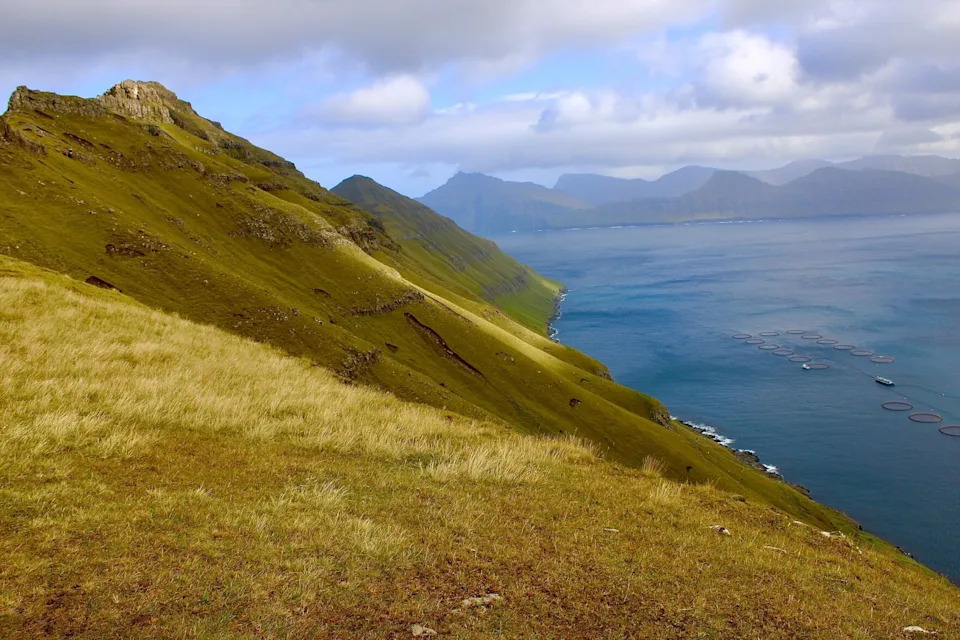
Faroe Islands' economy is driven in large part by salmon farming in its fjords. Tony Bartelme/Staff
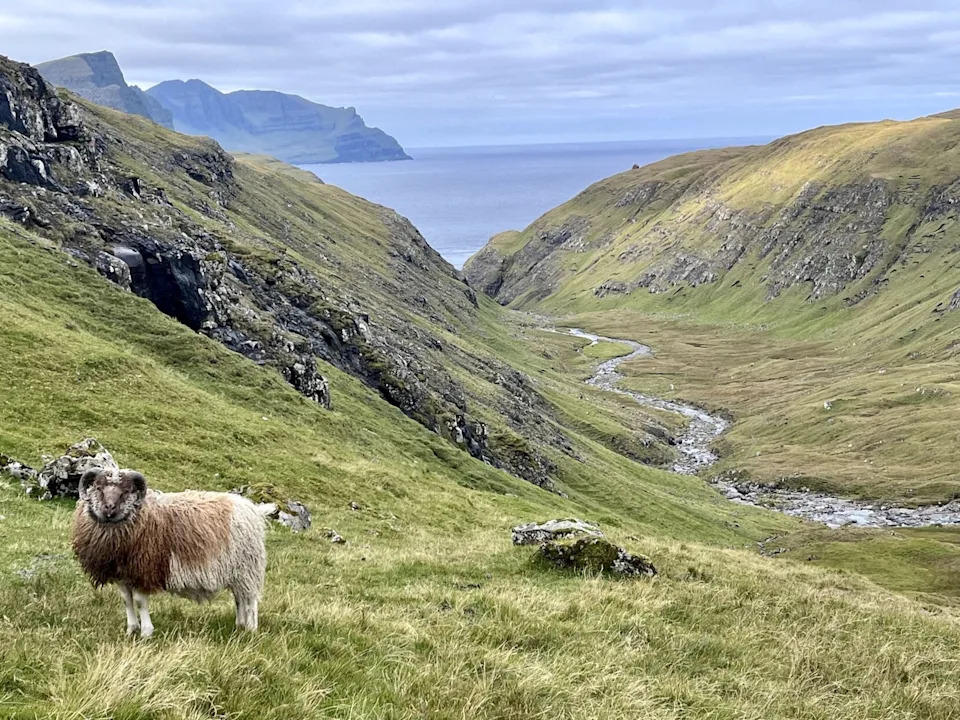
Faroese sheep munch on the islands' treeless slopes. Tony Bartelme/Staff
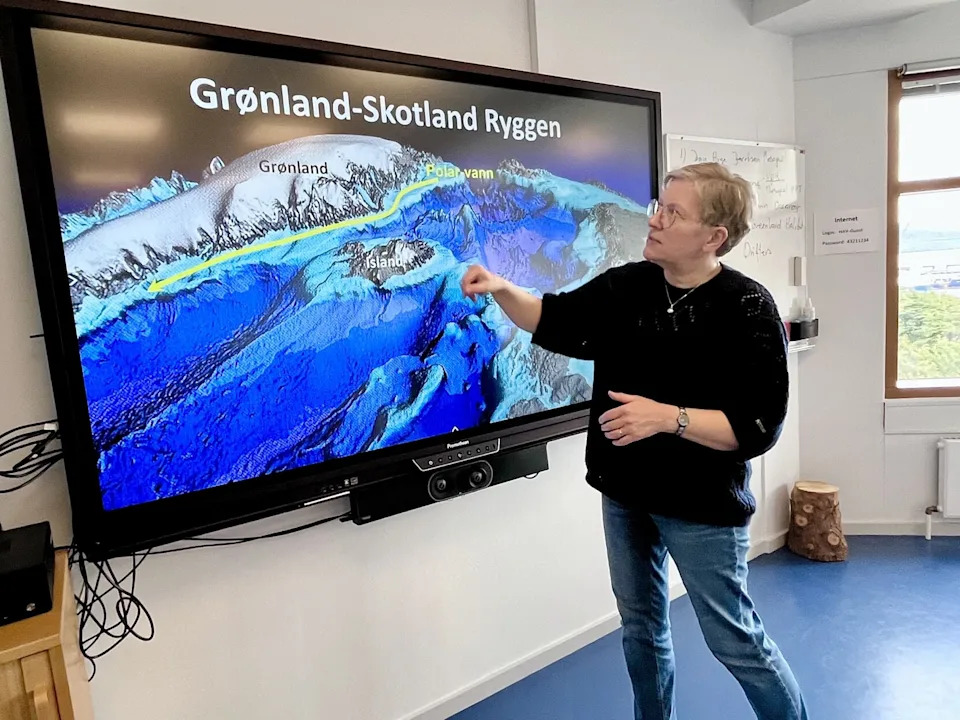
Karin Margretha H. Larsen of the Faroe Islands Marine Institute Tony Bartelme/Staff
Currents swirl around the Faroe Islands, which is an autonomous country in the Kingdom of Denmark. Tony Bartelme/Staff
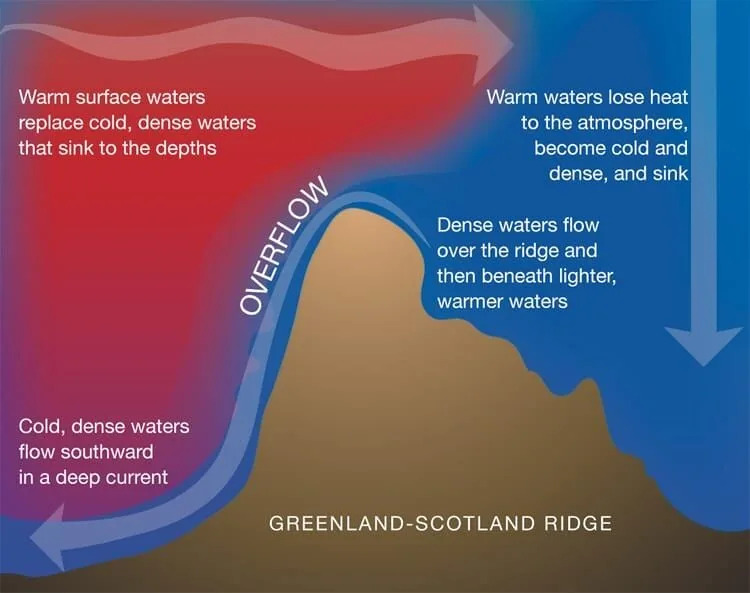
Illustration by E. Paul Oberlander, Woods Hole Oceanographic Institution
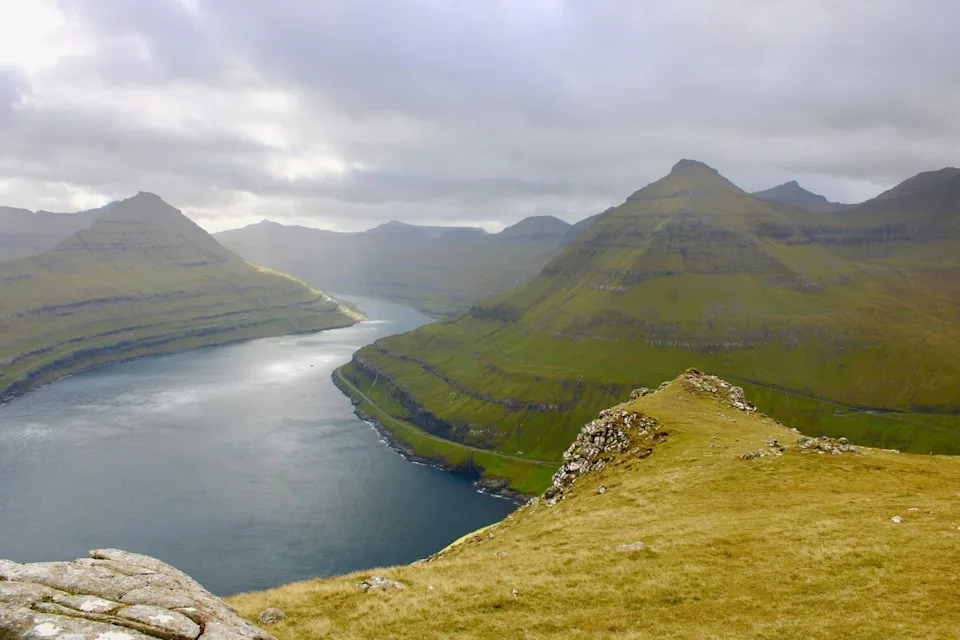
The Faroe Islands are a spectacular chain of 18 islands between Iceland and Scotland. Tony Bartelme/Staff
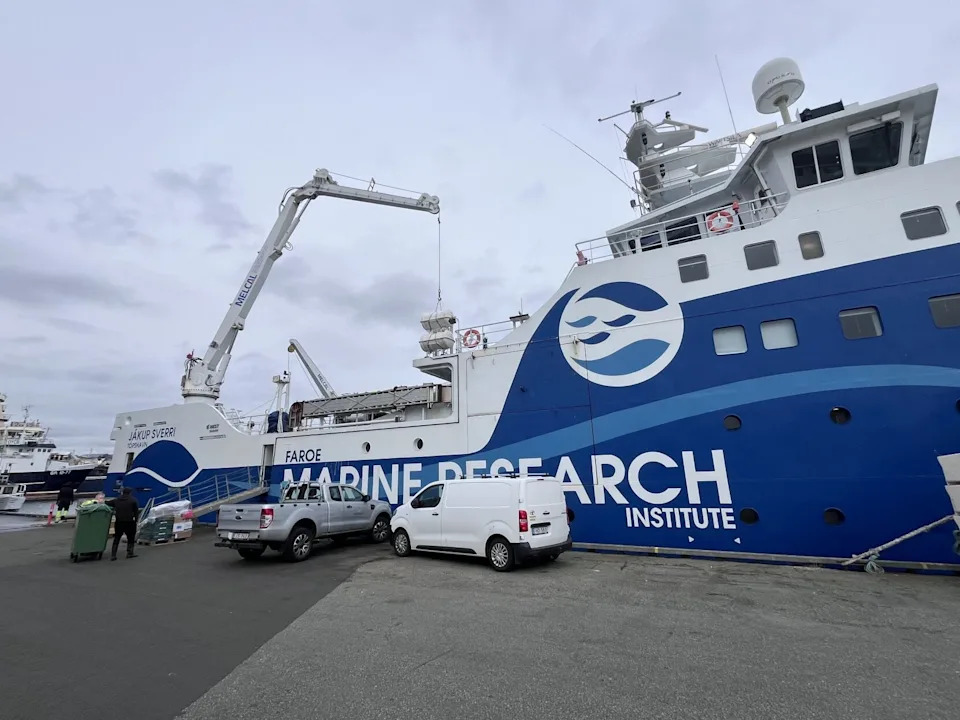
Dockworkers load the 177-foot Jakup Sverri, the Faroe Marine Research Institute's research vessel. Tony Bartelme/Staff
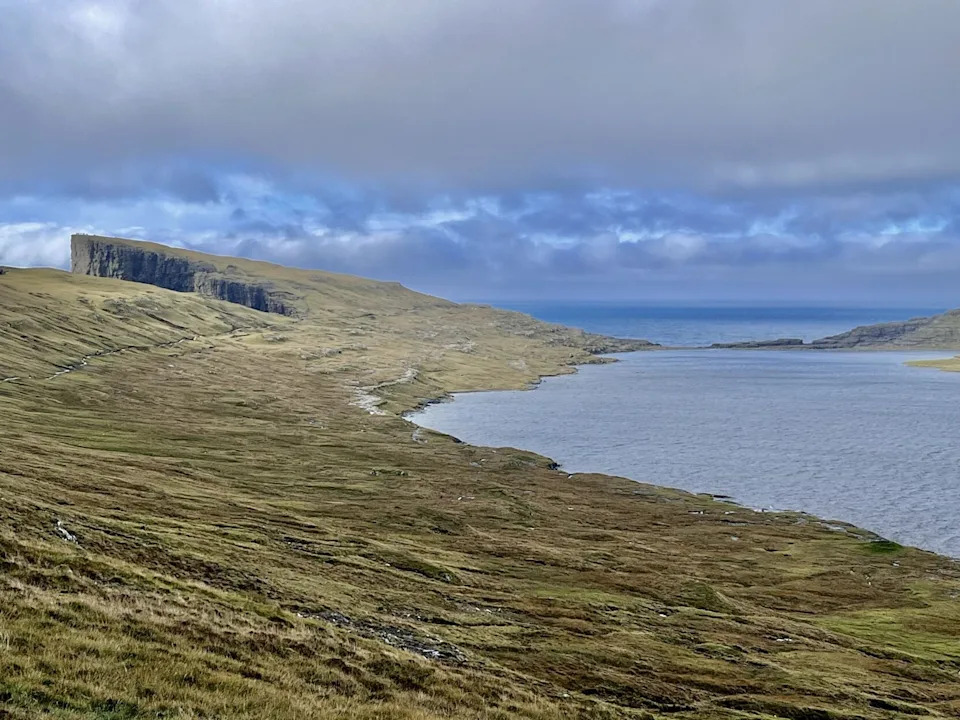
The AMOC curls around the rugged landscape of the Faroe Islands. Tony Bartelme/Staff
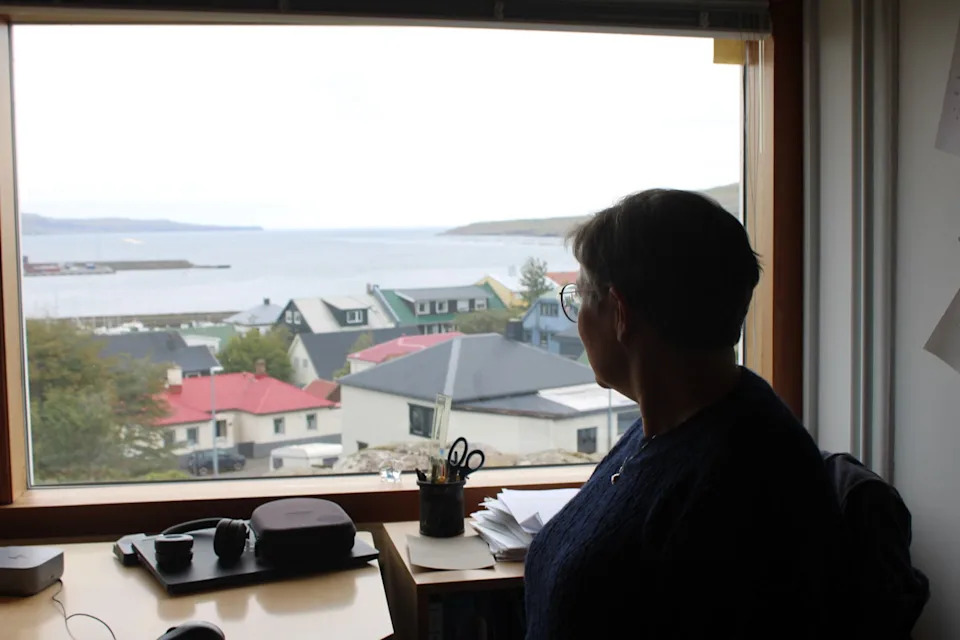
Karin Margretha H. Larsen is head of the Faroe Marine Research Institute's environmental department, which overlooks the harbor in Torshavn. Tony Bartelme/Staff
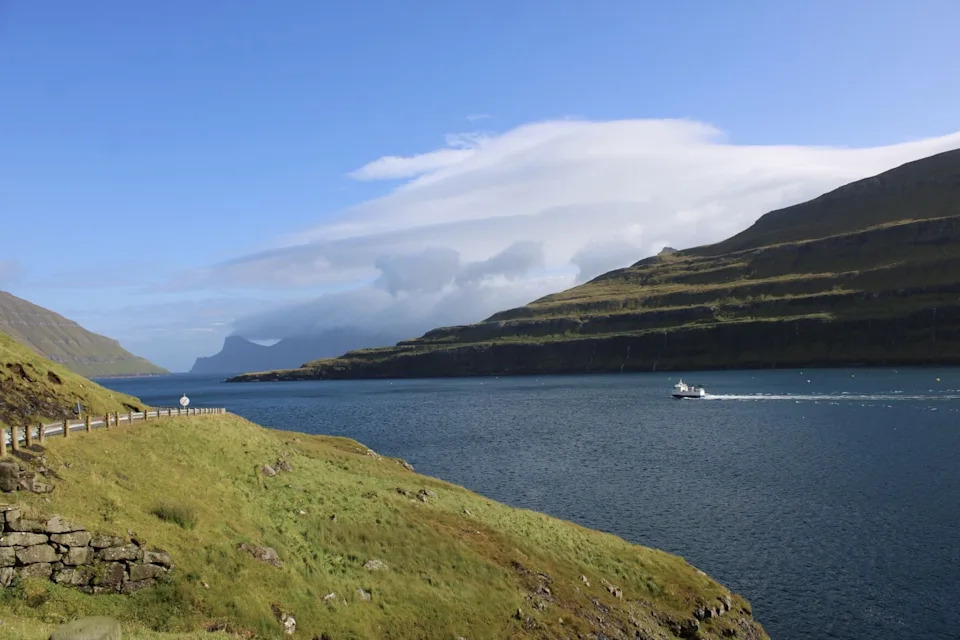
Fishing and tourism drive the Faroe Islands' economy. Tony Bartelme/Staff
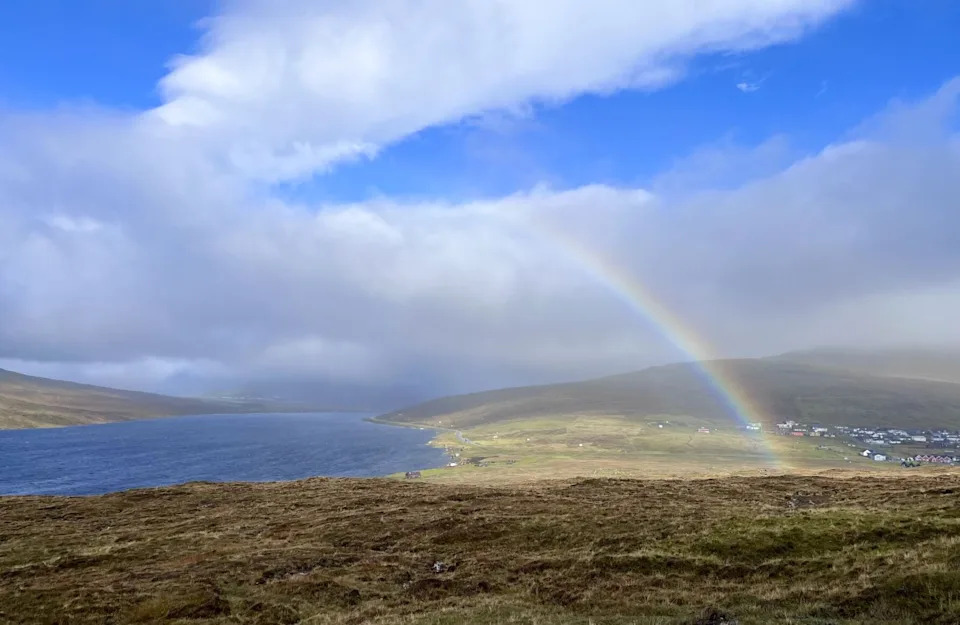
Tony Bartelme/Staff
Help us improve.