The article argues that hawkish appeals to "credibility" frequently backfire when threats are inconsistent with actions. It traces this pattern from Nixon and Kissinger’s "madman theory" through Trump-era episodes involving Greenland, Venezuela, Libya and Iran. Drawing on Thomas Schelling’s lessons, it shows that deterrence requires both believable threats and a clear, credible way for adversaries to comply—something many hawks ignore—ultimately weakening U.S. leverage and increasing conflict risk.
How the Hawks' Obsession With 'Credibility' Has Made America Less Credible
War Hawks' 'Credibility' Obsession Makes America Less Credible
Advocates of military toughness often invoke "credibility" to justify threats and escalations. But when public warnings are inconsistent with follow-through, they can erode the very reputation they aim to protect. From Nixon and Kissinger's “madman theory” to recent Trump-era episodes in Greenland, Venezuela, Libya and Iran, a pattern emerges: bluster without a credible restraint often undermines deterrence and complicates diplomacy.
Madman Theory vs. True Credibility
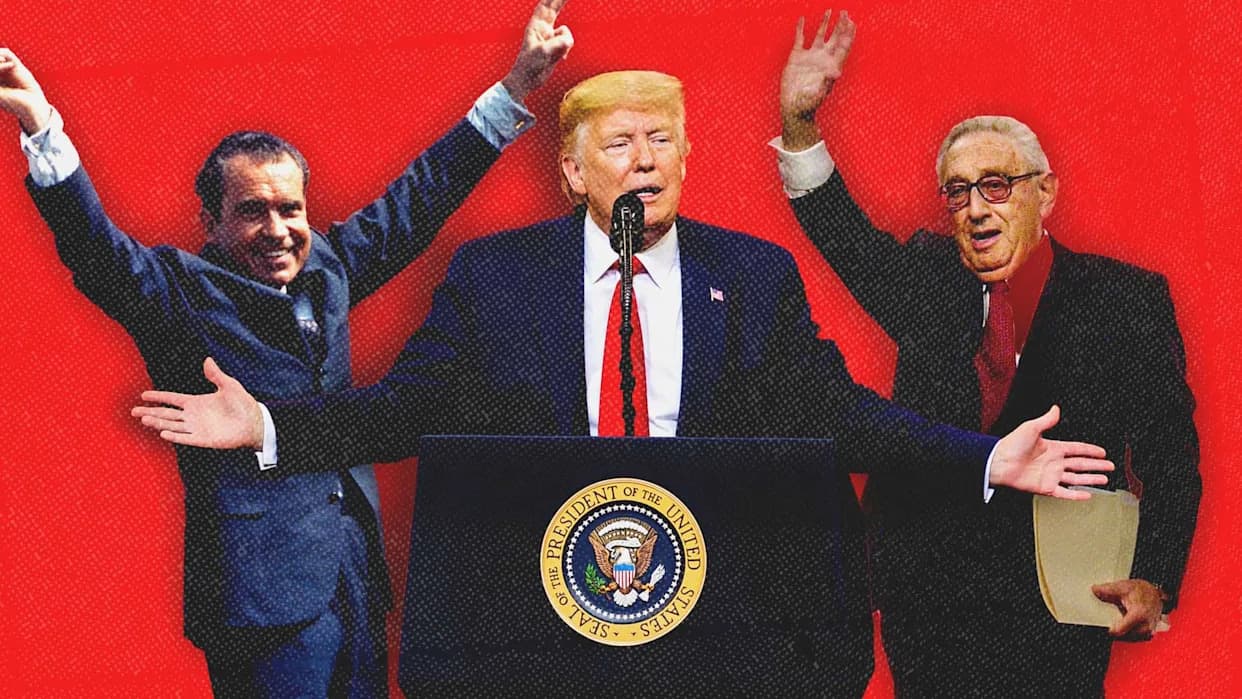
Many hawks equate credibility with appearing ruthless or unpredictable. Richard Nixon and Henry Kissinger explicitly embraced this logic during the Vietnam era: they believed that projecting irrationality would intimidate adversaries. That approach—mixing extreme threats with diplomatic overtures—created dangerous contradictions. Credibility, however, traditionally means a reputation for consistent, enforceable commitments, not merely a posture of toughness.
The Human and Strategic Cost
Nixon’s oscillation between threats and escalation—most notably the intense bombing campaigns and the secret invasion of Cambodia—produced massive human costs and failed to secure a lasting strategic victory. The iconic image of evacuees crowding Saigon’s last helicopters damaged American prestige far more than accepting a negotiated stalemate might have.
Schelling’s Balanced Lesson
"Deterrence requires more than a military capability. It requires projecting intentions." —Thomas C. Schelling
Schelling’s point is two-sided: threats must be believable, but they must also offer adversaries a clear way to comply without catastrophic loss. If a threatened party cannot see a realistic escape route, deterrence collapses into a willingness to fight rather than a credible avenue to prevent conflict.
Recent Examples: When Bluster Backfires
In the Trump era, high-profile threats—such as suggestions of seizing Greenland, abrupt deadlines over the Strait of Hormuz, and aggressive moves around Venezuela and Iran—have sometimes been followed by reversals or inconsistent policies. These mixed signals reduce trust among allies, encourage adversaries to hedge, and complicate negotiations.
History offers sharper warnings: Muammar Gaddafi gave up his WMD programs and later was killed amid a U.S.-backed intervention—an outcome that made other regimes more skeptical about concessions. Similarly, pre-negotiation strikes or last-minute escalations undermine prospects for genuine talks and feed a narrative that the United States cannot be relied upon to honor or restrain its commitments.
Consequences and Conclusion
When policymakers prioritize the appearance of toughness over consistent policy, they often create a dilemma: either escalate at great cost or back down and appear weak. Both outcomes damage long-term U.S. influence. Effective deterrence requires not only credible threats but also disciplined restraint and predictable behavior.
Originally published on Reason.com.
Help us improve.