Decades of research into authoritarianism show a recurring tactic: leaders use language and distance to hide responsibility for harms. Personal anecdotes from Russian fieldwork and life as a Navy spouse demonstrate how official narratives can make avoidable suffering seem inevitable. Recent U.S. examples — from CBP's 'self-deportation' messaging to the prolonged deployment of the USS Abraham Lincoln — show how policy and rhetoric shift blame away from decision-makers. Eyewitness accounts and family testimony are essential to restoring the full story and preserving accountability.
How Leaders Erase Responsibility — The Playbook Trump Has Adopted
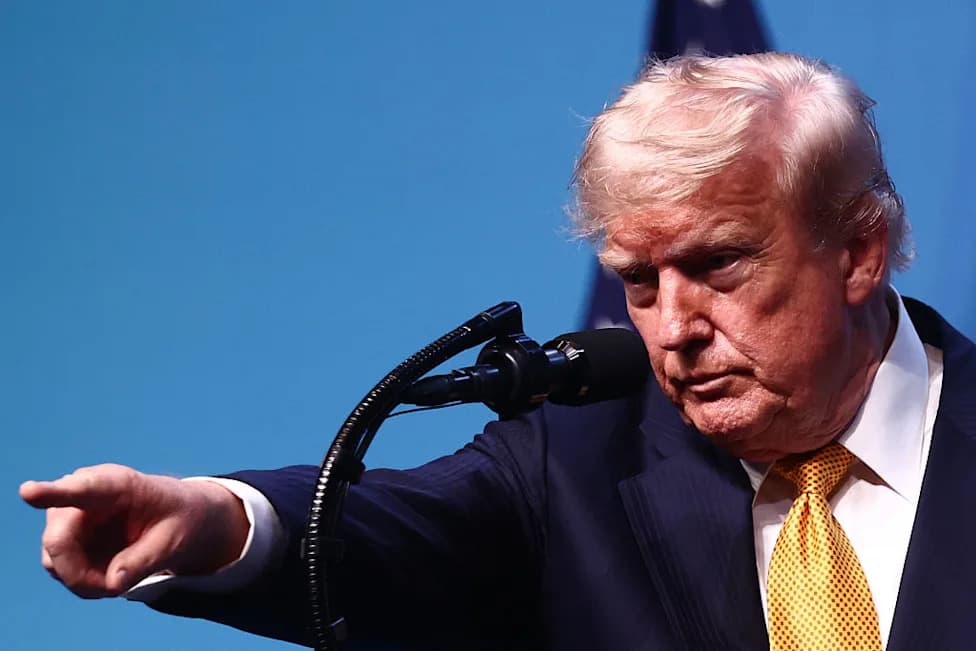
Donald Trump during a press conference at the NATO Summit in Ankara, Turkey, July 8, 2026. Jakub Porzycki/NurPhoto via Getty Images
Across decades of research into authoritarianism in Russia and the United States, a clear tactic keeps appearing: the deliberate erasure of responsibility. Leaders and institutions use language, distance and curated narratives to make harms appear impersonal, inevitable or the result of individual failings rather than the consequences of specific decisions.
From a Russian Woods to Institutional Doublespeak
My first vivid lesson in this kind of evasive language came during doctoral fieldwork in northern Russia. On a snowy walk an older acquaintance paused, looked at my thin jacket with mock alarm and declared she had 'lost her way' and feared we might freeze. Having grown up under Stalin, she had learned to cast human errors as accidents with no blame attached. Cold and shivering, I found myself playing along with the false narrative she had created.
That same pattern emerged in darker settings: in Russian orphanages, some government doctors described emaciated, withdrawn children as inherently 'defective.' Local activists told a different story — prolonged isolation from families and warehousing in guarded institutions produced the physical and developmental decline labeled by officials as innate.
Distance, Language and U.S. Institutions
Distance — both literal and rhetorical — makes it easier to evade scrutiny. Years later, as a Navy spouse, I watched how sanitized accounts of military life could mask leadership failures. A children's book from a spouses' group taught kids that danger was always abroad and that service members were there to protect the homeland, erasing the homegrown harms inflicted by overstretched forces. Commanding officers warned that 'notes to the boat' should avoid mentioning household stress, to preserve morale; those silences mattered to the children listening.
On a national level, similar rhetorical moves can make suffering look unavoidable. Under the second Trump administration, patterns of messaging and policy framing often presented constrained or coerced choices as voluntary and wars or extended deployments as natural consequences rather than consequences of political decisions.
Examples: Immigration and the Military
The Trump administration's Customs and Border Protection promoted a so-called 'self-deportation' program that offered undocumented residents a $2,600 'exit bonus' to leave voluntarily. Yet a Washington Post investigation in May 2026 found that of more than 80,000 voluntary departure orders between January 2025 and March 2026, more than 70 percent involved people already detained. Framing those exits as voluntary obscures the coercive conditions many detainees face: inadequate food, water and medical care; overcrowded, unsanitary spaces; documented mistreatment and, over the past 18 months, dozens of deaths in ICE custody.
Restricted choices are reframed as freely made in other spheres too. Consider the aircraft carrier USS Abraham Lincoln, which returned to port in Thailand after nine months at sea. President Trump dismissed families' concerns about the crew's deteriorating mental health and said the deployment 'was not nearly long enough.' Media reports that describe extended deployments as routine in times of conflict can make an undeclared war seem normal and inevitable instead of the result of a series of policy choices that deserve examination.
Who Tells the Longer Story?
Families and service members who speak out often risk retaliation or social repercussions. Jefferson Kelley, the father of a sailor aboard the Lincoln, worried that his public advocacy could harm his son's naval career. Public comments from other veterans urging families to 'suck it up' illustrate how cultural narratives can silence critics and normalize avoidable harm.
"Let's just conveniently leave out the part about who started another forever war," Kelley said when reflecting on official accounts that emphasize attacks and threat without naming who made the choices to engage.
Journalists and historians should do more than 'speak truth to power.' They must tell the longer story: who made the decisions, what trade-offs were chosen, and how ordinary people were affected. Eyewitness testimony and family accounts restore the causal links that official narratives often obscure, ensuring that responsibility is recorded and remembered.
When the missing parts of these stories are documented, accountability becomes possible and the truth has a better chance of coming home.
Help us improve.