Portfolio reasoning is a financial mindset that treats nations, alliances and people as assets to be managed to maximize return. Trump’s rhetoric in 2026—at Davos, the State of the Union and a Las Vegas rally—frames the U.S. as a flagship holding he aims to increase, citing stock market records and 401(k) gains. Examples include proposals on Greenland, a $71 billion price for Canadian defense coverage, plans for Venezuelan oil, and federal equity stakes such as 9.9% of Intel. The result: commitments become provisional and political relationships are valued like negotiable assets rather than durable obligations.
How “Portfolio Reasoning” Explains Trump’s Constant Reappraisal of America’s Value
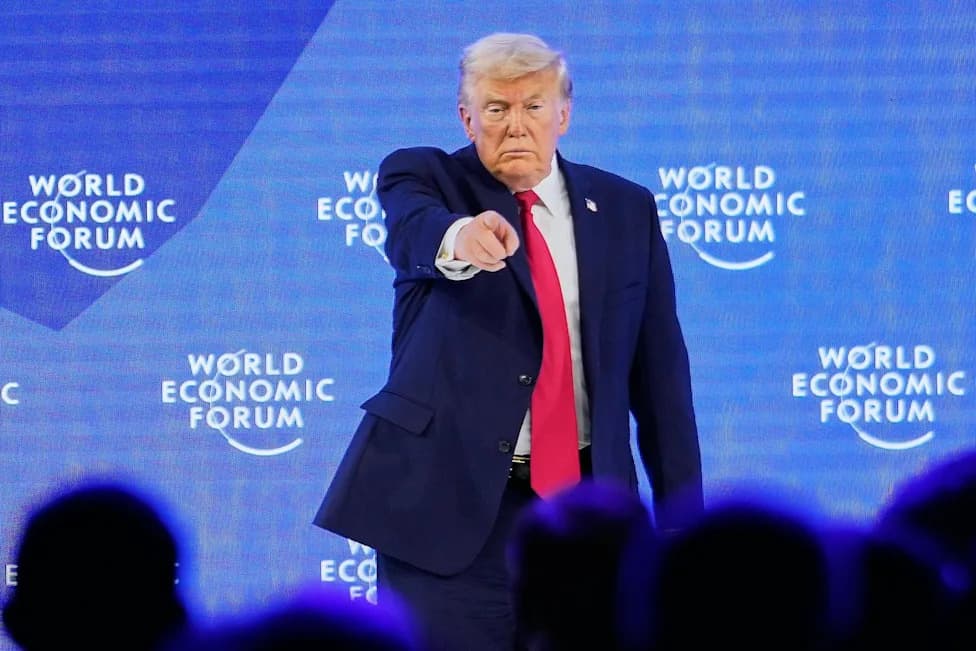
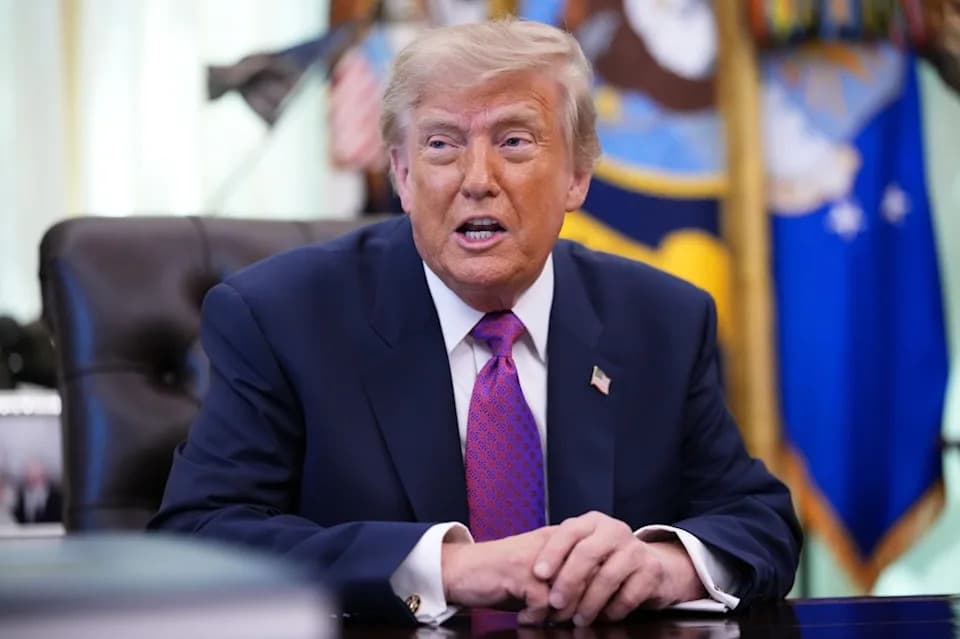
President Donald Trump takes questions after his speech at the World Economic Forum in Davos, Switzerland, on Jan. 21, 2026.AP Photo/Markus Schreiber
In January 2026 in Davos, President Donald Trump told business and political leaders that the United States needed the "right, title and ownership" of Greenland "because you need the ownership to defend it. You can't defend it on a lease." To the president, a territory of roughly 57,000 people was described in the language of property and acquisition.
Observers have proposed many explanations for the torrent of executive orders, public appeals and sweeping policy reversals that have defined his second term: a tactic to overwhelm courts and news outlets, psychological diagnoses such as narcissism, or frames invoking authoritarianism and demagoguery. I argue that these accounts miss a simpler and complementary explanation rooted in Trump's decades-long career in commercial real estate.
What Is Portfolio Reasoning?
Portfolio reasoning is a financial mindset that treats holdings—property, money, alliances, institutions and relationships—as a collection of assets to be continually managed and revalued to maximize return. The core questions are practical and transactional: What do I own? Which assets are performing well or poorly? What should I hold, acquire, renegotiate or divest? And how can I preserve the option to walk away?
Modern portfolio theory, formalized by economist Harry Markowitz in the 1950s, offered tools to manage financial risk. As finance has come to shape more areas of life, the habits of assessment and rebalancing have spread beyond markets. Think of a student checking stock picks on a trading app between classes, tweaking a fantasy football roster as player values shift, or adjusting positions on prediction markets—across very different activities, the same habit of managing a changing set of positions is at work.
Reading Trump Through This Lens
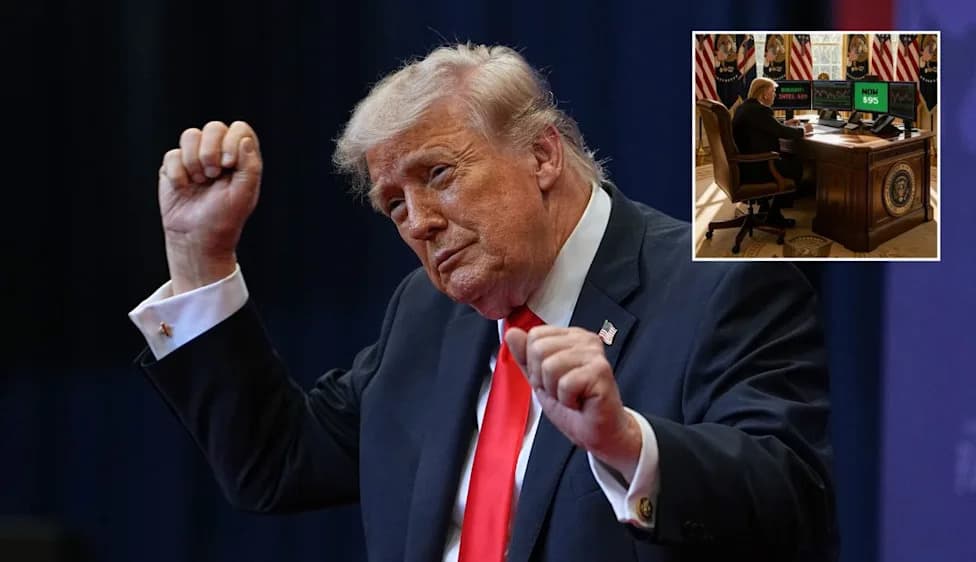
Viewed as portfolio reasoning, Trump’s rhetoric and actions consistently cast the United States as a flagship asset whose value he was elected to raise. He opened the 2026 State of the Union by declaring the nation "back, bigger, better, richer and stronger than ever before," and then presented evidence that read like an investment performance report: the stock market had set "53 all-time record highs," and the typical 401(k) was "up by at least $30,000." At a Las Vegas rally in August he framed gains in the language of capital flows: "Money is pouring" into the U.S.
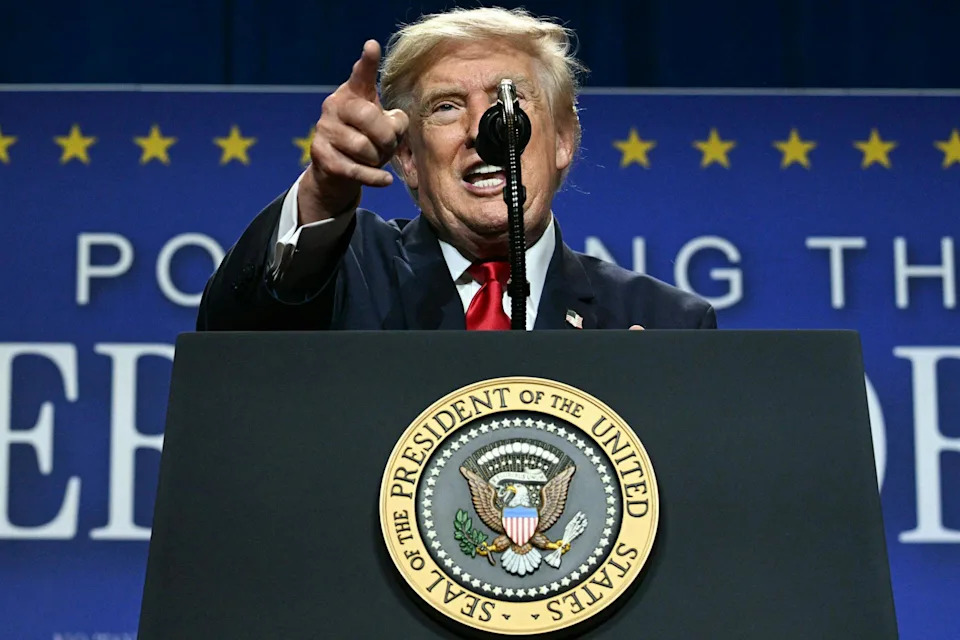
President Donald Trump speaks about his administration's tax-relief initiative in Las Vegas on Aug. 5, 2026.Jim Watson/AFP via Getty Images
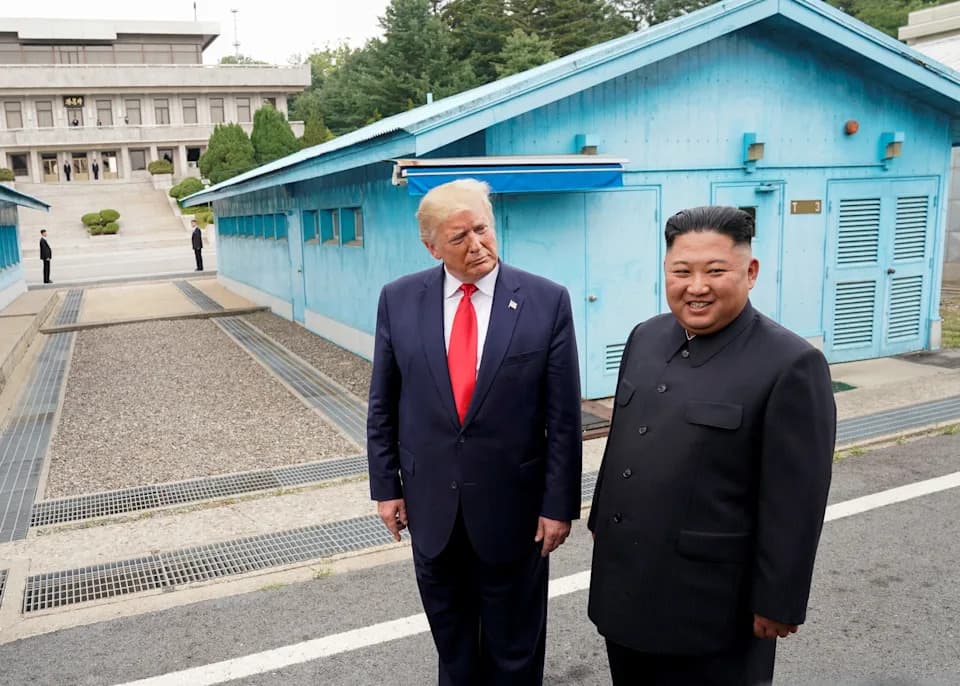
Trump also reassesses existing holdings and reprices relationships he deems underperforming. In the State of the Union he claimed NATO members had "just agreed, at my very strong request, to pay 5% of GDP for military defense rather than the 2%" they had been contributing, adding that the U.S. had been "paying the freight of many of them." When Canada sought coverage under a proposed Golden Dome missile defense system, Trump priced protection at roughly $71 billion and then offered an alternative: "Why don't you just join our country? Become the 51st state and you get it for free."
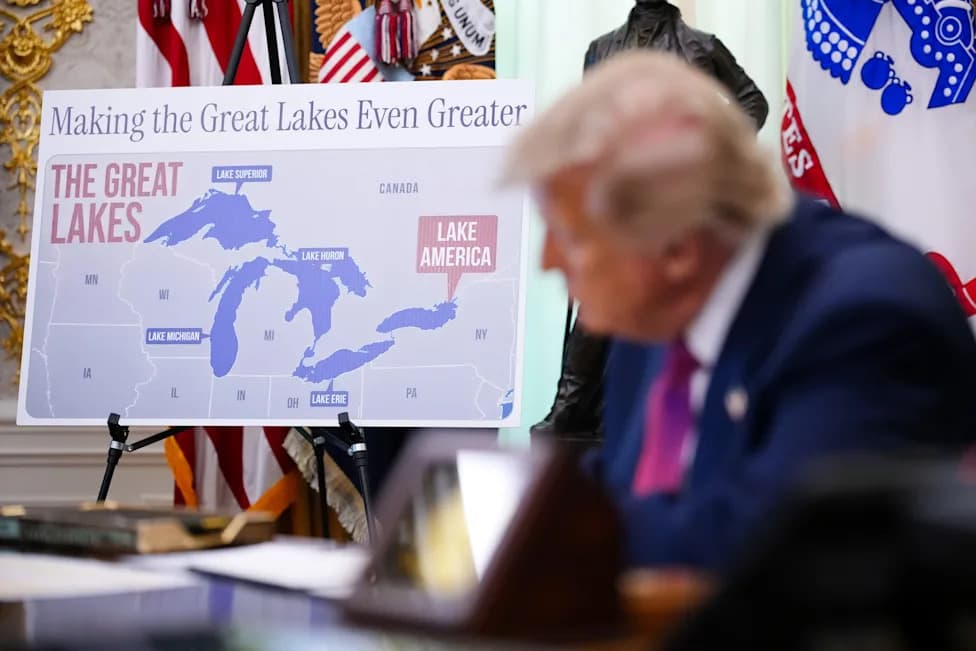
Expansion by acquisition also figures prominently. Greenland is the clearest geopolitical example: Trump pushed for ownership rather than mere access. After the removal of Venezuela's Nicolás Maduro, he proposed that Venezuela transfer up to 50 million barrels of oil and predicted U.S. companies would "start making money" by developing underused resources. Domestically, since 2025 the federal government has taken ownership positions in about 30 companies, including a reported 9.9% stake in Intel.
Implications And Limits
One could describe these moves as a more aggressive version of traditional statecraft—pursuing growth, expanding influence and defending national interests. But portfolio reasoning differs in how it treats limits and commitments. Democratic governments typically make some durable commitments—treaties, rights and institutional checks—that are intended to stand above continual recalculation. Portfolio logic, by contrast, prioritizes optionality: retain positions that pay off, renegotiate those that do not, and exit when better opportunities arise.
Applied to people and polities, this approach can render populations, partners and institutions as assets or liabilities rather than as participants with inalienable claims. Portfolio reasoning can assess value and risk efficiently; it does not, on its own, provide moral reasons to protect rights or to make certain obligations nonnegotiable. That difference helps explain why the second term has been marked by turbulence: commitments are provisional, and few relationships are exempt from reappraisal.
Resemblance is not proof. But Trump's own language—repeatedly framing national performance as returns to be maximized—provides persuasive evidence that portfolio reasoning is a meaningful frame for understanding his politics.
About this piece: This article was originally published by The Conversation and written by J. Christian Spielvogel, Penn State. The author reports no conflicts of interest beyond their academic appointment.
Help us improve.