The Archaeological Park at Pompeii released an AI-generated image that reconstructs a man’s final moments during Mount Vesuvius’s 79 AD eruption, based on a skeleton found at the Porta Stabia necropolis. Artifacts recovered at the site include a large, broken terracotta vessel, a small oil lamp and bronze coins. Park officials say AI can make archaeological research more accessible, while researchers note such reconstructions remain interpretive tools. Pompeii continues to produce important finds and now limits daily visitors to 20,000 to manage crowds.
AI Reconstructs Pompeii Victim’s Final Moments in Striking New Image
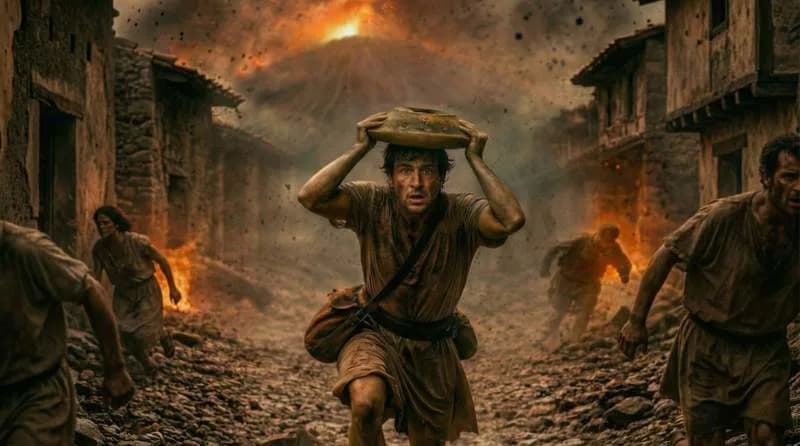
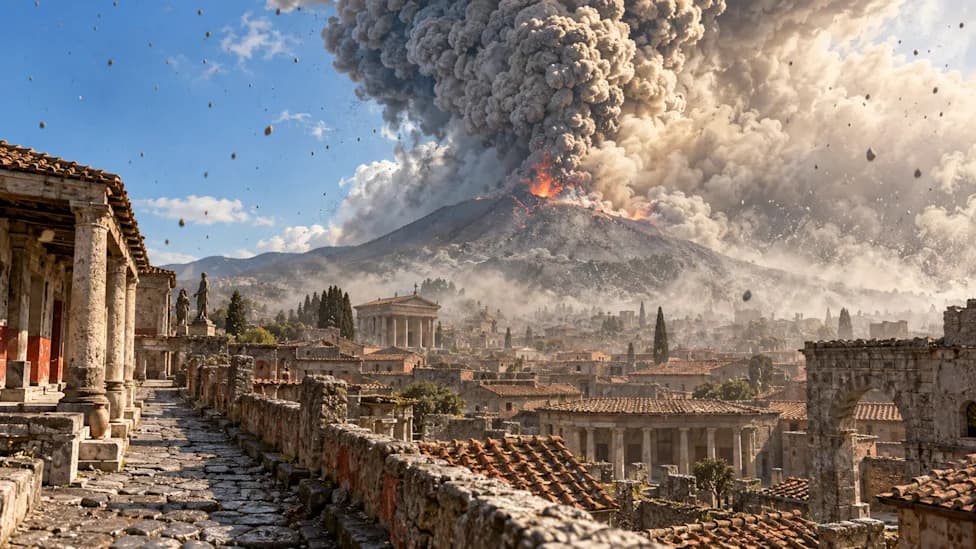
Researchers hope to bring archaeological research to life with AI-generated depictions of Pompeii during the volcanic eruption based on their findings. Italian Culture Ministry/dpa
Visitors to Pompeii may soon encounter vivid, AI-generated reconstructions that bring the city’s 79 AD catastrophe into striking focus. The Archaeological Park at Pompeii released an image this week showing a crouched man running while sheltering a terracotta vessel above his head, with Mount Vesuvius erupting in the background.
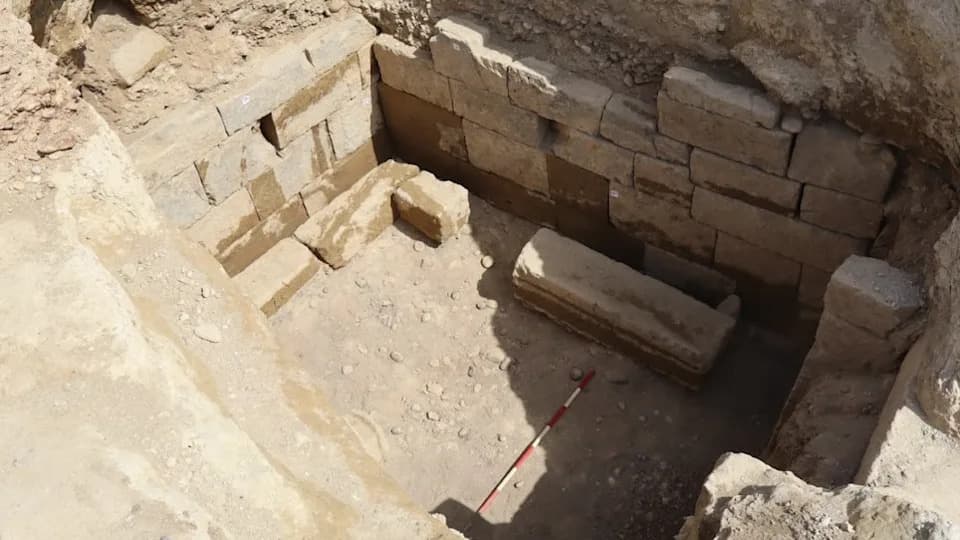
The depiction is based on a recent excavation at the Porta Stabia necropolis where archaeologists uncovered a male skeleton next to a large broken terracotta vessel. Investigators also recovered a small oil lamp and several bronze coins beside the remains.
Researchers believe the man was attempting to flee toward the coast when he was struck down by falling volcanic debris. The vessel’s breakage and the presence of the lamp — likely used to navigate in poor visibility — help inform the reconstructed scene.
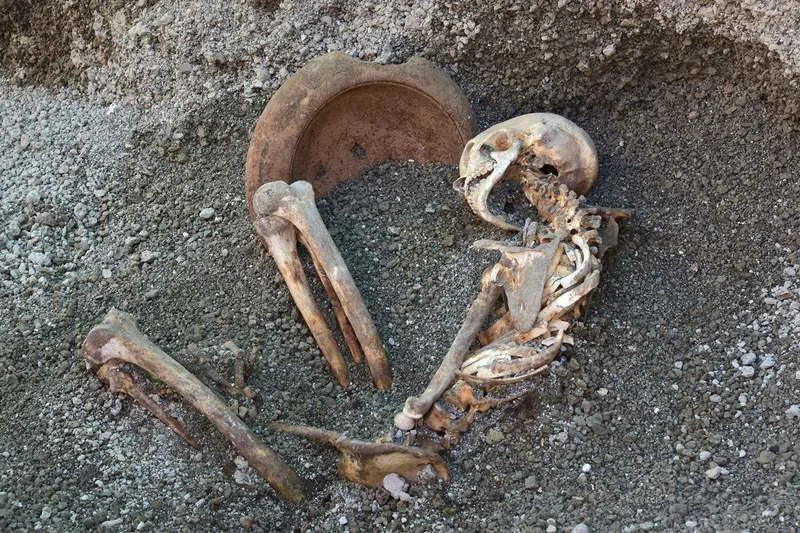
Researchers found a large terracotta vessel next to this victim of the volcanic eruption at Pompeii. He probably used this as protection whilst fleeing 2,000 years ago. Italian Culture Ministry/dpa
AI, Interpretation and Public Engagement
The park says the image—created with artificial intelligence—helps non-specialist audiences visualise archaeological findings and the human stories behind them. Gabriel Zuchtriegel, director of the Archaeological Park at Pompeii, commented:
"When used correctly, AI can contribute to a renewal of classical studies by telling the story of the classical world in a more immersive way."
Experts caution that AI reconstructions are interpretive tools: they synthesize archaeological evidence and artistic inference rather than producing definitive portraits. Still, the park argues such visualisations can make research more accessible and emotionally resonant for the public.
Context and Visitor Management
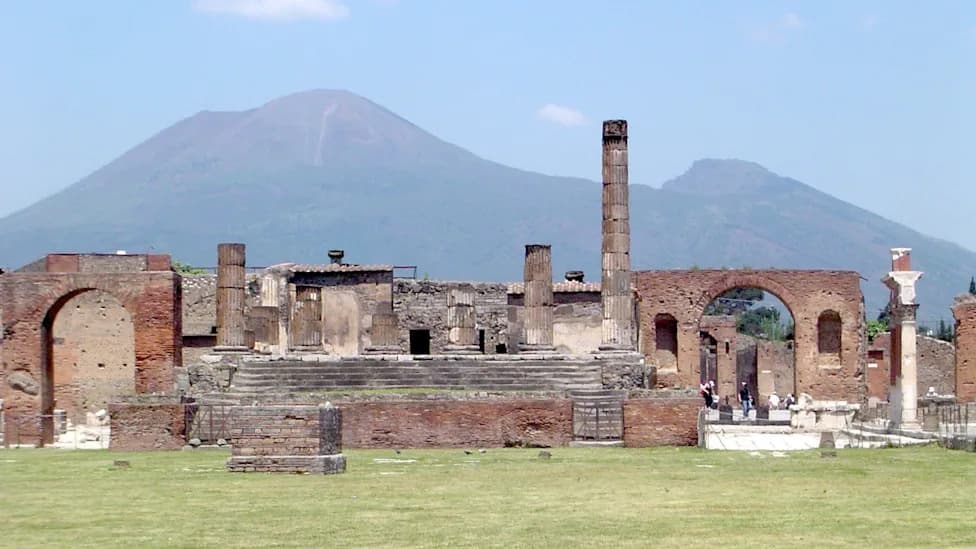
Pompeii — buried under ash, mud and lava in 79 AD and rediscovered in the 18th century — continues to yield dramatic finds and remains one of Italy’s top cultural destinations. In 2024 the park introduced a 20,000 daily visitor cap and rolled out personalized tickets to better manage crowds after annual attendance reached a record 4 million.
Help us improve.