The 82nd Airborne conducted practical training at Fort Bragg using Bumblebee quadcopters to rehearse drone‑on‑drone tactics. Soldiers trained mainly on the manual Bumblebee V1 and observed a prototype V2 with autonomous target recognition. The program prioritizes low‑cost interceptors to avoid exhausting expensive missile defenses and expands training domestically and in the Middle East. Pentagon officials say the effort will be iterated based on soldier feedback and is supported by a major budget request for drone programs.
82nd Airborne Trains With Bumblebee Interceptors to Hone Drone‑On‑Drone Tactics
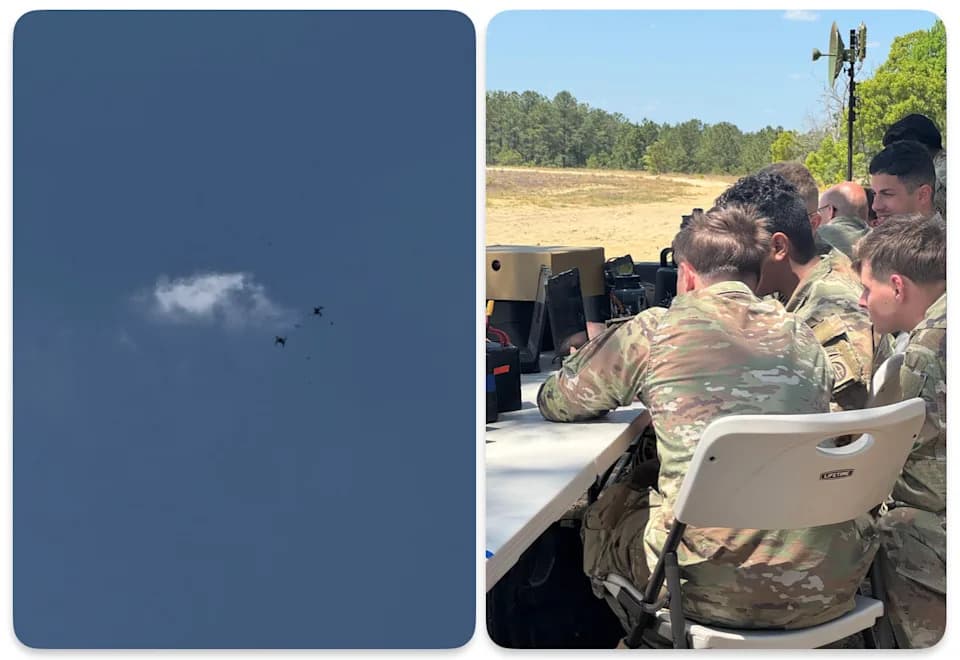
L: Two of the Bumblebee V1s moments after one collided into another to take it down. R: Soldiers of the 82nd Airborne Division piloting Bumblebee V1s from laptops. / Credit: Eleanor Watson / CBS News
Fayetteville, North Carolina — At Fort Bragg, soldiers from the 82nd Airborne Division conducted hands‑on exercises using small Bumblebee quadcopters to practice the drone‑on‑drone engagements that have become common on battlefields such as Ukraine. The live demonstrations paired teamwork and basic marksmanship with low‑cost interceptor concepts designed to preserve higher‑cost missile defenses.
Training Overview
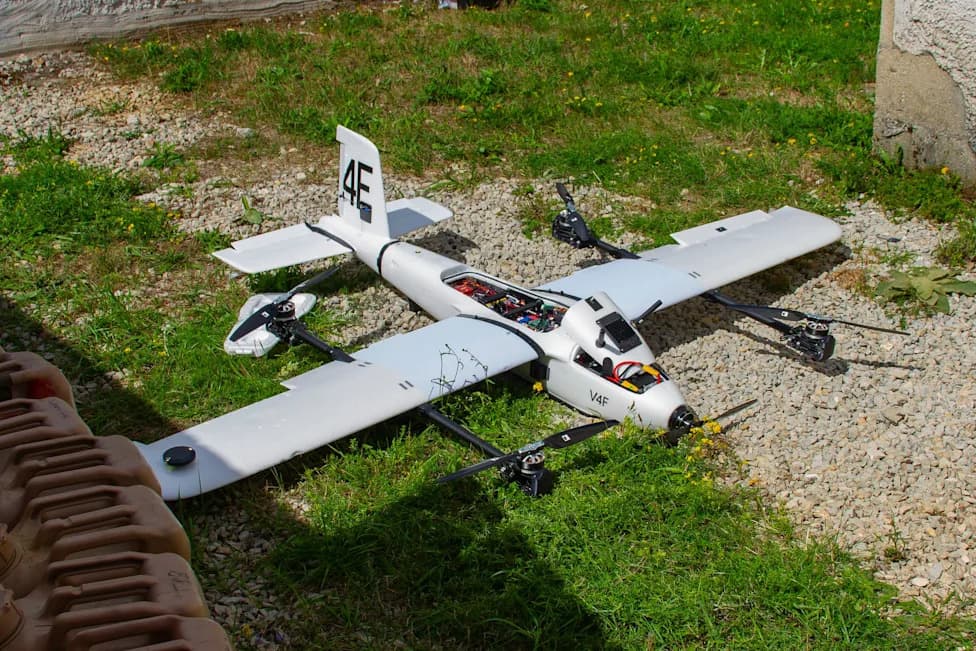
The brief, weeklong session introduced soldiers to two Bumblebee variants: the fielded Bumblebee V1 and a prototype Bumblebee V2 with autonomous target recognition. Most instruction focused on the V1 — a compact first‑person‑view (FPV) drone credited with thousands of sorties in Ukraine — while crews observed the V2's advanced features.
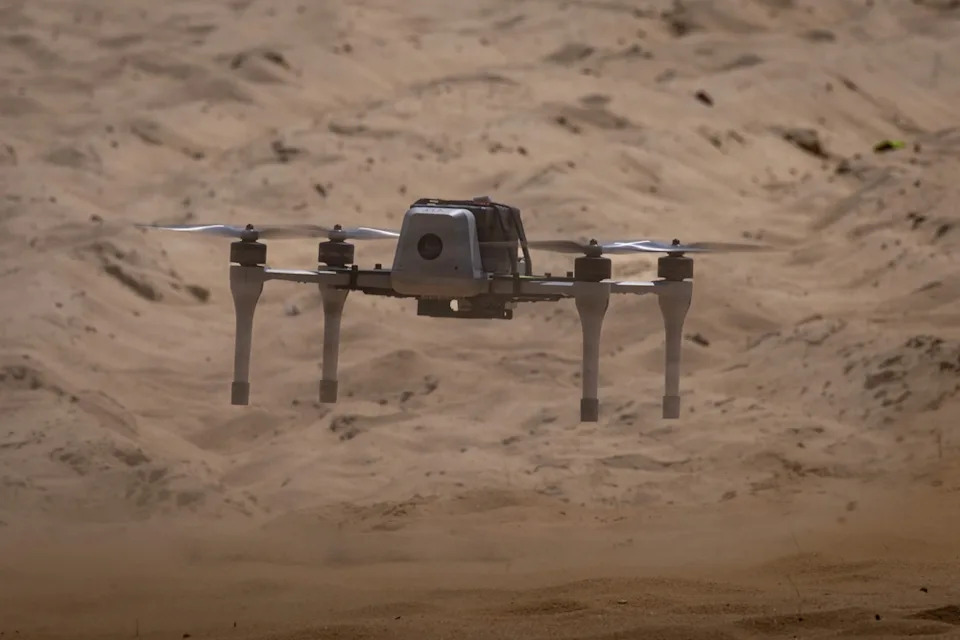
Bumblebee V1 drone at Fort Bragg, in North Carolina. / Credit: Defense Department
Bumblebee V1 vs. V2
Bumblebee V1: A manual FPV interceptor that requires pilots to adjust speed and altitude to lock on to a target. It is already in use by units including the 82nd Airborne and the 10th Mountain Division.
Bumblebee V2: A prototype that adds autonomous targeting software (pilot‑approved engagement), additional camera sensors and a gimbaled camera for improved tracking. The V2 has not yet been fielded.
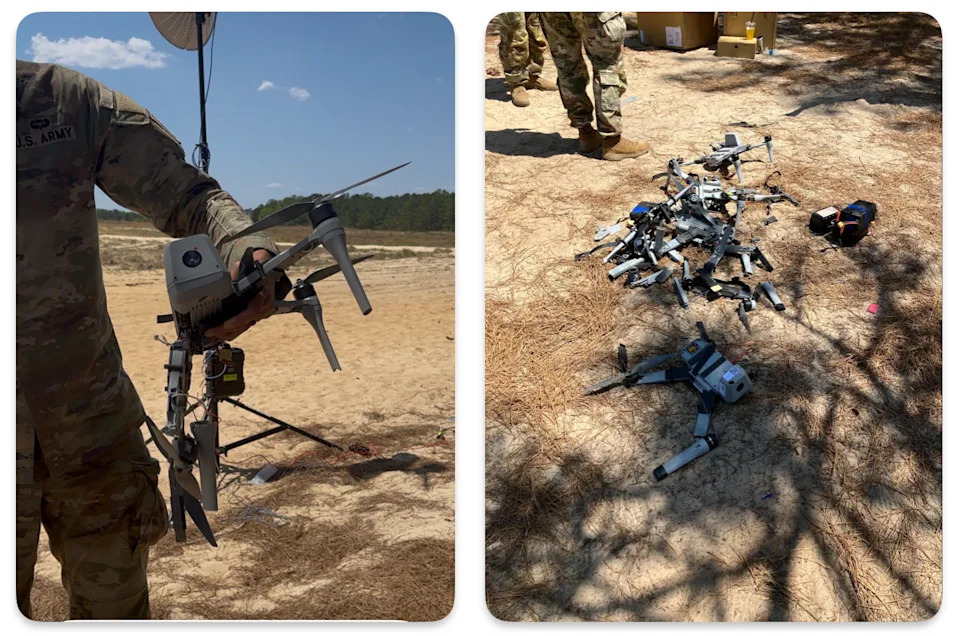
L: A soldier holds a Bumblebee V1 drone damaged after another drone attacked it. R: The pile of Bumblebees damaged after being targeted by other drones in training at Fort Bragg. / Credit: Eleanor Watson / CBS News
Tactics, Teamwork and Results
Demonstrations used three V1s: two acting as interceptors and one as a simulated enemy that hovered as if gathering intelligence. Teams of soldiers coordinated direction, altitude and timing from laptop consoles, then launched staged intercepts in which one drone rammed the target. Some runs missed or produced partial takedowns; damaged aircraft were recovered for analysis and iterative training.
"They pick up the skills necessary to do drone‑on‑drone combat," said Sgt. Maj. Kellen Rowley, senior enlisted adviser for the Pentagon's interagency counter‑drone task force. "I'm not gonna learn it in five minutes, but if I have 40 hours dedicated to learn how to figure this out, they're gonna be an effective operator."
Manufacturer, Cost And Policy
Both Bumblebee variants are produced by Perennial Autonomy, a U.S. defense firm backed by Eric Schmidt. Company specialists attended the training to collect soldier feedback and help refine designs. Pentagon officials are emphasizing small, inexpensive interceptors to avoid rapidly depleting stocks of expensive missile interceptors — a concern heightened during the Iran confrontation.
"There's a cost curve challenge, the offensive drones being used versus what we're using to shoot them down," said Lt. Col. Alex Morse, who manages acquisitions for the task force. "We're going to continue to drive the cost down into the single digits of thousands."
Next Steps And Funding
Training on the V1 is expanding to multiple domestic bases and a U.S. Central Command training center in the Middle East so personnel rotating into the region can receive basic instruction. Officials said the demonstrations were an early phase focused on crew drills and marksmanship; future iterations will add complexity such as electronic jamming and advanced mission scenarios.
The Defense Department's budget request for the year includes nearly $75 billion for drone and counter‑drone programs — described by the Pentagon comptroller as the largest single investment in this area in U.S. history.
Help us improve.