California has asked a court to stop Sable Offshore Corp. from using a pipeline that crosses 4 miles of Gaviota State Park after the federal government ordered offshore drilling near Santa Barbara to resume under the Defense Production Act. The pipeline, idle since a 2015 rupture that caused a massive spill, has produced more than 1 million barrels since restarting, according to the company. State officials and experts argue the federal rationale is overstated, and the case now tests whether wartime emergency powers can override state property and environmental laws.
Battle Over Gaviota Pipeline: California Sues After Federal Order Forces Offshore Drilling Restart
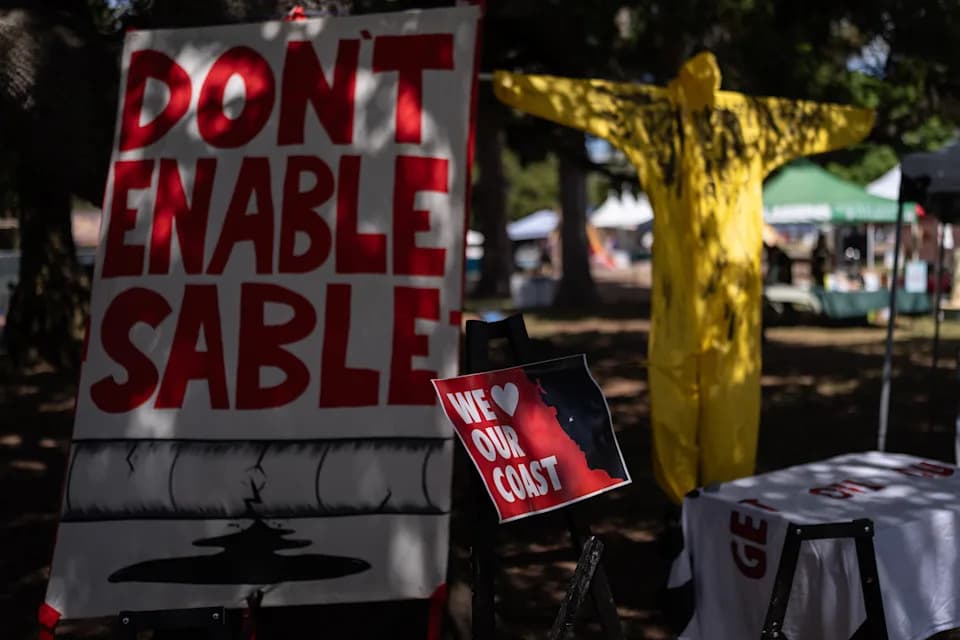
Signs opposing Sable Offshore Corp.'s offshore oil operations are displayed at the Santa Barbara Earth Day Festival in Santa Barbara, Calif., Sunday, April 26, 2026. (AP Photo/Jae C. Hong)(ASSOCIATED PRESS)
Crude oil from deep beneath the Pacific Ocean has begun flowing again through a pipeline that runs roughly 4 miles (6 kilometers) across Gaviota State Park after the federal government ordered drilling off Santa Barbara to resume, calling the move vital to national security. California state officials have called the restart trespassing and asked a Santa Barbara County Superior Court judge to halt use of the pipeline and order its removal.
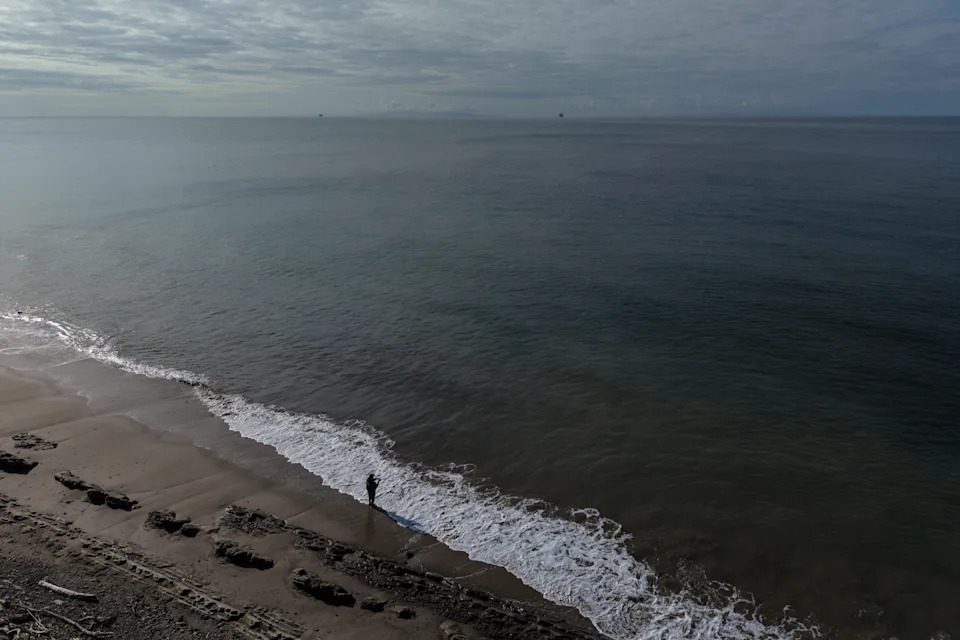
A person casts a fishing line into the ocean at Gaviota State Park in Santa Barbara County, Calif., Sunday, April 26, 2026, as an offshore drilling platform operated by Sable Offshore Corp. is seen in the distance. (AP Photo/Jae C. Hong)(ASSOCIATED PRESS)
Background
The pipeline system, owned by Texas-based Sable Offshore Corp., had been idle since a 2015 rupture that caused one of California’s worst oil spills. That accident fouled about 150 miles (240 kilometers) of coastline from Santa Barbara to Los Angeles, damaged habitat for endangered whales and sea turtles, killed scores of birds and marine mammals, and devastated local fisheries.
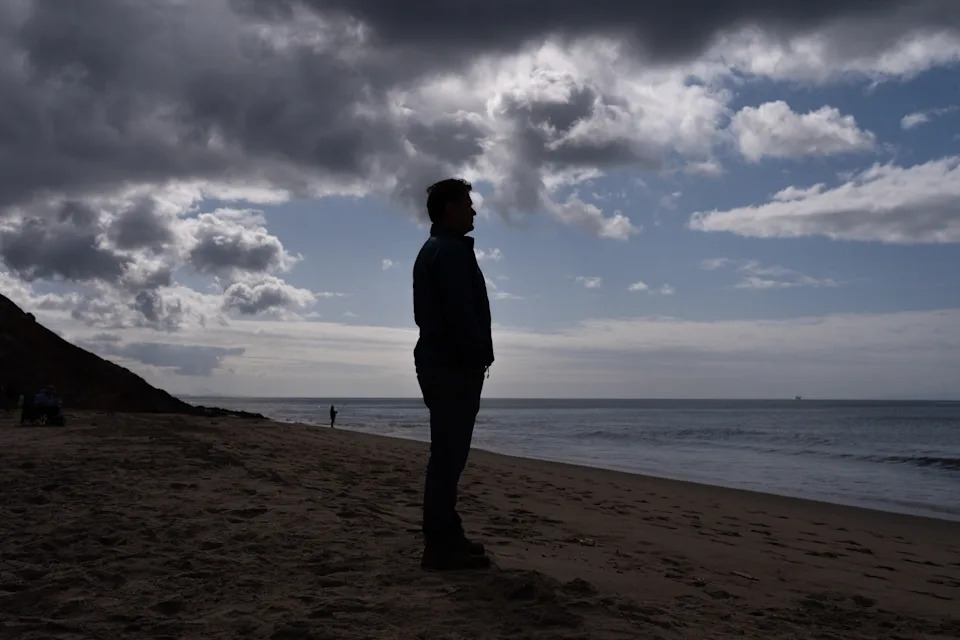
Alex Katz, executive director of the Environmental Defense Center, stands for a photo at Gaviota State Park in Santa Barbara County, Calif., Sunday, April 26, 2026, as an offshore drilling platform operated by Sable Offshore Corp. is seen in the distance. (AP Photo/Jae C. Hong)(ASSOCIATED PRESS)
Federal Intervention
On March 13, Energy Secretary Chris Wright invoked a Cold War–era authority under the Defense Production Act to direct Sable to restart production. The Energy Department framed the move as necessary to bolster domestic oil supplies and help reduce gasoline prices amid the Iran war, noting that more than 60% of the oil refined in California is imported and much transits the Strait of Hormuz.
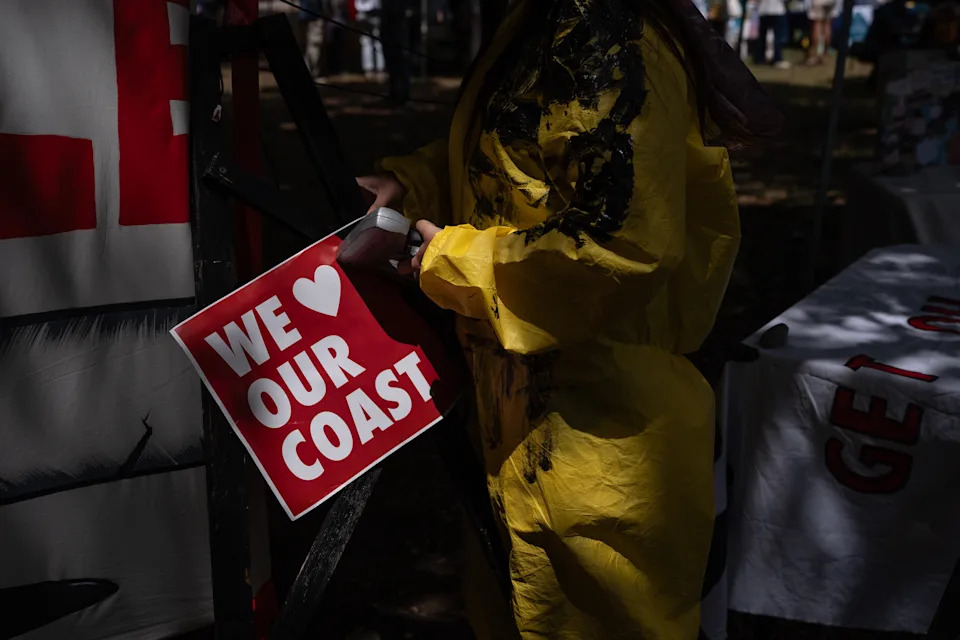
Activist Isabella Pena uses a stapler to post a sign opposing offshore oil operations by Sable Offshore Corp. during the Santa Barbara Earth Day Festival in Santa Barbara, Calif., Sunday, April 26, 2026. (AP Photo/Jae C. Hong)(ASSOCIATED PRESS)
Legal And Local Pushback
State officials say the company’s permission to use state park land expired in 2016 and contend the federal order improperly overrides state property and environmental rules. Santa Barbara County and the state have filed lawsuits and sought injunctions; a state judge previously ordered operations halted until Sable demonstrated compliance with state regulations. The Santa Barbara district attorney has also filed felony charges alleging pollution and harm to wildlife during pipeline repairs.
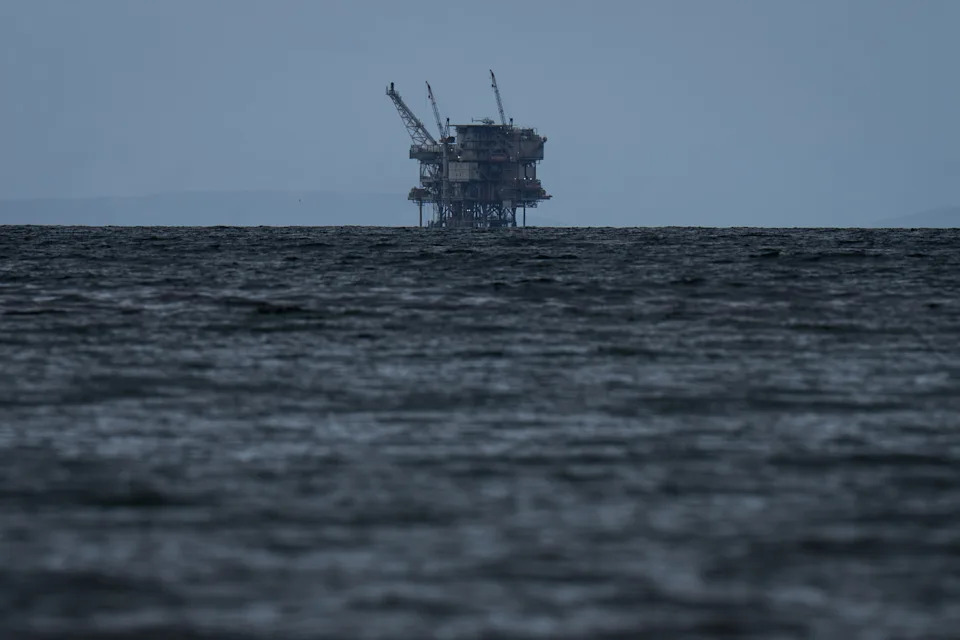
An offshore drilling platform operated by Sable Offshore Corp. is seen from Refugio State Beach near Goleta, Calif., Sunday, April 26, 2026. (AP Photo/Jae C. Hong)(ASSOCIATED PRESS)
“I think it’s an attack not only on our democracy but also the will of the people who live here,”
Claims, Counterclaims And Technical Details
The U.S. Energy Department and Sable say the restart will raise California’s in-state oil production by about 15%, replacing nearly 1.5 million barrels of foreign crude per month. Sable’s chairman and CEO, Jim Flores, said the pipeline had already produced more than 1 million barrels by April 20.
But experts and state officials push back. Paasha Mahdavi, an associate professor at UC Santa Barbara, noted Sable’s crude is heavy and costly to refine and that the estimated 50,000 barrels per day is small on the global scale and unlikely to materially lower U.S. gasoline prices. California Attorney General Rob Bonta has called the federal rationale “completely fabricated” and aimed at benefiting the oil industry.
Broader Implications
Legal scholars say the dispute raises fundamental questions about federal preemption and the limits of wartime or emergency powers. Some say courts are typically reluctant to second-guess federal emergency orders during conflicts, while others argue that using the Defense Production Act to override state regulatory and property rights on state land is unprecedented and may be subject to legal challenge.
Current Status
Santa Barbara County Superior Court Judge Donna Geck has maintained an injunction against full operation and ordered Sable to adhere to state and local regulations, writing that case law “strongly implies that the (Defense Production Act) order, by itself, does not permit the violation of applicable state regulatory law.” The U.S. Department of Justice has asked the court to modify or lift a federal decree created after the 2015 spill that gave the state a role in restarting operations. Sable is pursuing claims for damages and legal relief to limit what it calls regulatory overreach.
Why It Matters: The case tests the tension between federal emergency powers and state environmental and property protections, with implications for offshore drilling policy, coastal communities, and how wartime authorities are used on the home front.
Help us improve.