Santa Barbara County's Board of Supervisors voted 3-2 on Sept. 15 to ban any new onshore oil-drilling permits, while existing wells remain open for now. County staff estimated roughly three years to craft an amortization plan and complete an environmental impact report. The decision drew 53 public speakers and highlighted a UCSB estimate of $54–$81 million in health-related costs from oil production. Opponents warned of job losses, reliance on imported oil, and the loss of a key asphalt producer; legal challenges are expected.
Santa Barbara Bans New Onshore Oil Drilling in 3-2 Vote — Legal Battle Expected
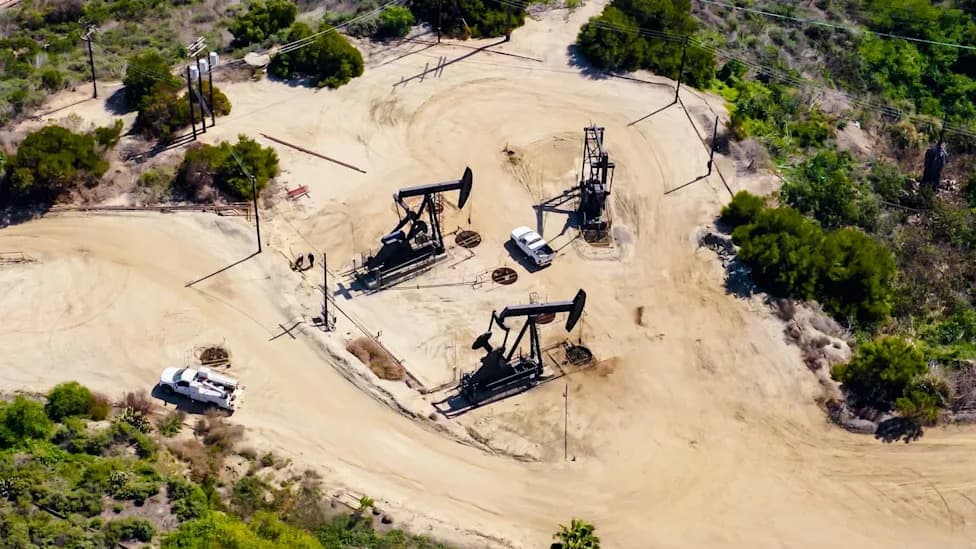
Photo Credit: iStock
Santa Barbara County's Board of Supervisors voted 3-2 on Sept. 15 to prohibit any new onshore oil-drilling permits, a move that could mark the beginning of a local phaseout of onshore oil operations.
The decision does not force the immediate closure of existing wells. County staff told supervisors they would need roughly three years to design an appropriate amortization plan — a phased timeline to end current operations — and to complete a required environmental impact report (EIR).
New onshore drilling in the county had been effectively dormant for years: no new proposals have been approved since 2014, and remaining production is concentrated in the North County. The Board formalized that status quo with a narrow 3-2 vote, according to the Santa Barbara Independent.
The split was visible in the chamber: Supervisor Bob Nelson, whose district contains most of the county's oil activity, opposed the ban, while Supervisor Joan Hartmann supported it as part of a broader effort to wind down the industry.
Public Reaction and Local Impacts
At the Santa Maria hearing, 53 residents signed up to speak. Environmental advocates cited a University of California, Santa Barbara estimate that toxic chemicals released during oil production generate an estimated $54 million to $81 million in annual health-related costs for the county. Opponents stressed economic concerns: workers and business representatives emphasized that oil-industry jobs are well paid, that roughly 70% of the oil used in California is imported, and that one Santa Maria facility under scrutiny is among only four sites in the state that produce asphalt in significant quantities — a potential factor in future road-repair costs.
Legal and Policy Questions
Critics signaled that a legal challenge is likely. They argued the county should have completed environmental review for both the new-drilling ban and any potential phaseout of existing operations together, rather than treating them as separate steps. County leaders framed the initial ban as a legally cautious first step: by stopping new permits now, they aim to reduce immediate legal exposure while preparing for a longer, more complex transition away from onshore oil.
Bottom line: The vote formalizes a long-standing pause on new onshore drilling and launches a potentially years-long process that could reshape local oil production, public health costs, jobs, and infrastructure supply chains — all against the backdrop of likely court challenges.
Broader Context
This decision connects to wider debates in California and beyond: recent state actions expanding county authority over oil-and-gas siting, research linking oil-and-gas pollution to respiratory illness and premature deaths, and disputes in other states over leaking or abandoned wells that pose environmental and property risks.
Help us improve.