About 60 countries met in Santa Marta, Colombia, for a pioneering conference focused on phasing out fossil fuels. Host Irene Velez Torres called the participating nations "a new power," with more than 50 countries representing nearly half the global population. The meeting launched the first scientific panel on the energy transition and will produce a synthesis report to inform COP30 and COP31. Colombia has pledged no new hydrocarbon contracts and said 2025 was the first year renewables (notably solar) generated more energy than coal.
‘A New Power’: Around 60 Nations Gather in Colombia to Fast‑Track Fossil Fuel Phaseout
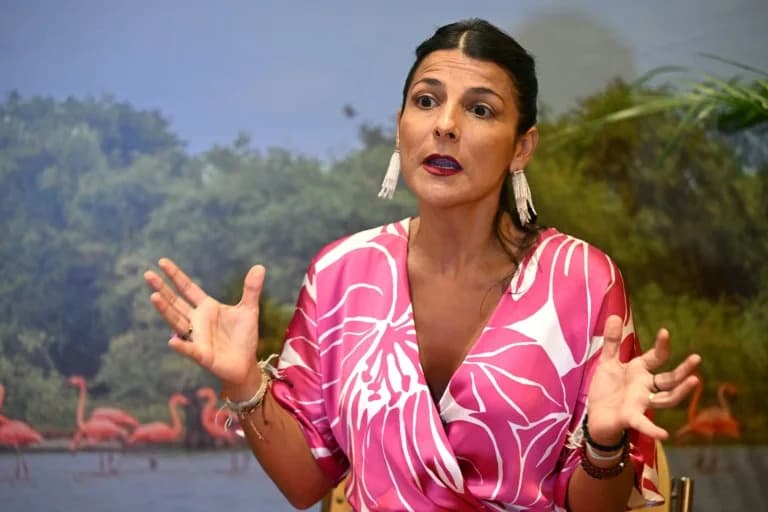
Colombia is hosting the first global conference on the transition away from fossil fuels in the coastal city of Santa Marta. (Raul ARBOLEDA)(Raul ARBOLEDA/AFP/AFP)
Around 60 countries have convened in Colombia for a first‑of‑its‑kind conference aimed at breaking a long‑running impasse in UN climate negotiations: how to phase out the fossil fuels that drive global warming. The high‑level talks took place in the Caribbean port city of Santa Marta on April 28–29.
Colombia's Environment Minister Irene Velez Torres — a former mining and energy minister who is guiding her country’s transition away from coal and oil — hosted the meeting. She described the participating states as "a new power," noting that more than 50 countries present represent almost half of the world’s population and include consumer states, producer states and vulnerable nations from both the Global South and North.
Why This Gathering Matters
The conference convened governments and stakeholders seeking practical pathways to accelerate the move beyond fossil fuels, even as the largest greenhouse‑gas emitters — including the United States, China and Russia — did not attend. Several major fossil‑fuel producing countries did take part, underscoring a shift in some producer positions.
Q&A With Minister Irene Velez Torres
Question: The world's biggest fossil fuel producers are not in Santa Marta. Does their absence threaten the credibility of this event?
Answer: "We can look at it the other way around. When the largest emitters have been present at COP negotiations, they have sometimes pushed to veto discussions about moving beyond fossil fuels. Today it is worth focusing on the more than 50 countries here, representing almost 50 percent of the global population. In that sense, we are a new power."
Question: Would their absence weaken the authority of any agreement from Santa Marta?
Answer: "Not at all. We are not waiting for a single joint declaration or new binding treaties. We are seeking solutions — technical roadmaps, policy tools and practical cooperation — which do not necessarily depend on the immediate participation of the biggest emitters. We hope they will join later."
Question: Does this parallel conference signal frustration with the UN COP process?
Answer: "Multilateralism is under strain, but that does not mean abandoning it. We need a multilateralism more deeply rooted in people and communities, not only in governments or economic lobbying. New alignments and alliances are required to advance more ambitious action."
Question: What concrete outcomes should be expected from this meeting?
Answer: The conference launched the inaugural scientific panel dedicated to the energy transition. That panel will advise cities, regions, countries and coalitions on developing tailored transition roadmaps. Organisers also plan a synthesis report — compiling inputs from governments, civil society, the private sector, unions and other participants — to be submitted as an input to the COP30 and COP31 presidencies as part of a global roadmap for moving away from fossil fuels.
Colombia’s Domestic Balancing Act
Colombia is both a vocal advocate of the clean energy transition and a significant coal and oil producer. Minister Velez Torres said the government has committed to no new hydrocarbon contracts and no expansion of coal mining, while promoting alternatives like food production, tourism and industrialisation.
Notably, 2025 marked two milestones for Colombia: for the first time, remittances and coffee exports together generated more foreign exchange than coal exports, and non‑conventional renewables — particularly solar — supplied more electricity than coal.
What To Watch
The conference is important because it aims to translate diplomatic momentum into actionable roadmaps and scientific guidance on phasing down fossil fuels. Its influence will depend on follow‑through: whether the scientific panel’s recommendations, the synthesis report and newly formed coalitions inform national policies and future COP agendas.
Location: Santa Marta, Colombia • Dates: April 28–29 • Host: Environment Minister Irene Velez Torres
Help us improve.