UC San Diego researchers mapped a neural pathway in mice linking the prefrontal cortex to the ventrolateral periaqueductal gray (vlPAG) that mediates expectation-driven pain relief. Activating this circuit produced about 30–60% of morphine's analgesic effect, and naloxone blocked the response, implicating endogenous opioids. The effect generalized across pain types and pre-conditioning reduced later pain sensitivity. Human studies are needed to confirm clinical relevance.
Your Brain's "Placebo Circuit" Mapped in Mice — Activating It Triggers Natural Painkillers

New research from UC San Diego maps a neural circuit in mice that links expectation-related regions of the brain with the brainstem to produce measurable pain relief — a biological basis for what we call the placebo effect.
What The Study Did
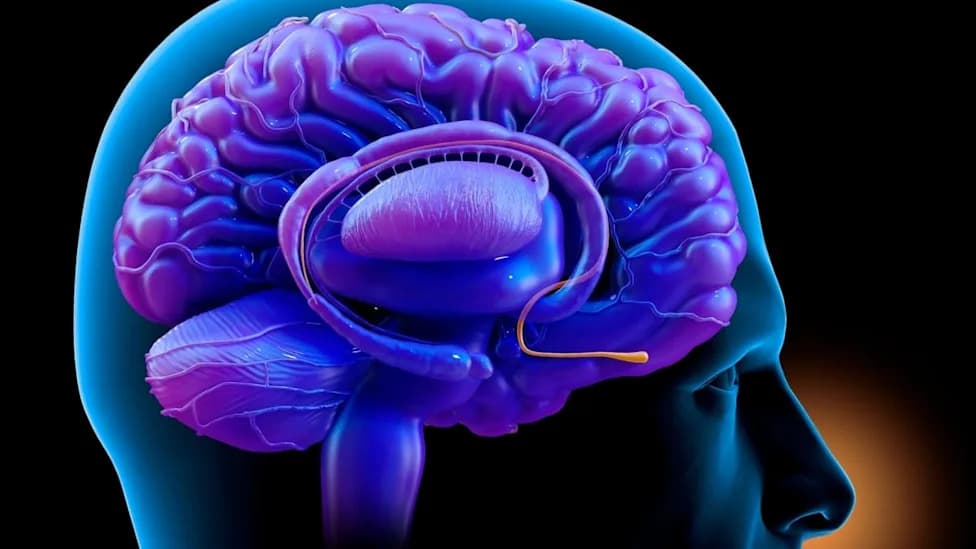
Researchers traced a pathway running from the prefrontal cortex (a region involved in expectation and learning) down to the ventrolateral periaqueductal gray (vlPAG) in the brainstem. They used behavioral conditioning and neural activation techniques in mice to test whether expectation-driven signals through this pathway could reduce pain.
Key Findings
Activation of the pathway produced substantial analgesia. When the pathway was engaged through learned expectation, mice experienced roughly 30–60% of the pain relief typical of morphine in the same tests.
The effect depended on the brain's opioid system. Administering naloxone, an opioid-receptor blocker, abolished the placebo-like relief, indicating that endogenous opioids (the body's natural painkillers) mediated the response.
Relief generalized across pain types. Mice conditioned to expect relief showed reduced sensitivity to different painful stimuli, and conditioning in one context affected responses in others, suggesting the circuit is not strictly pain-modality specific.
Pre-conditioning reduced later pain. Mice trained to expect relief before injury later experienced markedly less pain, pointing to the possibility of nonpharmacological prevention strategies.
Implications
These results reframe pain as an actively regulated signal rather than a purely passive sensation. Expectations, prior experience and learned associations can engage concrete biological mechanisms — specifically, the release of endogenous opioids via a defined neural pathway. The findings lend biological plausibility to therapies that alter expectations or learning (for example, cognitive behavioral therapy, mindfulness, and other mind–body approaches), and suggest potential strategies to complement or reduce reliance on medications.
Caveats and Next Steps
All experiments were performed in mice; direct translation to humans is not yet proven. Important questions remain about whether the same pathway functions identically in people, how durable conditioned effects are, and whether such mechanisms can be harnessed safely and reliably in clinical settings. Further human research is required before drawing clinical conclusions.
Bottom line: The study identifies a learnable brain circuit in mice that can trigger the body's own opioid system to reduce pain — offering a biological explanation for at least part of the placebo effect and a potential target for nonpharmacological pain strategies.
Help us improve.