The U.S. government froze $344 million in cryptocurrency it says was linked to Iran, with stablecoin issuer Tether assisting in the action. Officials cited blockchain analysis showing transactions with Iranian exchanges and wallets tied to the Central Bank of Iran, though CNN has not independently verified those links. Chainalysis estimates Iran’s crypto holdings at $7.8 billion in 2025, and experts say the seizure is meaningful but may have limited effect given Iran’s established sanctions workarounds.
US Freezes $344M in Cryptocurrency Said to Be Linked to Iran; Tether Assisted
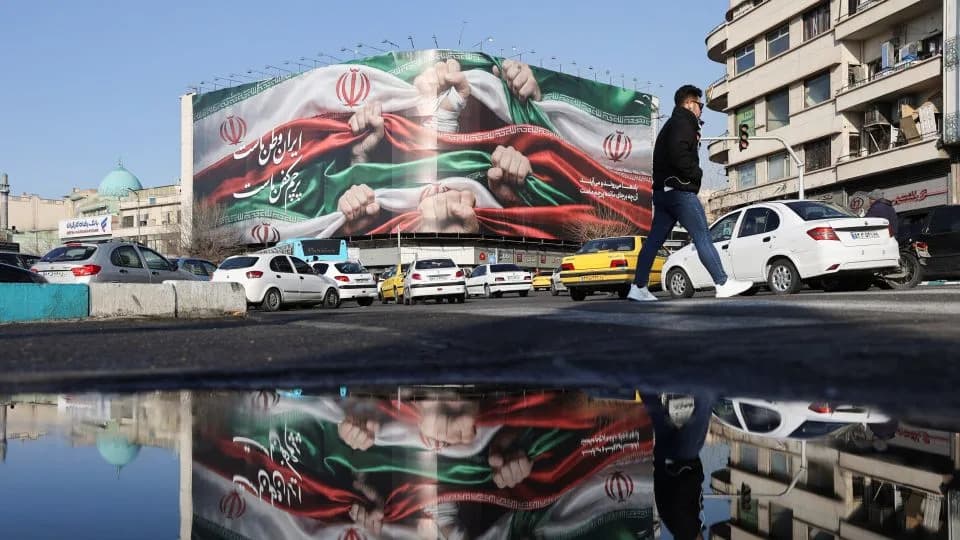
A billboard with a picture of Iran's flag on a building in Tehran, Iran, on January 24, 2026. - Majid Asgaripour/Wana News Agency/Reuters
The United States has frozen $344 million in cryptocurrency that officials say was linked to Iran, intensifying economic pressure on Tehran as diplomatic efforts to secure a ceasefire falter and the global economy feels the fallout.
What Happened
The action, first reported by CNN, targeted digital assets held across two addresses. Tether, a stablecoin issuer and major facilitator of crypto transactions, said it "supported the US government in freezing" the funds after being provided information by multiple U.S. authorities about activity tied to alleged unlawful conduct.
"The Treasury is sanctioning multiple wallets tied to Iran," Treasury Secretary Scott Bessent said in a statement. "We will follow the money that Tehran is desperately attempting to move outside of the country and target all financial lifelines tied to the regime."
Official Claims and Caveats
A U.S. official told CNN that blockchain analysis revealed "material links to the Iranian regime," including confirmed transactions with Iranian exchanges and transfers routed through intermediary addresses that interact with wallets associated with the Central Bank of Iran. CNN has not independently corroborated the specific links between the frozen Tether addresses and Iranian entities.
The Treasury Department said it maintains an active dialogue with U.S. and foreign financial institutions, including digital asset exchanges, as part of efforts to disrupt sanctions-evasion networks.
Context: Crypto and Sanctions Evasion
Heavily sanctioned regimes such as Iran, Russia and North Korea have increasingly turned to cryptocurrencies, which are often less regulated than traditional banking systems, to generate revenue and evade restrictions. Crypto-tracing firm Chainalysis estimates that cryptocurrency holdings in Iran reached $7.8 billion in 2025, with Iran's Islamic Revolutionary Guard Corps (IRGC) accounting for roughly half of on-chain holdings in the last quarter of 2025.
Chainalysis said the frozen addresses showed patterns consistent with other IRGC-linked wallets. "When these wallets were regularly active several years ago, they engaged in frequent, large transfers of up to tens of millions of dollars, largely with other private wallets," the firm told CNN.
Expert Reactions
Analysts described the seizure as meaningful but cautioned it may not dramatically alter Iran's ability to operate under long-standing sanctions. Daniel Tannebaum, senior fellow at the Atlantic Council, said Iran has developed extensive workarounds and often relies on third-country actors to continue trade and military procurement.
"They will use actors that try to stay outside the U.S. banking system," Tannebaum said, noting the regime's longstanding use of crypto-related funds to acquire arms and other support.
Recent Related Incidents
Last year, hackers widely believed to be acting on behalf of or supporting Israel reportedly stole about $90 million from Iran's largest cryptocurrency exchange amid Israeli military actions targeting Iranian facilities.
While the immediate operational impact of the $344 million freeze is unclear, the move underscores growing U.S. efforts to use digital-asset controls and industry cooperation to tighten pressure on entities the government says are bypassing sanctions.
Help us improve.