The pope’s public criticism of the U.S. war in Iran and President Trump’s retaliatory attacks have put many Catholic voters in Bucks County, Pennsylvania, in a difficult political position ahead of the midterms. Local leaders — including Archbishop Nelson Perez and moderate Rep. Brian Fitzpatrick — have defended the pontiff or condemned divisive rhetoric, while voters weigh the war’s political impact. Polls show Catholic opinion on Trump and military action is mixed, with frequent churchgoers more supportive of both.
Bucks County Catholics Torn Between Trump and the Pope Over the Iran War
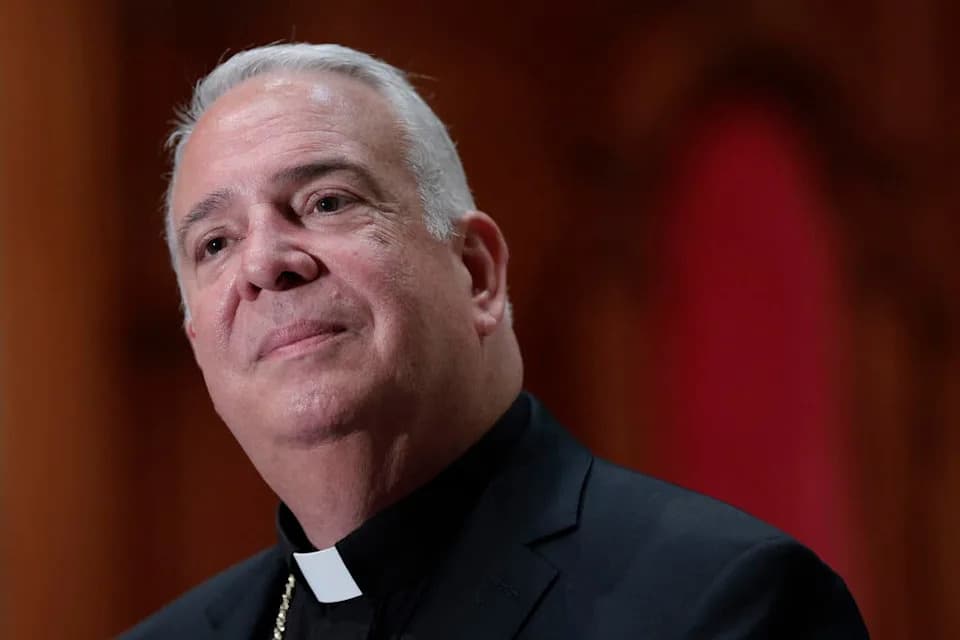
Archbishop Nelson Perez leads Mass and gives communion to members of the community outside the former site of St. Leo's Catholic Church in Philadelphia on June 19, 2021. / Credit: Tyger Williams / AP
Bucks County, Pennsylvania, is dotted with Catholic churches — 33 parishes in all — reflecting that more than a third of county residents identify as Catholic, according to the privately run 2020 U.S. Religion Census.
In 2024, Catholic voters helped swing Bucks County to President Trump — the first time in 36 years a Republican presidential candidate carried the county — a shift that contributed to the GOP’s statewide victory. But the war with Iran, the pope’s increasingly blunt criticism of the conflict, and Mr. Trump’s sharp public rebukes of the pontiff have left many local Catholics watching developments closely during a midterm election year.
Even Philadelphia Archbishop Nelson Perez, who has oversight of churches in Bucks County, publicly defended the pope after Mr. Trump’s attacks, saying in a statement that the pontiff’s plea for peace “powerfully reflects the truth of the gospel.” That message has resonated from the pulpit at the Cathedral of St. Matthew the Apostle in Philadelphia and into parish congregations such as St. Mark’s in Bristol borough.
William Watkins, a Democrat from Bristol who has previously supported GOP Rep. Brian Fitzpatrick, told CBS News after Mass that he would likely vote against the moderate Republican this fall if the U.S. remains at war with Iran on Election Day.
“I would do it as a protest,” Watkins said. “Not that I think he's not a good candidate. I just think that the policy of the Republican Party right now is too one-sided.”
Since 2019, most of Bucks County has been in Pennsylvania’s First Congressional District. The county’s southern towns are more working-class than its northern areas and carry a strong streak of independence.
Fitzpatrick secured reelection in 2024 by nearly 13 percentage points, improving on his earlier margins and reinforcing his image as a pragmatic moderate. Yet county-level politics tell a different story: when Fitzpatrick first won his seat, Republicans held nearly all county offices; today, Democrats occupy 11 of the county’s 12 seats.
Local tensions escalated after the pope criticized the U.S. military campaign in Iran and the president responded with personal attacks on the pontiff. Mr. Trump’s comments included calling the pope "weak on crime" and "very liberal," and saying he was not "doing a very good job," prompting swift rebuke by some local leaders.
Rep. Brian Fitzpatrick condemned the president’s rhetoric about the pope as “disgraceful” and “plainly sacrilegious,” saying elected officials should avoid divisive language aimed at religious leaders.
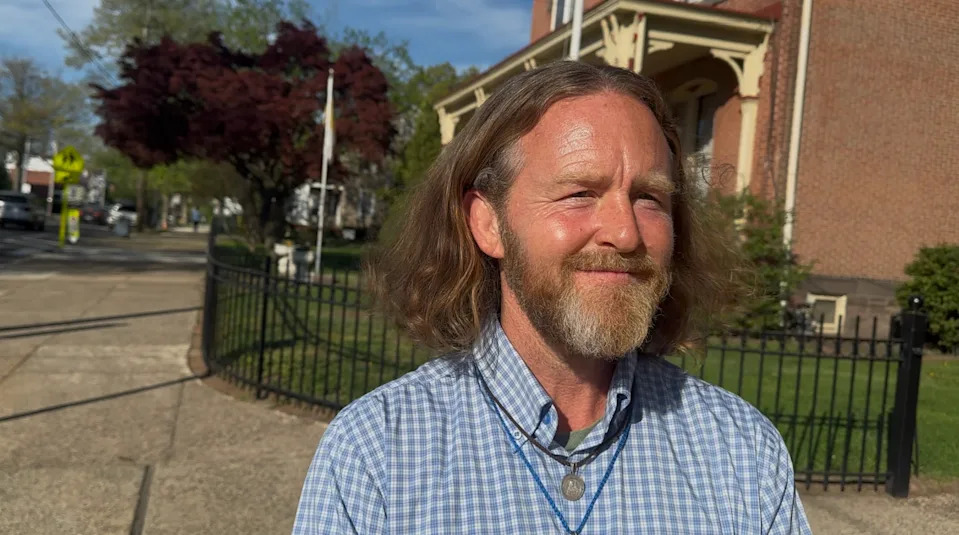
Dennis McGee Jr. in Bristol Township, Pennsylvania. / Credit: Zak Hudak
“I am not a fan of any divisive rhetoric ever, particularly when it's targeted at any religious leader,” Fitzpatrick told CBS News. “The pope is one of many religious leaders who's trying to bring world peace and solve world hunger and see the humanity and dignity of every human being. That's somebody we should hold in high esteem.”
For Pat Balcer, a Catholic Republican in Bristol Township who has never supported Mr. Trump, Fitzpatrick’s stance underscores why he continues to back the congressman.
“Let the pope have his say. The pope is for world peace, and … that's what he was proclaiming,” Balcer said after Mass. “I like that [Fitzpatrick] crosses the line every once in a while and doesn't stay with the rest of the lemmings.”
Still, the war with Iran may be a more consequential political issue for Fitzpatrick than the president’s sparring with the pope. Polling suggests a majority of Americans oppose the conflict — including many Catholics — and local Democrats argue that votes on war powers matter more than rhetoric.
In March, Fitzpatrick voted against a resolution that would have required U.S. forces to cease hostilities with Iran absent congressional authorization, calling that measure “recklessly over-broad.” Only two House Republicans supported that resolution. Fitzpatrick later introduced his own War Powers resolution in April intended to enforce the War Powers Act of 1973, but that measure had not reached the floor.
Fitzpatrick has occasionally broken with party leadership on major votes, including last summer’s vote on the administration’s signature domestic bill. He says condemning the president’s rhetoric and introducing a War Powers resolution are evidence of his independent approach.
Historical voting patterns in Bucks County show how foreign conflicts can shift political outcomes. Before 2024, the last Republican to carry the county was President George H.W. Bush; in 1992, a year after Operation Desert Storm, Bill Clinton won Pennsylvania. In congressional races, Bucks County elected a Democrat in 2006 after then-Rep. Mike Fitzpatrick voted to fund military operations in Iraq and Afghanistan; Mike Fitzpatrick reclaimed the seat in 2010.
Some voters who were drawn to the GOP by the MAGA movement have reconciled their faith with support for Mr. Trump. A CBS News poll conducted before the pope–Trump feud intensified found 46% of Catholics approved of Mr. Trump’s job performance and 44% supported U.S. military action against Iran. Frequent churchgoers were likelier to back the president and military action.
Dennis McGee Jr., a Bristol Township market researcher and podcaster who became a registered Republican in 2016, said he was motivated by Mr. Trump’s positions and defended the pope’s remarks as non-infallible commentary rather than a doctrinal pronouncement.
Bucks County often functions as a political bellwether. Fitzpatrick and his likely Democratic challenger, Bob Harvie, grew up in the county’s southern region; their childhood parishes sit roughly six miles apart. Because Catholic voters remain a sizable and sometimes decisive bloc in Pennsylvania, tensions over the Iran war and the pope’s criticism could ripple across statewide contests.
“For Republicans, the Catholic vote is pivotal,” said Charlie Gerow, a GOP strategist in Harrisburg. “A lot of Catholic voters are still old-line Democrats, who will vote Republican, particularly in statewide and national elections. So capturing the Catholic vote is very, very important.”
Help us improve.