Recent Senate roll calls have exposed a widening split within the Democratic Party over support for Israel. More than three dozen Democrats backed measures to block certain arms and equipment sales, doubling previous opposition levels and prompting the DNC to create a Middle East Working Group. Critics warn that cutting defensive aid such as Iron Dome could worsen violence and damage Democrats’ general-election prospects; the authors urge balanced debate that preserves U.S.-Israel ties while allowing principled dissent.
Senate Votes Expose a Deepening Democratic Divide Over Israel — And the Political Stakes

As Democrats prepare to reclaim the House and possibly the Senate, recent roll-call votes in the upper chamber offered a revealing snapshot of the party’s shifting foreign-policy posture — and raised questions about both U.S. strategy and Democratic electoral prospects.
What Happened
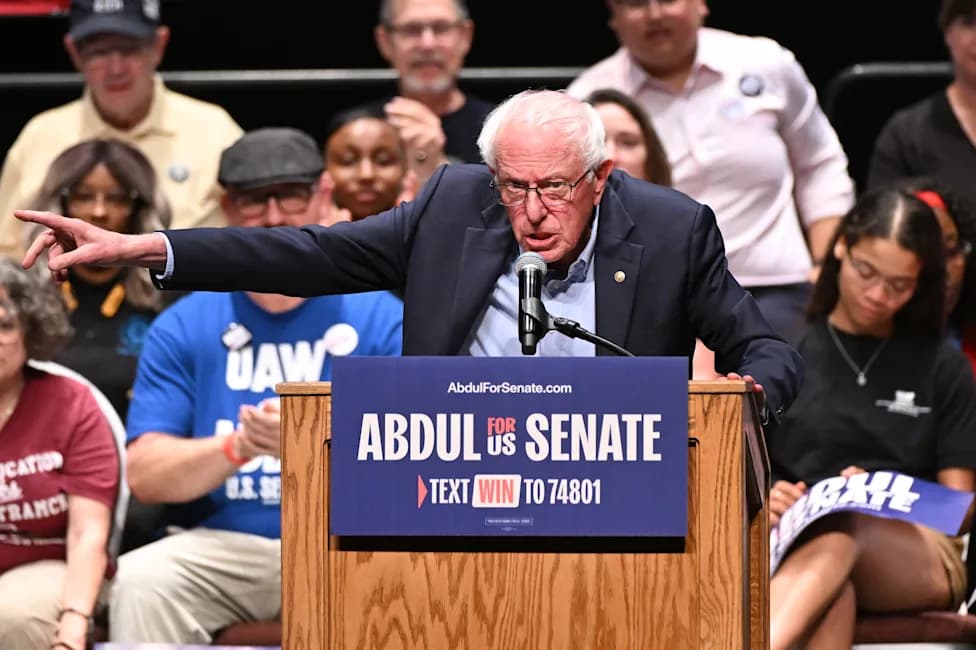
More than three dozen Democratic senators supported Sen. Bernie Sanders’s (I-Vt.) efforts to block sales of munitions and engineering equipment to Israel. Both measures failed, but the number of Democrats voting in favor more than doubled compared with prior years, according to the Associated Press.
What the Shift Means
This change reflects a broader political reality: Israel has become an increasingly polarizing issue in American politics, especially within the Democratic Party. Factional tensions exist in the GOP as well, but the intra-party dynamics among Democrats are especially pronounced — with some activists and candidates treating policy toward Israel as a litmus test for loyalty and credibility.
Progressive lawmakers who once limited criticism to offensive weapons have in some cases broadened their stance to oppose funding for defensive systems such as Iron Dome. At the same time, several moderates who previously opposed such measures reversed course and voted with Sanders this year. The Democratic National Committee has formed a "Middle East Working Group" to try to craft a party-wide approach.
Policy, Politics and Practical Risks
There is ample room for principled critique of specific Israeli policies or actions. But critics — including the authors — caution that denying Israel access to defensive equipment could lead to worse humanitarian outcomes by forcing more destructive responses in future conflicts. The core concern is practical: weakening defensive capabilities may increase civilian casualties and escalate violence.
Electorally, the growing embrace of anti-aid positions by influential activists and candidates could have consequences. Candidates who energize a progressive base by opposing traditional U.S. allies may face difficulties in competitive, general-election environments. Party leaders worry this could weaken Democratic prospects in midterm cycles and in 2028.
Polarizing Voices and Party Tensions
Controversial media figures and outspoken online personalities have amplified tensions. Some progressives have aligned with or amplified individuals whose rhetoric many find extreme, creating internal friction and confounding efforts to present a unified message. Critics argue that elevating such voices deepens divisions and damages the party’s broader appeal.
A Path Forward
Democrats should preserve space for debate and dissent on foreign policy while recognizing the practical and political implications of distancing the party from a long-standing U.S. ally. Navigating this terrain will require careful, strategic messaging and policy trade-offs that balance moral concerns, humanitarian priorities and national-security considerations.
Douglas E. Schoen and Carly Cooperman are pollsters and partners at Schoen Cooperman Research in New York. They are co-authors of the book America: Unite or Die.
Help us improve.