Ukrainian forensic teams examining debris from North Korea’s KN‑23 and KN‑24 missiles found production techniques and workmanship resembling methods from 40–50 years ago. Though the missiles externally resemble modern short‑range systems, they use less efficient propellants, larger engines, and commercial off‑the‑shelf electronics. Those pragmatic choices reduce cost and enable production under sanctions but have led to poorer accuracy and higher failure rates. The case highlights how supply‑chain constraints and engineering trade‑offs shape real‑world systems.
Missiles Built Like 'Old Trucks': How Crude Craftsmanship Keeps Modern North Korean Rockets Operational

Image Credit: adrianne9566/Instagram.
A recent forensic review of missile fragments recovered in Ukraine reveals an unexpected manufacturing philosophy: North Korea’s KN-23 and KN-24 systems look like contemporary short-range ballistic rockets on the outside but are assembled using decades‑old techniques on the inside.
What Ukrainian Forensics Found
Workmanship From Another Era. Ukrainian defence analysts reported soldering, assembly quality, and general production methods that resemble practices used 40–50 years ago rather than modern aerospace manufacturing standards.
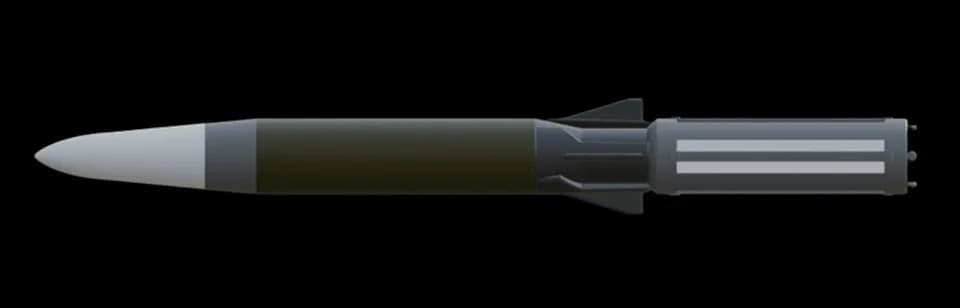
Modern Form, Rudimentary Execution. Externally, the missiles mirror contemporary short‑range ballistic systems — including visual and layout similarities to Russia’s Iskander — but the internal execution favors brute force over efficiency.

Image Credit: dave_7 from Canada - CC BY 2.0, Wikimedia.
Less Efficient Propellants And Oversized Engines. Investigators found propellants that are comparatively energy‑inefficient, requiring larger engines and more fuel to reach performance levels that more refined designs would achieve with smaller, optimized motors.
Commercial Parts And Pragmatic Materials. The debris contained commercial off‑the‑shelf (COTS) electronic components sourced from multiple countries, consistent with engineers adapting to sanctions and constrained supply chains. Materials like graphite were used for thermal protection instead of lighter, more advanced composites.
Operational Tradeoffs
Those pragmatic choices lower costs and simplify production, but they come with consequences. Ukrainian officials reported reduced accuracy and a noticeable failure rate in operational deployments — the inevitable trade‑offs when older methods and lower‑grade components are substituted for purpose‑built solutions.

Image Credit: Donetsk Regional Military Civil Administration - CC BY 4.0,Wikimedia.
Why This Matters Beyond Defense
This analysis matters to engineers and supply‑chain managers across industries. It highlights how constraints — sanctions, limited access to specialized parts, and cost pressures — shape design decisions. The findings echo supply‑chain adaptations seen in the automotive sector during global semiconductor shortages, when manufacturers redesigned systems around available components rather than ideal ones.
In short, the North Korean example shows that functional systems can be produced with legacy techniques, but performance, reliability, and precision typically suffer. The forensic report — cited in Business Insider — is less a story about a specific weapon and more a window into how engineering choices and manufacturing philosophy determine outcomes under pressure.
Source: Business Insider
Help us improve.