Pope Leo XIV will visit the Church of Our Lady of Muxima in Angola, a 16th‑century chapel that later became a hub of the trans‑Atlantic slave trade and, from about 1833, a popular Catholic shrine. The stop carries symbolic weight because recent genealogical research suggests the pope — born Robert Prevost — has Creole ancestry with both Black and white forebears. Angolan clergy and civic leaders say they hope the visit will acknowledge the legacy of slavery and colonialism while pressing the Church to champion social justice amid ongoing concerns about corruption and inequality.
Pope Leo XIV’s Visit to Muxima: A Shrine Built in Slavery’s Shadow and a Pope With Complex Roots
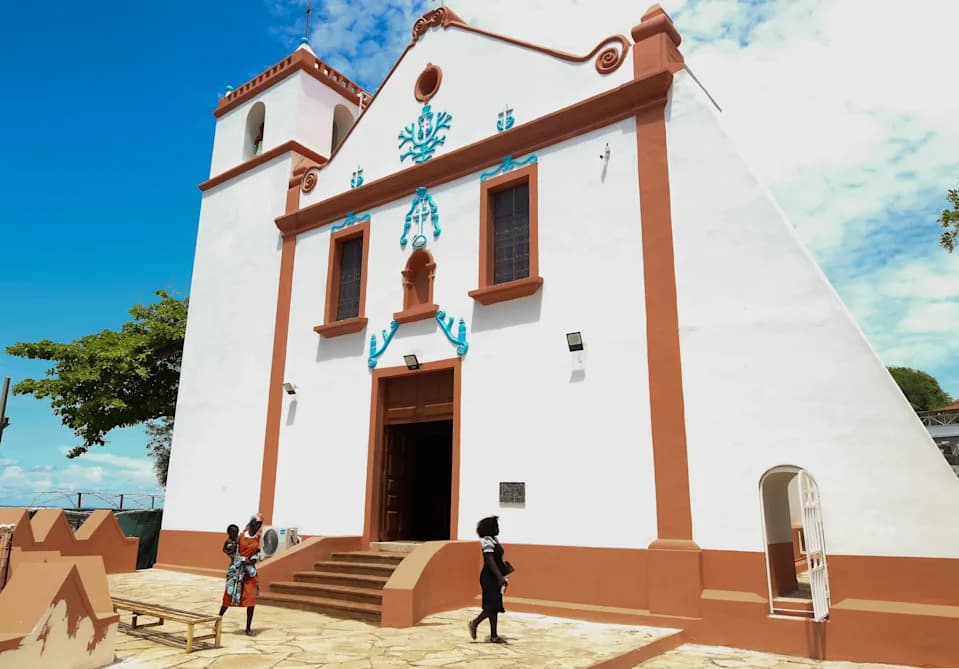
People walk by the Church of Our Lady of Muxima in Muxima, Angola, Saturday, April 11, 2026, which Pope Leo XIV will visit during his 11-day pastoral visit to Africa. (AP Photo)(ASSOCIATED PRESS)
The Church of Our Lady of Muxima, built by Portuguese colonizers in Angola at the end of the 16th century as part of a riverside fortress complex, later became a central site in the trans‑Atlantic slave trade and today stands as a powerful reminder of how Catholicism was entangled with the exploitation of Africa.
Pope Leo XIV plans to stop at the white‑washed chapel overlooking the Kwanza River on Sunday during his Africa tour. The site became a popular pilgrimage destination after believers reported an appearance of the Virgin Mary around 1833, but centuries earlier it was a place where enslaved Africans were baptized by Portuguese priests before being forced to march the final 145 kilometers (90 miles) to Luanda to be loaded onto ships bound for the Americas.
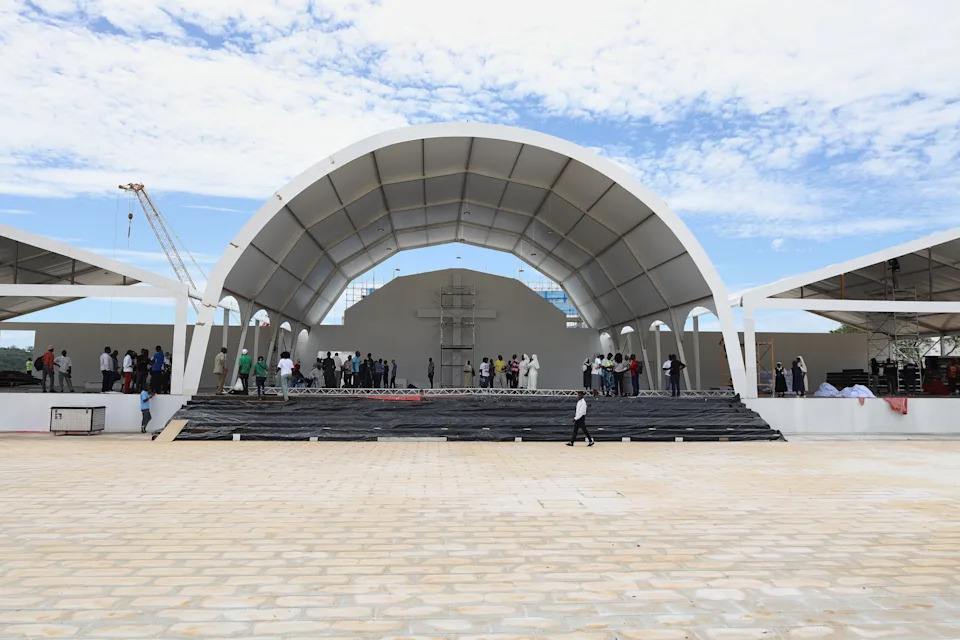
People walk on a stage set by the Church of Our Lady of Muxima in Muxima, Angola, Saturday, April 11, 2026 which Pope Leo XIV will visit during his 11-day pastoral visit to Africa. (AP Photo)(ASSOCIATED PRESS)
Historical Context
Portuguese expansion in the 15th and 16th centuries was facilitated in part by papal directives—such as the mid‑15th‑century bulls Dum Diversas and Romanus Pontifex—that endorsed conquest and the subjugation of non‑Christian peoples. Scholars estimate that more than 5 million people were taken from the territory now called Angola via the trans‑Atlantic slave trade—more than any other single source region and roughly half of the approximately 12.5 million Africans trafficked across the Atlantic.
Symbolism of the Visit
It is not yet clear whether Pope Leo will explicitly address the history of slavery during the visit, as previous popes have done on other African trips. Still, for many Angolans and African Catholics the image of the head of the Catholic Church — an American pope who plans to pray the Rosary on the esplanade beside the fortress chapel — carries strong symbolic weight.
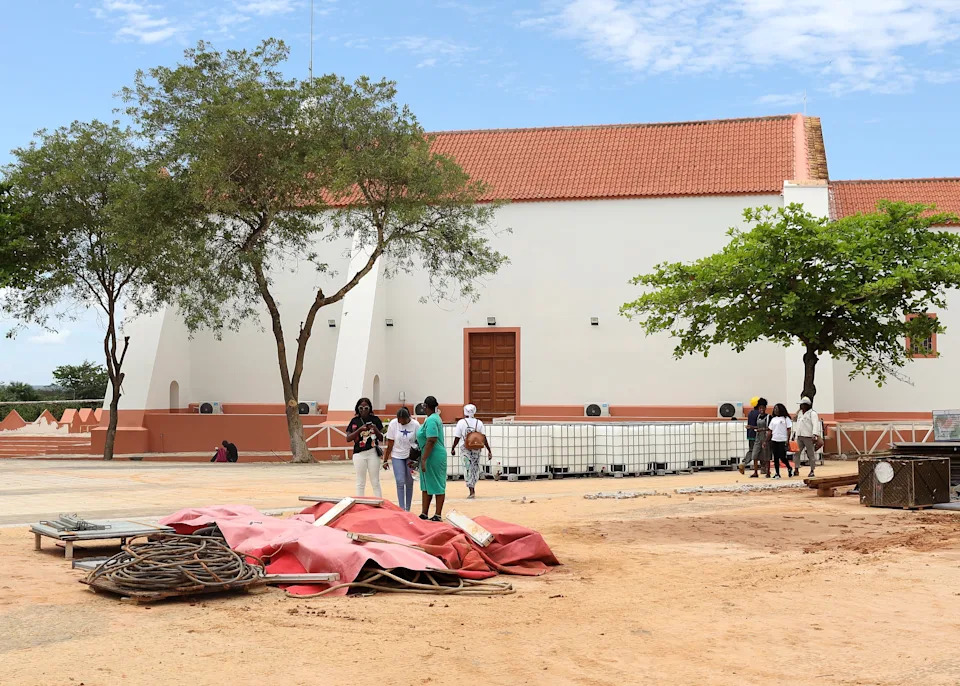
People walk by the Church of Our Lady of Muxima in Muxima, Angola, Saturday, April 11, 2026 which Pope Leo XIV will visit during his 11-day pastoral visit to Africa. (AP Photo)(ASSOCIATED PRESS)
“For me, the pope going there to pray the Rosary ... he will give that place a new significance,” said Rev. Celestino Epalanga of the Catholic Bishops’ Conference of Angola. “We have to give it a new sense. To make this place sacred instead of being a place of evil.”
Questions About Personal Heritage
The visit takes on additional resonance after recent genealogical research reported by a U.S. researcher suggesting that Pope Leo XIV — born Robert Prevost — has Creole ancestry. Census records reportedly describe some of his maternal great‑grandparents in Louisiana as people of color; the research indicates his family tree includes both Black and white ancestors, among them enslaved people and slave owners. Pope Leo has not publicly commented on these findings.
Historians note that some of the earliest enslaved Africans brought to Louisiana were taken from Angola, a link that intensifies the symbolic connections at Muxima for those tracing diasporic histories.
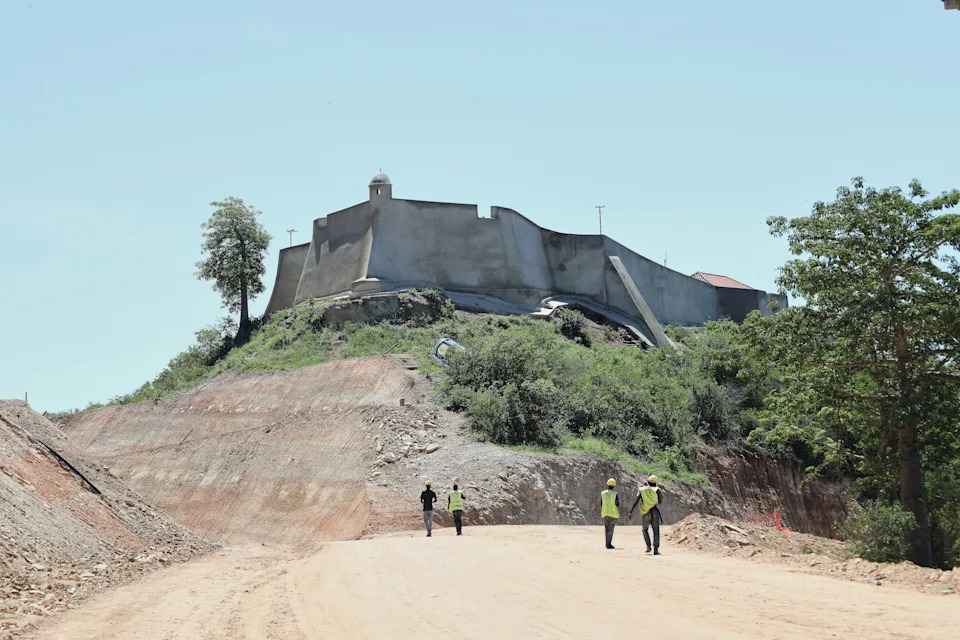
Workers walk by the 16th century fortress in Muxima, Angola, Saturday, April 11, 2026. (AP Photo)(ASSOCIATED PRESS)
Church, Politics and Social Justice
Observers say Pope Leo’s background and pastoral record — including work in Chicago, a city with a significant African American population — could help him connect with African Catholics. Scholars and clergy also point to signs the pontiff is elevating African voices within the Vatican, citing recent appointments of African clergy to higher roles.
The Vatican says themes for the trip will include exploitation of natural and human resources, corruption and the challenge of authoritarian regimes. Those concerns echo inside Angola, where decades of Portuguese rule followed by a prolonged civil war left deep wounds: independence came in 1975, and intermittent civil conflict lasted for roughly 27 years, killing hundreds of thousands and destabilizing the country.
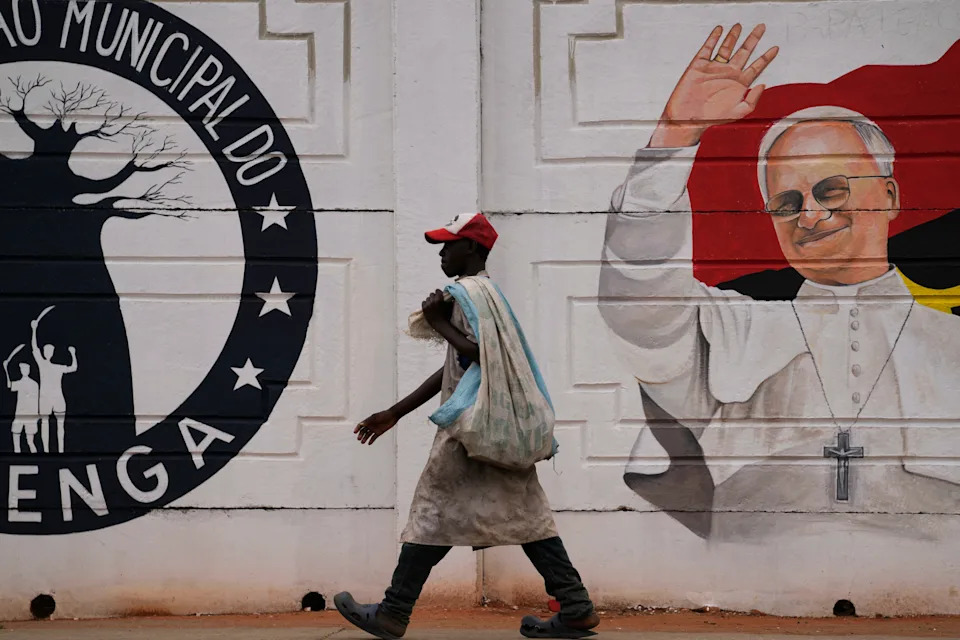
A man walks past a mural of Pope Leo XIV in Luanda, South Africa, Thursday, April 16, 2026. (AP Photo/Themba Hadebe)(ASSOCIATED PRESS)
Opposition figures and civil society activists say Angola—rich in oil, diamonds and other resources—still struggles with authoritarian governance and stark inequality that leaves millions in poverty. Olivio Nkilumbo, an opposition lawmaker, asked the pope to be both a pilgrim for peace and a vocal advocate for social justice.
Local clergy involved in human rights work say they hope the pope’s visit will not only acknowledge painful histories but also encourage the Church to deepen its commitment to the poor and to democratic values. Rev. Epalanga, who serves as executive secretary of the Catholic Commission for Justice and Peace in Angola, said he planned to thank the pope and to urge bishops to prioritize social justice if given a chance to speak.
The visit to Muxima — a place of sorrow, devotion and historical memory — underscores the complicated intersections of faith, colonialism and contemporary politics in Angola and beyond.
Help us improve.