Myanmar's president has reduced Aung San Suu Kyi's 27‑year sentence by one‑sixth as part of a mass amnesty that also freed former president Win Myint. Suu Kyi, 80, has not been seen publicly since her trials, and it remains unclear whether she will be permitted to serve the remainder of her term under house arrest. The United Nations and the United States urged the military government to release all arbitrarily detained people, end violence and pursue inclusive political dialogue.
Myanmar Reduces Aung San Suu Kyi's Sentence; Ex‑President Win Myint Freed in Mass Amnesty
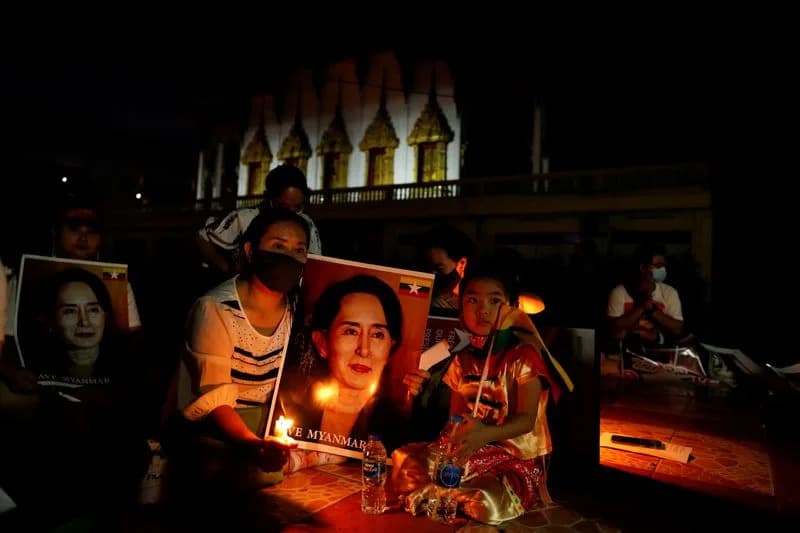
Migrants protesting against the military junta in Myanmar hold a picture of leader Aung San Suu Kyi, during a candlelight vigil at a Buddhist temple in Bangkok, Thailand, March 28, 2021. REUTERS/Jorge Silva
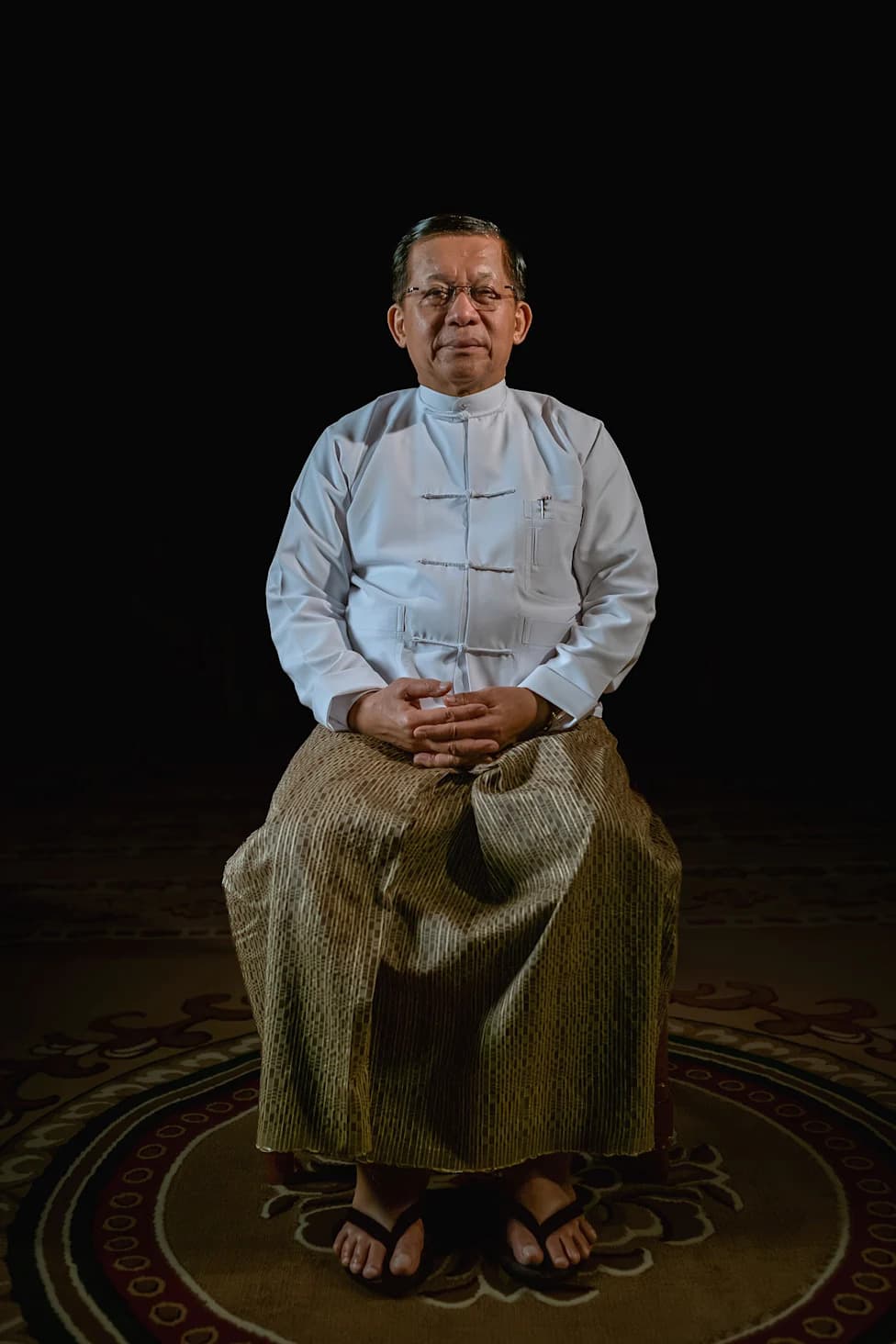
April 17 (Reuters) - Myanmar's new president has shortened the prison term of former leader Aung San Suu Kyi as part of a wide amnesty that also saw the release of ex‑president Win Myint, her lawyer and state media said on Friday.
Suu Kyi, 80, a Nobel Peace Prize laureate, had been serving a 27‑year sentence on a range of charges her supporters say were politically motivated, including incitement, corruption, election fraud and breaches of the state secrets law. Her lawyer said the sentence was reduced by one‑sixth — from 27 years to roughly 22.5 years — but it was not immediately clear whether she would be allowed to serve the remainder under house arrest. Suu Kyi has not been seen in public since her trials and her precise whereabouts remain unknown.
State media reported that President Min Aung Hlaing approved pardons for 4,335 inmates in the latest clemency move, the third such amnesty in six months. Myanmar traditionally grants mass pardons around Independence Day in January and the New Year in April.
Among those released was Win Myint, who served as president from 2018 until the military takeover in 2021. State broadcaster MRTV said he was "granted a pardon and the reduction of his remaining sentences under specified conditions." A spokesperson for the military‑backed administration did not immediately respond to requests for further comment on the terms attached to the releases.
The United Nations said Secretary‑General Antonio Guterres "takes note" of the moves while stressing the need for "meaningful efforts to ensure the swift release of all those arbitrarily detained, including State Counsellor Daw Aung San Suu Kyi, and to create conditions conducive to a credible political process." Guterres' office emphasized that a viable political solution requires an immediate halt to violence and a genuine commitment to inclusive dialogue.
The United States welcomed Win Myint's release but urged the military government to free all unjustly detained individuals, including Suu Kyi. A State Department spokesperson also called on Burma's military and other armed groups to cease violence harming civilians, ensure unhindered humanitarian access, and pursue meaningful negotiations to end the crisis.
The 2021 coup, led by Min Aung Hlaing, ousted the elected government of Win Myint and Aung San Suu Kyi and plunged Myanmar into a nationwide conflict that continues to this day. Min Aung Hlaing was formally elected president on April 3 following contested polls held in December and January that critics and many Western governments described as neither free nor fair.
What Remains Unclear: Officials have not disclosed whether sentence reductions will allow supervised release or house arrest for political detainees, or the specific conditions attached to individual pardons.
Help us improve.