NSTM‑3 (April 14, 2026) makes a major federal commitment to fission surface power and nuclear electric propulsion with firm timelines and contracting rules, but it offers no clear programmatic path for nuclear thermal propulsion (NTP). NTP uniquely combines high thrust and high specific impulse, enabling very fast lunar and Mars transits that matter for crew safety and responsive cislunar defense. The memo’s focus on shared reactor components without dedicated NTP funding risks eroding the industrial base and losing a critical capability; the article recommends separate NTP funding, inclusion in DoD’s use‑case analysis, accelerated fuel and reactor development, and protection of the workforce.
Don't Leave Nuclear Thermal Propulsion Off the Table: Completing America's Space Nuclear Strategy
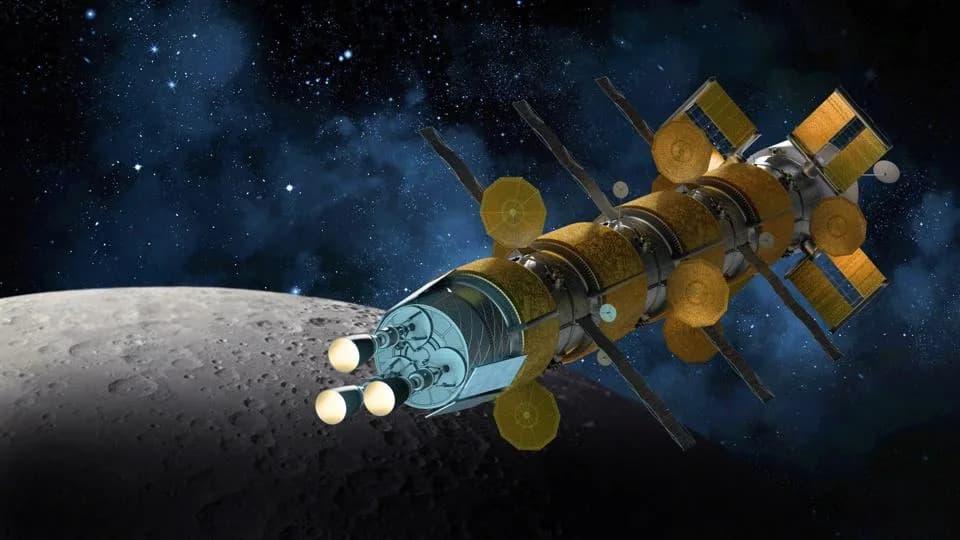
A fast nuclear thermal propelled spacecraft enters lunar orbit.NASA
The White House memorandum NSTM-3 (April 14, 2026) is the most far‑reaching U.S. commitment to space nuclear capability in decades. It directs NASA and the Department of Defense (DoD) to run parallel reactor competitions for fission surface power (FSP) and nuclear electric propulsion (NEP), sets ambitious timelines (FSP ready to launch to the Moon by 2030; an in‑space reactor available for DoD use by 2031), requires firm‑fixed‑price contracts with milestone payments, and leverages the Energy Department’s national laboratory infrastructure for fueling, testing, and safety analysis. Combined with NASA’s SR‑1 Freedom NEP plan for Mars (December 2028) and recent executive directives on space superiority, NSTM‑3 is a genuine inflection point.
There is, however, a conspicuous strategic omission: nuclear thermal propulsion (NTP). NSTM‑3 funds many "common" nuclear elements—shielding, reactor controls, radiation‑hard electronics—but provides no concrete programmatic path to build a flight‑ready NTP engine. That gap matters for crewed exploration, logistics, and national security because NTP uniquely combines high thrust with high specific impulse, enabling much faster transit times than either chemical rockets or low‑thrust NEP.
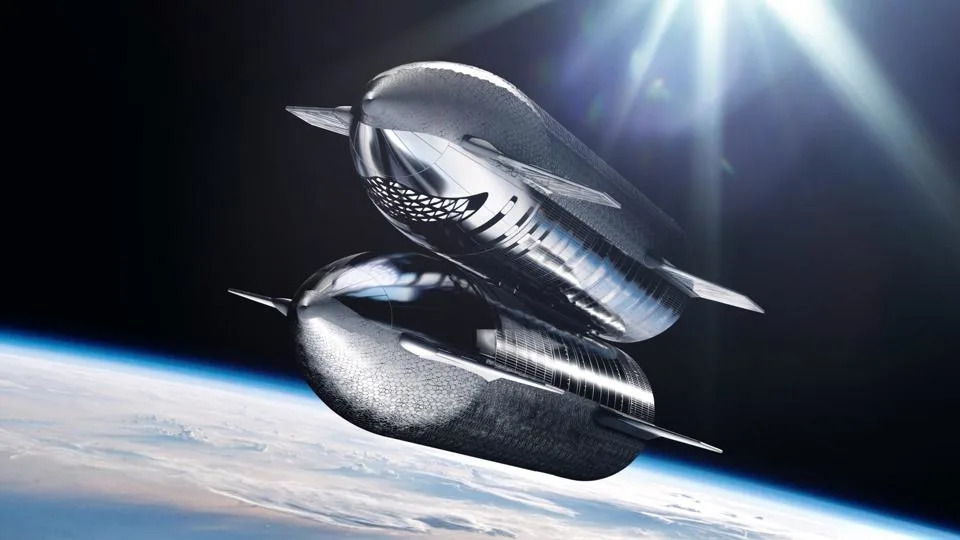
Two Starships mate and refuel in low Earth orbit.SpaceX
What Makes NTP Distinct
NTP heats a propellant (typically hydrogen) with a nuclear reactor to achieve exhaust temperatures and specific impulses well above chemical rockets while producing substantially higher thrust than electric systems. In practical terms, that can translate to transit times as short as a day to lunar orbit and 60–90 days to Mars—reductions with direct operational benefits: lower radiation exposure and reduced physiologic degradation for crews, and the rapid maneuvering essential for responsive cislunar defense.
Why “Cheap Launch” Doesn’t Make NTP Obsolete
One argument for deferring NTP is falling launch costs: if propellant can be lofted cheaply (for example aboard Starship), brute‑force chemical architectures become more plausible. But the operational plan for a lunar Starship landing highlights the flaw: enabling a single lunar landing can require a depot and many tanker flights (estimates range from ~10–16 refuels), each involving autonomous rendezvous and cryogenic transfer—multiple discrete risk points and high campaign overhead.
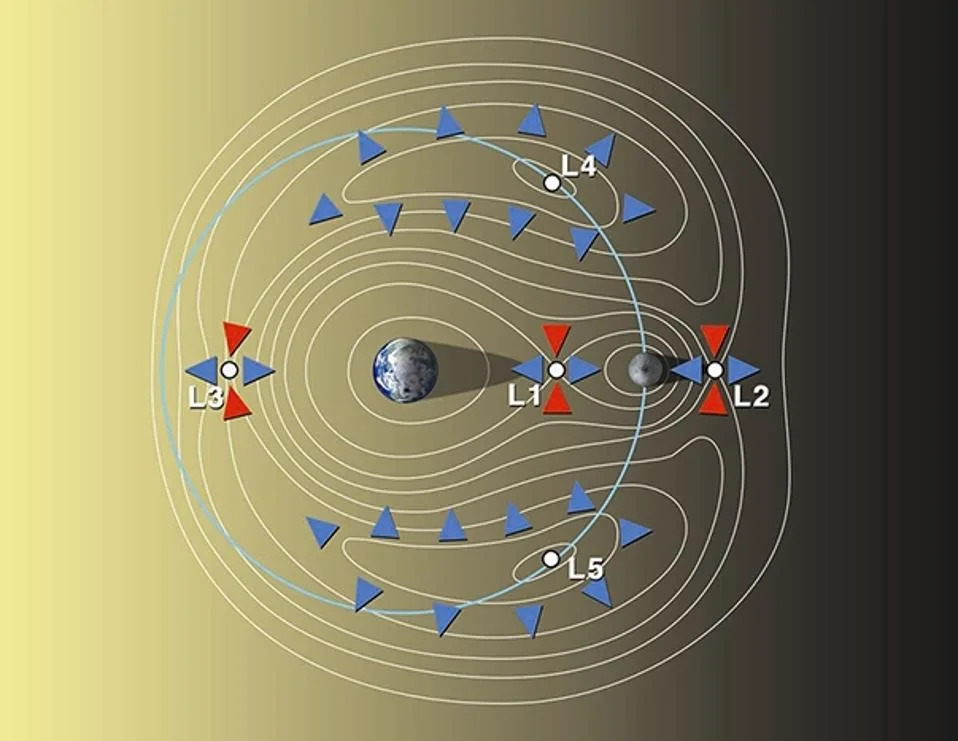
The five Earth-Moon Lagrange points (L1-5), not to scale.A Lunar L2-Farside Exploration and Science Mission Concept, Burns et. al.
By contrast, a reusable NTP transfer stage can dramatically shorten and simplify logistics. With roughly double the propellant efficiency of chemical upper stages and far higher thrust than NEP, an NTP tug can pick up payloads and propellant in LEO, ferry them to lunar orbit, and return for repeat missions with far fewer risky rendezvous. Cheap launch and high flight cadence actually strengthen NTP’s economics: the more missions there are, the more a reusable NTP vehicle can amortize its costs and drive mid‑leg prices toward low LEO access costs.
Defense Needs Responsive Maneuver
NSTM‑3 asks DoD to develop a mid‑power (20 kW+) in‑space reactor and to study operationally relevant use cases. If that analysis considers only electric power and low‑thrust NEP, it risks missing a key capability gap. Defense missions in cislunar space—inspection, logistics, rapid repositioning, and future maneuver warfare—require transit times measured in hours or days. NEP’s low thrust means many defense scenarios would be impractical; NTP provides a distinct and operationally relevant option.
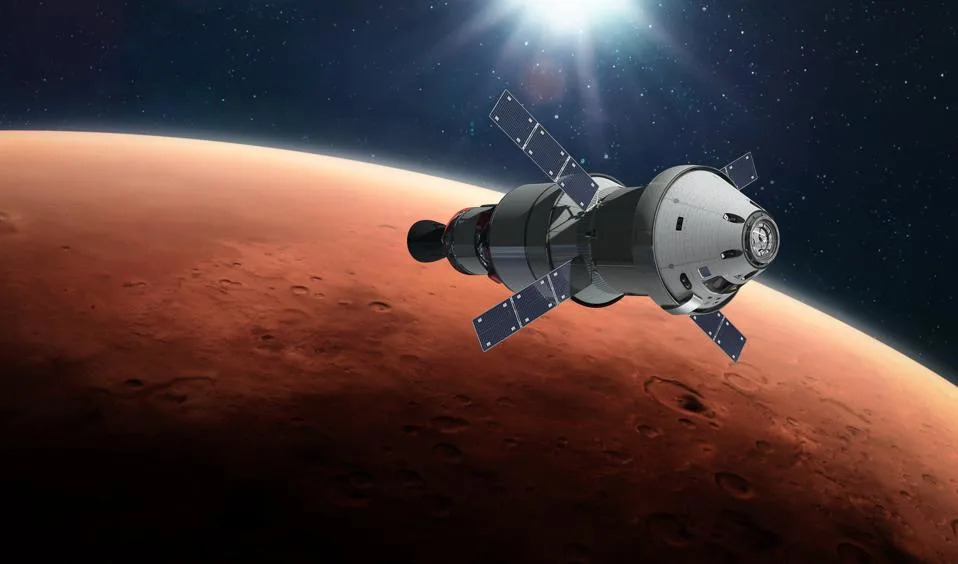
Spaceship on orbit of red planet Mars. Expedition and colonization of other worlds. Outer space and stars on background. Elements of this image furnished by NASA (url:https://mars.nasa.gov/internal_resources/647 https://www.nasa.gov/sites/default/files/styles/image_card_4x3_ratio/public/images/719829main_Orion_Arrays_02_full.jpg)getty
Crew Safety and Mars Transit Times
Galactic cosmic rays and cumulative radiation exposure set practical limits on crewed Mars missions. Chemical travel typically requires ~7–9 months each way on favorable launch windows. NEP, despite excellent efficiency, cannot produce the impulsive, high‑thrust burns needed for fast crew transfers and would increase time spent in radiation belts and deep space. NTP offers a credible path to shorten transit to months or even weeks, directly improving crew safety and mission viability.
An Intermodal Strategy, Not A Single Mode
The right national approach treats propulsion as intermodal logistics: chemical rockets for the first mile (Earth surface to LEO), NTP for the middle miles (LEO to cislunar, GEO, and fast Mars transfers), NEP for the long haul (efficient cargo pre‑positioning and outer‑solar‑system missions), and FSP for sustained surface power. NSTM‑3 funds three of these four legs; leaving NTP programmatically underfunded risks a two‑thirds solution when a complete strategy is required.
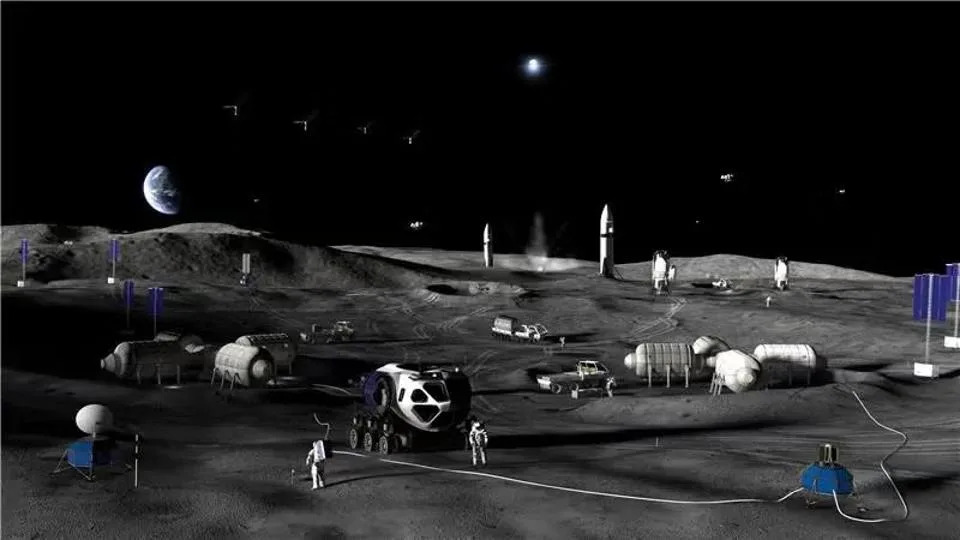
Artist’s concept of NASA’s planned lunar base, showing surface habitats, power and mobility systems that would support a sustained human presence at the Moon’s south pole.NASA
Recommendations
- Fund NTP As A Distinct Program Line: Preserve separate, dedicated funding for NTP engine and fuel‑element development, not just for common systems shared with NEP.
- Include NTP In Use‑Case Analysis: Require DoD’s 90‑day study to model NTP and NEP maneuver timelines across operational scenarios so physics and mission timelines drive decisions.
- Accelerate Fuel And Reactor Development: Direct NASA to fast‑track NTP fuel‑element and reactor integration efforts that Congress has sustained; pursue incremental, low‑cost flight tests to exercise regulatory and interagency processes.
- Protect The Industrial Base: Stabilize funding signals to retain engineers, national labs, and private firms working on NTP materials, fuel elements, and engines.
NSTM‑3 is a landmark document: its approach to FSP, NEP, contracting discipline, and timelines is broadly sound. Extending the same clarity and urgency to NTP would complete the national space nuclear toolkit and preserve the full range of operational options for exploration and defense.
Disclosure: The author is CEO of Dark Fission Space Systems, which is developing nuclear thermal propulsion technology under a U.S. Space Force SBIR contract.
Help us improve.