Benin's finance minister Romuald Wadagni, a former Deloitte partner, is the clear frontrunner in Sunday's presidential election after a decade running outgoing President Patrice Talon's economic program. His campaign highlights large fiscal gains and proposes development hubs, expanded healthcare and local policing in border towns. The vote comes amid escalating jihadist attacks in the north and a December coup attempt that left around 100 suspects detained; the main opposition is effectively sidelined.
Wadagni Runs As Frontrunner In Benin's Presidential Vote Amid Security Crisis
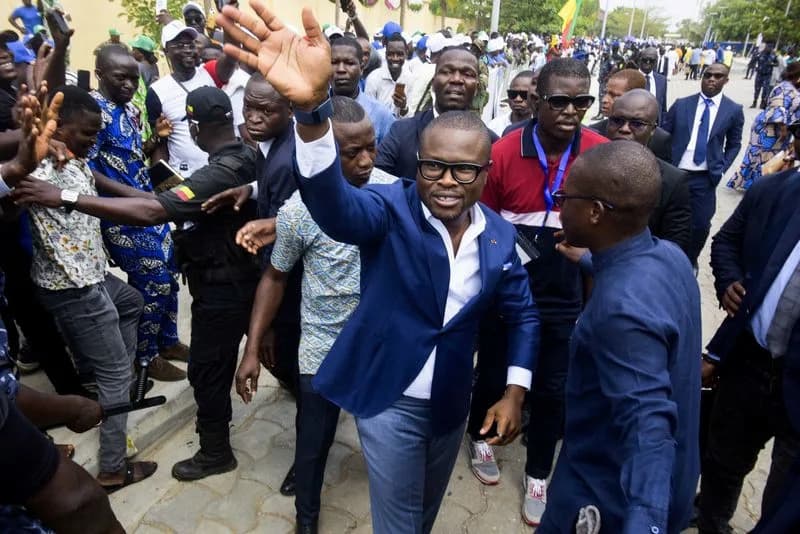
Romuald Wadagni, Benin's finance minister and the ruling party candidate for the presidential election, waves after presenting his platform in Cotonou, Benin March 21, 2026. REUTERS/Charles Placide Tossou
COTONOU, April 8 — Benin's finance minister, Romuald Wadagni, is poised to move from behind-the-scenes technocrat to frontrunner in Sunday's presidential election as the country grapples with rising jihadist violence in the north and a recent attempted coup.
Technocrat Turned Candidate
The 49-year-old former Deloitte executive has spent the last decade implementing the economic agenda of outgoing President Patrice Talon, who cannot run again due to constitutional term limits. Wadagni's campaign highlights measurable fiscal achievements under his stewardship, including a trebling of the national budget and some of Benin's strongest GDP growth rates in more than two decades, helped by cotton exports.
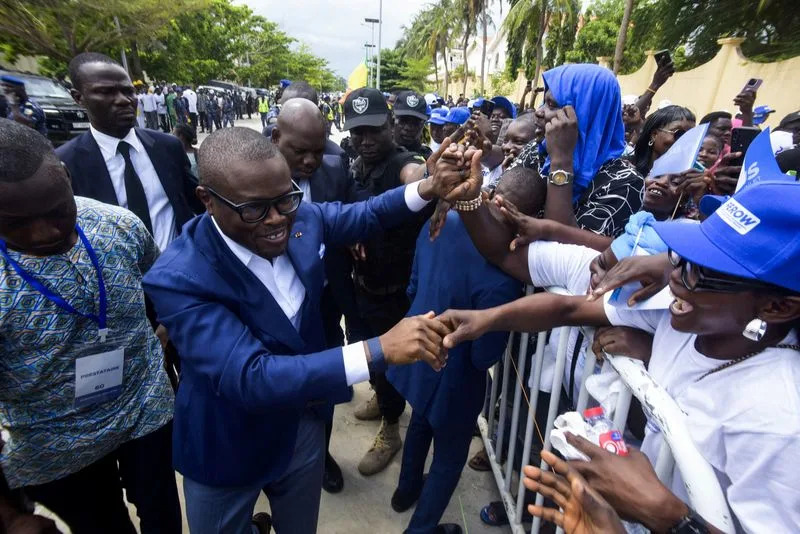
FILE PHOTO: Romuald Wadagni, Benin's finance minister and the ruling party candidate for the presidential election, shakes hands with supporters after presenting his platform in Cotonou, Benin March 21, 2026. REUTERS/Charles Placide Tossou/File Photo
Campaign Platform And Continuity
Wadagni has emphasized continuity with Talon's policies, describing his relationship with the president as "almost like a father-and-son relationship" in an interview with Jeune Afrique. He proposes creating development hubs to spread industrial and tourism investment more evenly across the country, expanding access to healthcare, and introducing municipal police forces in northern border towns to strengthen local security.
"Under President Talon I had the honour of managing one of your most precious assets: your money. If elected president, I will do the job with the same seriousness and dedication," Wadagni told supporters in March.
Security Challenges And A Near-Cancelled Vote
The vote followed a December 7 attempted coup by disaffected soldiers who briefly seized state television and engaged in clashes near the presidential residence. Nigeria carried out airstrikes and ECOWAS deployed elements of a standby force to bolster Talon’s hold on power. Authorities say about 100 people accused of participating in the coup remain in detention awaiting trial.
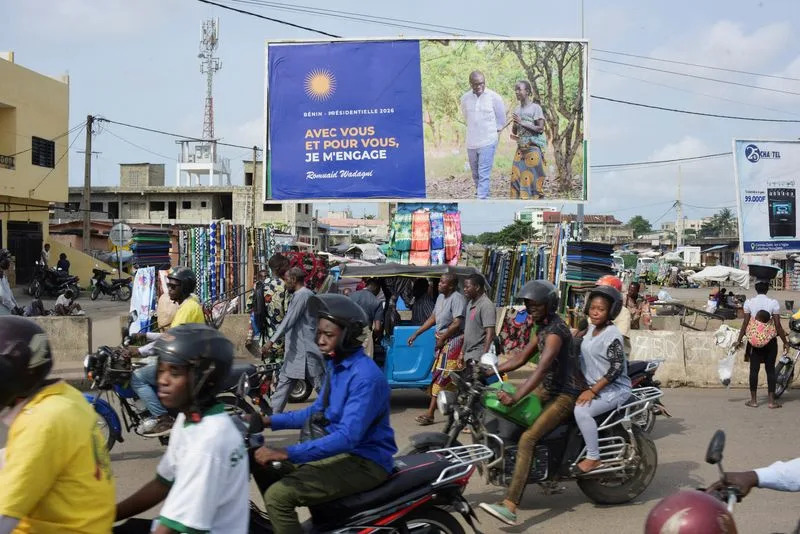
FILE PHOTO: Motorcyclists move next to an electoral campaign billboard of Romuald Wadagni, Benin's finance minister and the ruling party candidate for the presidential election scheduled for April 12, in Cotonou, Benin April 2, 2026. REUTERS/Charles Placide Tossou/File Photo
Benin has been increasingly affected by jihadist groups that have expanded from the central Sahel into coastal West Africa. Fighters linked to al Qaeda and Islamic State have stepped up attacks along the Niger–Benin–Nigeria borderlands. In one deadly incident a year ago, the al Qaeda-linked Jama'at Nusrat al-Islam wal-Muslimin killed 54 Beninese soldiers; a more recent attack last month killed another 15.
"Benin, historically, has never faced a situation like this, with serious threats, with these regular losses in the army," said Gilles Yabi, founder of the West African think tank WATHI.
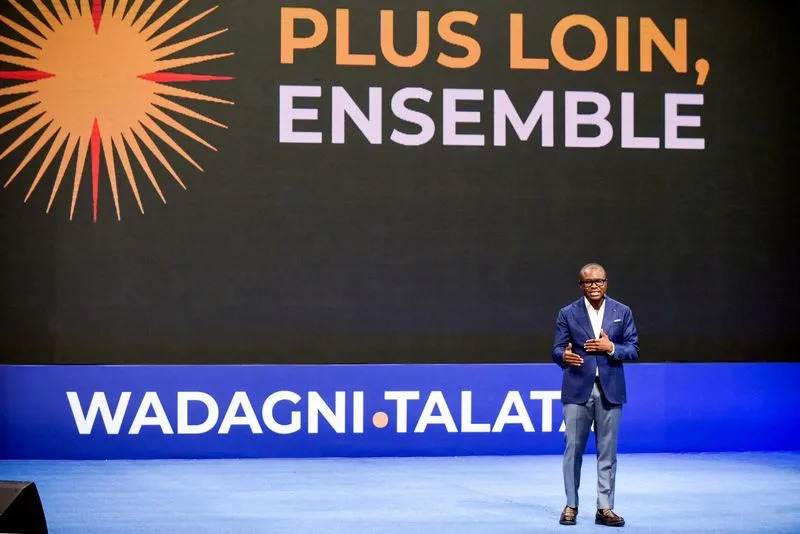
FILE PHOTO: Romuald Wadagni, Benin's finance minister and the ruling party candidate for the presidential election, speaks during the presentation of his platform in Cotonou, Benin March 21, 2026. REUTERS/Charles Placide Tossou/File Photo
Political Landscape
The main opposition has been largely sidelined under Talon's administration. The Democrats failed to secure enough parliamentary sponsors to put forward a candidate and won no seats in January's legislative elections. As a result, Wadagni faces only one opponent on the ballot: Paul Hounkpe of the Cowry Forces for an Emerging Benin, who argues that much of the population has not benefited from the country's GDP growth and high-profile projects.
Analysts warn that persistent security threats could further narrow political space. "There is a risk that the government will be increasingly cracking down on any opposition to make sure they maintain that grip on power," said Nina Wilen, director of the Africa Programme at the Egmont Royal Institute for International Relations.
Reporting: Robbie Corey-Boulet in Dakar and Pulcherie Adjoha in Cotonou. Editing: Hugh Lawson.
Help us improve.