What To Know: The special runoff in Georgia’s 14th Congressional District pits Democrat Shawn Harris against Republican Clay Fuller to fill the seat vacated by Marjorie Taylor Greene. The winner could immediately affect the narrow 217-214 Republican majority in the U.S. House. Key factors include turnout, early-vote reporting from Cobb and Paulding counties, fundraising disparities, and whether conservative voters coalesce behind Fuller.
What to Expect in Georgia’s 14th Congressional Special Runoff: Harris vs. Fuller

FILE - Rep. Marjorie Taylor Greene, R-Ga., speaks during a news conference on the Epstein Files Transparency Act, Nov. 18, 2025, outside the U.S. Capitol in Washington. (AP Photo/Julia Demaree Nikhinson, File)(ASSOCIATED PRESS)
Three months after Republican Marjorie Taylor Greene resigned from Congress following a public dispute with former President Donald Trump, voters in northwest Georgia’s 14th Congressional District will choose someone to finish the remainder of her term. The special runoff is the direct result of a March 10 special election in which no candidate won a majority of the vote.
Who’s On The Ballot
Democrat Shawn Harris, a retired Army brigadier general who ran against Greene in 2024, and Republican Clay Fuller, a district attorney endorsed by former President Trump, advanced as the top two finishers from the 17-candidate March field. Both are also competing in their parties’ May 19 primaries for the full two-year term ahead of the November midterms.
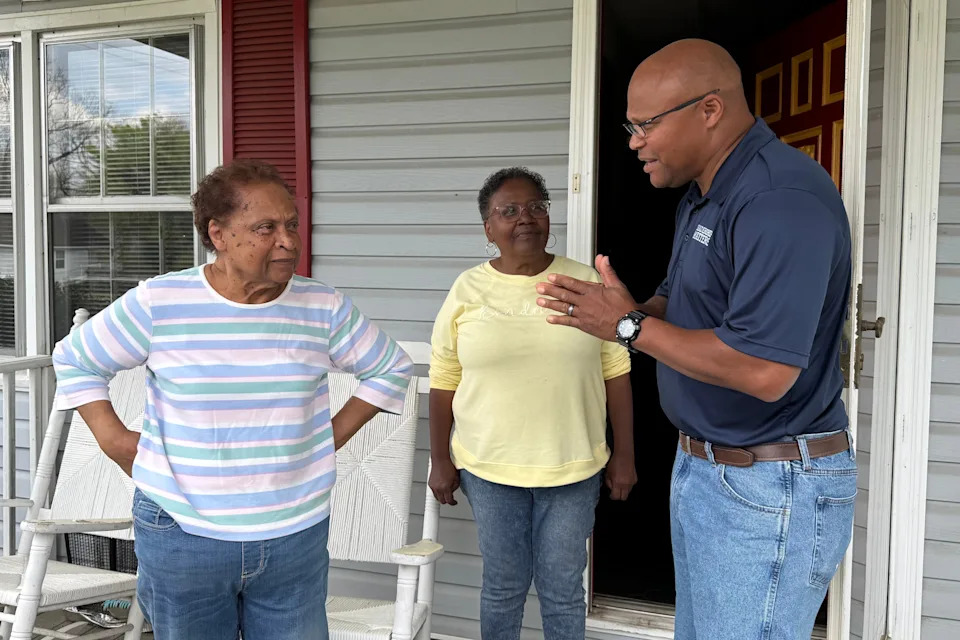
Democratic House candidate Shawn Harris talks with voters in Rome, Ga., on Thursday, March 26, 2026. (AP Photo/Charlotte Kramon)(ASSOCIATED PRESS)
Why This Race Matters
The winner will immediately affect the narrowly divided U.S. House, where Republicans hold a 217-214 edge. One additional seat is held by a former Republican who switched to independent, and two seats remain vacant, making this contest potentially consequential for control of the chamber.
Vote Dynamics And Turnout
About 116,000 votes were cast in the March 10 special election, with roughly 52% cast before Election Day. Nearly 47,000 ballots had already been cast in the runoff as of the Friday before election day. Special elections and runoffs typically draw significantly lower turnout than presidential-year contests, and runoffs often see further declines.

Republican Clay Fuller speaks to supporters after learning he would advance to a runoff election during an election night watch party, Tuesday, March 10, 2026, in Rome, Ga. (AP Photo/Mike Stewart)(ASSOCIATED PRESS)
County And Early-Vote Patterns
The 14th District spans 10 counties. All tend to release absentee and early-vote tallies in the first update of the night; Paulding and Cobb, the district’s two largest counties, often include nearly all early-vote totals in their initial reports. Since 2020, Democrats in the district have been more likely to vote early or by mail, which can produce an early Democratic lead until in-person Election Day ballots are added.
Fundraising And Ground Game
Fundraising has favored Harris: he raised roughly $6.4 million for the special election compared with about $1.3 million for Fuller. As of March 18, Harris reported approximately $745,000 cash on hand versus Fuller’s roughly $53,000. Trump’s endorsement could help Fuller consolidate conservative voters, but turnout and vote consolidation will be decisive.
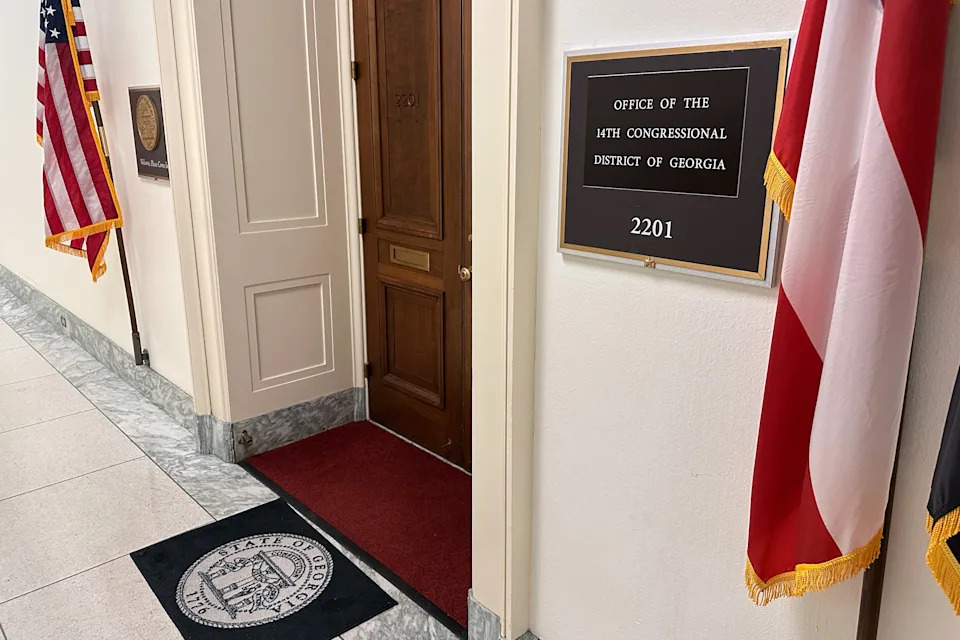
American flags are on display outside the Office of the 14th Congressional District of Georgia in the Rayburn House Office Building, Thursday, March 5, 2026, on Capitol Hill in Washington. The office most recently was occupied for former Rep. Marjorie Taylor Greene, R-Ga., who resigned in January. (AP Photo/Robert Yoon)(ASSOCIATED PRESS)
AP Decision Rules And Recounts
The Associated Press will declare winners only when it determines no plausible scenario allows a trailing candidate to catch up. Georgia has no automatic recount; a losing candidate may request a recount if the margin is less than or equal to 0.5% of the total vote. The AP can call a race that is eligible for recount if the lead is too large for a recount or legal challenge to reverse.
Logistics And Timeline
- Polls Close: 7 p.m. ET.
- Registered Voters: About 571,000 people live in the 14th District, including roughly 524,000 active registrants (Georgia does not register voters by party).
- Last Election Reporting: In the March special, the AP first reported results at 7:05 p.m. ET; the final sizable update that night came from Paulding County at 9:51 p.m. ET.
- Next Regular Election: This seat is next up on the ballot in the 2026 midterm elections (about 210 days from the runoff).
Other Georgia Races
Also on the ballot are special runoffs for State Senate District 53 and State House District 94. Republicans control both chambers of the General Assembly, and those legislative runoffs are not expected to threaten GOP majorities.
Bottom Line: The runoff pits a Democrat who performed strongly in the multi-candidate special and a Trump-backed Republican in a reliably Republican district. County-level early vote reporting, turnout, and how conservative voters consolidate behind Fuller will determine whether the result merely maintains the status quo or tips the balance in an already-tight House.
Help us improve.