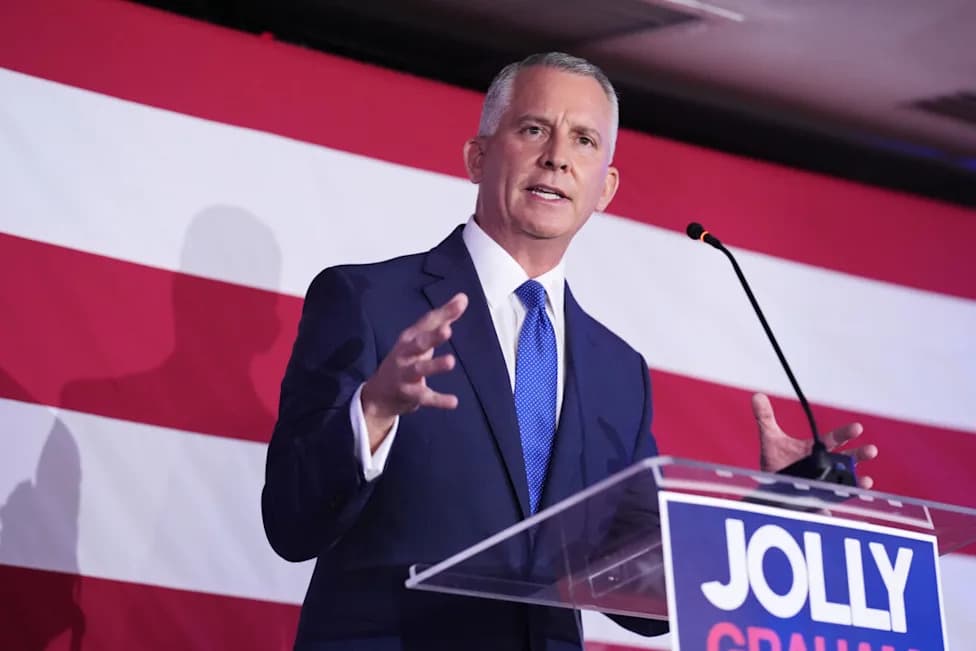
A Democratic flip in Palm Beach’s State House District 87, decided by fewer than 800 votes in a contest with under 29% turnout, has renewed questions about whether migrants from blue states are reshaping Florida politics. Democrats are campaigning on affordability — including Medicaid expansion and insurance reforms — while critics point to fiscal strains in high-spending states as a warning. Despite recent local upsets, Republicans retain a statewide registration advantage of roughly 1.5 million and hold a legislative supermajority.
Are Migrating Democrats Turning Florida Blue? What One Palm Beach Special Election Reveals
Longtime Florida residents who prize the state's low taxes, perceived safety and business-friendly policies say a recent special election felt like a political alarm bell.
Millions relocated to the Sunshine State in recent years — a trend that accelerated during the pandemic — drawn by warm weather, a lighter-touch government and a high quality of life. Among those newcomers are sizable numbers of Democrats leaving New York, New Jersey, Illinois, California and other "blue" states, often citing high taxes and concerns about public safety as reasons for the move.
For years, Floridians (and Texans, who have also absorbed many migrants) watched this influx warily, wondering if and when it might alter the state's political balance. That concern intensified in Palm Beach County when a Democrat flipped State House District 87 in a special election.
What Happened In District 87
District 87 — which includes Mar-a-Lago — elected Democrat Emily Gregory by fewer than 800 votes in a low-turnout race. Turnout was under 29 percent. The seat had been won by a Republican by 19 points in 2024, and President Trump carried the district by 11 points that year, so the result surprised many analysts.
Observers offered several explanations: low Republican turnout, a possible shift among independent voters toward Democrats, and a national pattern in which the out-of-power party often does better in special and off-cycle elections. Mr. Trump urged supporters to back the Republican candidate, Jon Maples, calling him a "very successful businessman and civic leader," but the intervention did not reverse the outcome.
Is This Part Of A Larger Trend?
The Palm Beach flip is not isolated. The New York Times reported that since November 2024 Democrats have won more than two dozen legislative seats in traditionally red and purple states, including Arkansas, New Hampshire and Texas. While Republicans defended some ground, these special-election gains have been notable and raise questions about how parties perform in localized, low-turnout contests.
District 87 sits entirely within Palm Beach County — one of only eight Florida counties where registered Democrats outnumber Republicans. Reports indicate the district has roughly 308,000 registered Democrats, about 13,000 more than Republicans, and about 234,000 independents. If independents leaned Democratic in this cycle, that swing could explain the narrow result.
Policy Messaging: Affordability And Medicaid
Democrats in these contests have emphasized affordability. Gregory highlighted rising housing costs, escalating homeowners' insurance rates and a high share of uninsured residents — about 11 percent. Her proposals include expanding Medicaid and creating state-level catastrophic insurance options.
Critics counter that expanding entitlement programs can carry long-term fiscal costs. The article cites New York as an example: the state’s Medicaid spending has grown substantially and is a major budgetary pressure. Florida’s $117 billion budget remains far smaller than New York State’s roughly $254 billion budget, even though Florida has a larger population — a factor often invoked to explain different tax approaches and fiscal choices.
Outlook: Close Races, But Republicans Still Hold Advantage
Other recent Democratic successes in Florida include a competitive special election in West Tampa and the election of Miami’s first Democratic mayor in nearly 30 years. Still, Republicans hold a statewide registration advantage of roughly 1.5 million and maintain a supermajority in the Florida House, making a near-term statewide partisan realignment unlikely.
Between now and the next major elections, both parties will emphasize pocketbook issues. Democrats are campaigning on affordability and health coverage; Republicans face pressure to deliver policies that reduce cost-of-living pressures and reassure voters on energy and economic stability. Gas prices, which peaked near $5 per gallon at times in recent years, remain a potent political issue tied to those broader concerns.
Bottom line: Local dynamics, low turnout and shifts among independents produced a surprising flip in Palm Beach. While the result is notable, Florida's broader partisan advantages give Republicans a strong structural edge for now.
About the author: Liz Peek is a former partner at Wall Street firm Wertheim and Company.
Help us improve.