The Three Gorges Dam on China’s Yangtze holds about 44 billion tons of water and, according to NASA, has trimmed Earth’s rotation by roughly 0.06 microseconds. Although tiny, this human-driven effect is measurable and far smaller than shifts caused by major earthquakes. A study in Geophysical Research Letters also links large-scale mass redistribution to a near-one-meter shift in the planet’s rotational axis over recent decades. These findings are scientifically important and warrant continued monitoring, even though they do not present an immediate danger to daily life.
This Massive Chinese Dam Has Slightly Altered Earth's Rotation
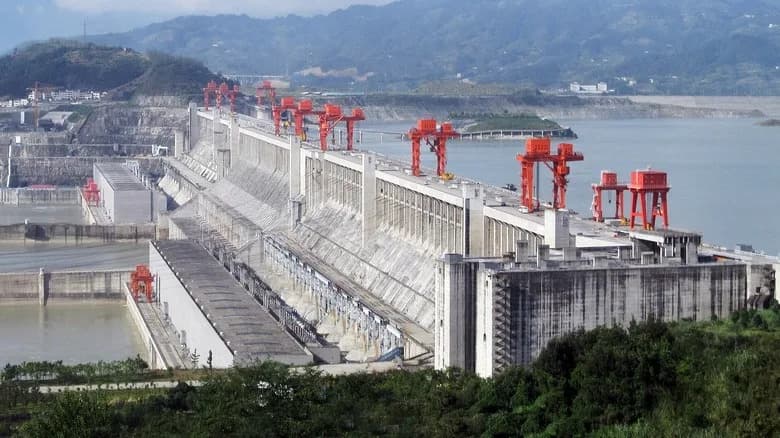
The Three Gorges Dam on the Yangtze River in China. - Le Grand Portage/Wikimedia Commons
Over human history we've built colossal structures, and China's Three Gorges Dam stands out not only for its engineering scale but also for its measurable geophysical effects. Beyond power generation and flood control, the dam's reservoir has subtly changed Earth's rotation and mass distribution.
What the Three Gorges Dam Is
Construction and scale: Built between 1994 and 2006, the dam rises about 607 feet and stretches nearly 1.5 miles across the Yangtze River. The reservoir holds roughly 44 billion tons of water, and the plant's installed capacity is about 22,500 megawatts—roughly three times the capacity of the largest U.S. dam, Grand Coulee.
How a Reservoir Can Change Earth's Spin
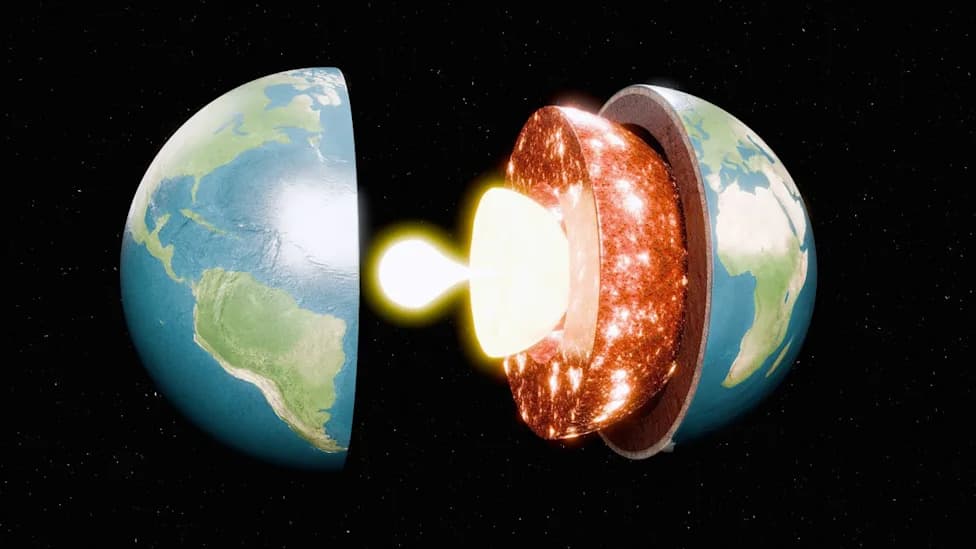
When large amounts of water are concentrated in one place, Earth's moment of inertia changes. The effect is analogous to a figure skater extending or drawing in their arms to control spin speed. NASA researchers estimate that the mass stored behind the Three Gorges Dam has slowed Earth's rotation by about 0.06 microseconds.
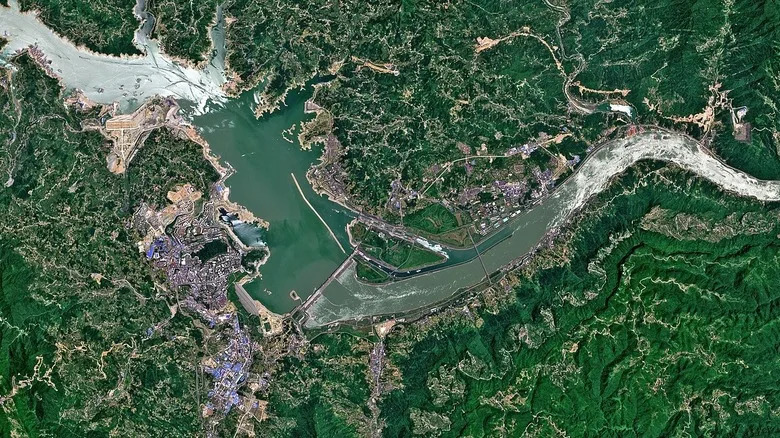
Aerial satellite view of Three Gorges Dam on the Yangtze River in China. - Sentinel Hub/Wikimedia Commons
Putting That Change In Context
That 0.06-microsecond change is extremely small compared with shifts from major natural events. For example, the magnitude-9.1 Tohoku earthquake off Japan in 2011 shortened the length of Earth's day by roughly 1.8 microseconds, and the 2004 Sumatran earthquake shortened it by about 2.68 microseconds. Modern instruments, however, are sensitive enough to detect even these tiny human-driven effects.
Mass Redistribution And The Planet's Axis
Shifting large volumes of water also alters Earth's shape and can contribute to processes sometimes described as true polar wander, in which the planet adjusts its orientation to rebalance mass. A study published in Geophysical Research Letters reports that mass redistribution—including from reservoirs—has nudged the planet's rotational axis by nearly a meter over recent decades. These changes are measurable but not catastrophic for daily life.
Human And Environmental Costs
The Three Gorges project required relocation of about 3.67 million people and affected nearly 55 million more after inundating 13 cities and over 1,300 villages. Numerous archaeological sites and hazardous-waste locations were submerged, underscoring the complex social and environmental trade-offs of mega-infrastructure projects.
Bottom line: The Three Gorges Dam is an engineering marvel whose vast reservoir has produced tiny but detectable changes in Earth's rotation and mass distribution. While these effects are scientifically significant, they pose no immediate threat to everyday life. Continued monitoring will help scientists understand the long-term geophysical consequences of large-scale water storage.
Help us improve.