The U.S. intelligence community says Chinese leaders do not currently plan to invade Taiwan in 2027 and have no fixed timeline for unification. The annual report notes the PLA is making "steady but uneven" progress on capabilities relevant to a Taiwan contingency. It also warns Beijing's coercive pressure could intensify through 2026, particularly aimed at Japan. The assessment comes amid stepped-up Chinese military drills and a recent $11 billion U.S. arms sale to Taiwan.
U.S. Intelligence: China Not Planning Taiwan Invasion in 2027, Prefers Non‑Forceful Unification

Vehicles drive on a street, at New Taipei city, Taiwan December 9, 2024. REUTERS/Ann Wang
WASHINGTON — The U.S. intelligence community said on Wednesday that Chinese leaders do not currently plan to invade Taiwan in 2027 and prefer to achieve control over the island without using military force if possible, according to the agencies' annual global threats report.
The assessment arrives as Beijing has increased pressure on Taiwan with frequent military drills, even as U.S. President Donald Trump has publicly downplayed the likelihood of Chinese military action while he remains in office. The report reiterates that China continues to threaten the use of force as a possible option but does not appear to have a fixed timeline for unification.
Last year the Pentagon said the U.S. military assessed China was preparing to be able to prevail in a conflict over Taiwan by 2027 — the centenary of the People's Liberation Army — and was refining options to seize the island by "brute force" if necessary. The intelligence report restates that the PLA is making "steady but uneven" progress in capabilities relevant to a Taiwan contingency.
"China, despite its threat to use force to compel unification if necessary... prefers to achieve unification without the use of force, if possible," the intelligence agencies said.
China's embassy in Washington and Taiwan's de facto embassy in Washington did not immediately respond to requests for comment.
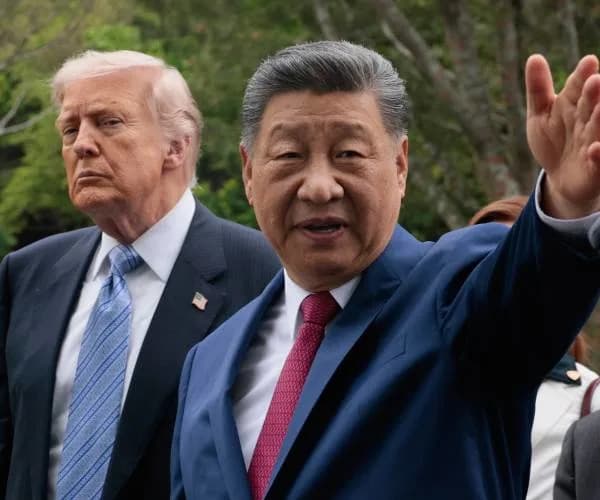
President Trump, who has frequently described a "great relationship" with Chinese leader Xi Jinping, has downplayed the risk posed by Chinese drills near Taiwan and has said privately that Xi told him he would not attack Taiwan while Trump is president — a claim Beijing has not publicly confirmed.
Pressure On Japan
The report also warns that Beijing is applying multidomain coercive pressure and that this pressure will "probably intensify through 2026," aimed at punishing Japan and deterring other countries from signaling involvement in a Taiwan crisis. The U.S. agencies described remarks by Japanese Prime Minister Sanae Takaichi about potential Japanese involvement in a Taiwan contingency as a "significant shift" for Tokyo.
Despite concerns about U.S. rhetoric, the Trump administration approved a record $11 billion arms sale to Taiwan in December, a move that angered Beijing and underscored continued U.S. material support for the island's defense.
What This Means
The intelligence assessment suggests Beijing currently favors political, economic and military coercion short of full-scale invasion to bring Taiwan closer to unification. However, steady improvements in PLA capabilities and continued strategic competition make the situation a key flashpoint in U.S.-China relations and a focus for allies in East Asia.
(Reporting by Michael Martina, Patricia Zengerle and David Brunnstrom; Editing by Franklin Paul and Rod Nickel)
Help us improve.