Charles Bennett and Gilles Brassard won the A.M. Turing Award for inventing BB84, a 1984 quantum key-distribution protocol that uses photons to create encryption keys whose secrecy is guaranteed by the laws of physics. Unlike math-based encryption, BB84 makes eavesdropping detectable because interception disturbs the quantum state. With fears of a future “Q day” when quantum computers could break today’s public-key systems, BB84’s physics-based security is increasingly important — though current hardware limits wide deployment.
How Bennett and Brassard’s BB84 Protocol Changed Cryptography — and Why It Matters Today

Computer scientist Gilles Brassard (left) and physicist Charles Bennett received the A.M. Turing Award on Wednesday for their groundbreaking work on quantum key cryptography. - Getty Images/AP
Decades before email, internet banking, cloud storage and cryptocurrency wallets became commonplace, two researchers devised a method to protect secrets so eavesdroppers could not decipher them. Their 1984 invention relies not on elaborate but theoretically vulnerable mathematical codes, but on the counterintuitive rules of quantum physics that govern particles at the smallest scales.
From Idea to Breakthrough
Charles Bennett, an American physicist and longtime IBM Research fellow, and Gilles Brassard, a Canadian computer scientist and professor at the Université de Montréal, reshaped cryptography and information theory with their BB84 protocol. On Wednesday the pair were awarded the A.M. Turing Award — often described as the Nobel Prize of computer science — which carries a $1 million prize.
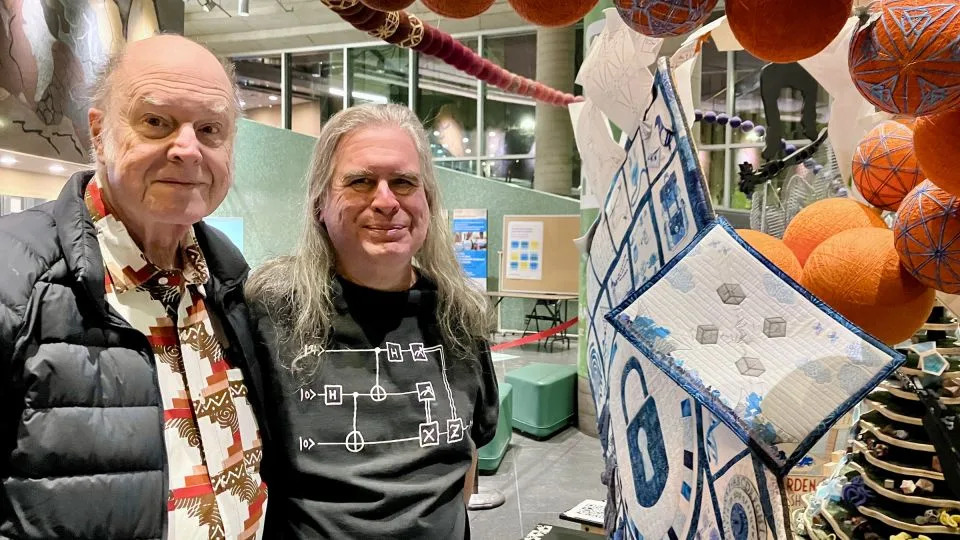
Bennett and Brassard pose in 2024 with thesmall quantum cryptography quiltlet, which fancifully depicts how the BB84 protocol works, at Mathemalchemy at the University of Quebec in Montreal. - Lise Raymond
Why It’s Important
Modern internet security largely depends on public-key cryptography, which is based on mathematical problems such as factoring large numbers. Those schemes are secure only so long as certain computations remain infeasible. But a sufficiently powerful quantum computer could solve those problems far more quickly, potentially exposing vast amounts of encrypted data.
"Cryptography is a fundamental pillar of the global economy and our safety and our security and our sovereignty. It’s really the invisible background plumbing," said Michele Mosca, cofounder and CEO of cybersecurity firm evolutionQ and a professor at the Institute for Quantum Computing at the University of Waterloo. He called the Turing Award for Bennett and Brassard "wonderful."
How BB84 Works
The BB84 protocol uses photons — particles of light — to establish a shared secret key between two parties. Rather than directly encrypting a message, BB84 creates a secure channel: because of quantum mechanics, any attempt to measure or intercept the photons inevitably disturbs their quantum state. That disturbance can be detected, alerting the communicants to eavesdropping.
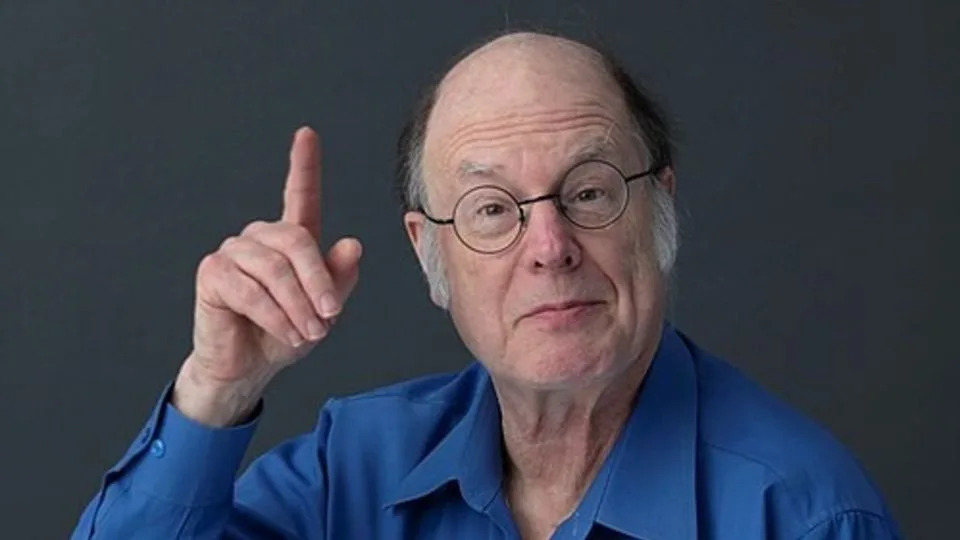
Charles Bennett is a fellow at IBM Research. - Connie Zhou for IBM
In short: secrecy is guaranteed by the laws of physics, not by the assumed difficulty of a computation. As Bennett put it, BB84 allows parties to "share information with an assurance that it has not been overheard by somebody else."
Urgency and Limitations
Security experts warn of a potential "Q day" — the point when quantum computers become capable of breaking today's widely used cryptographic algorithms such as RSA. Analysts have raised concerns that adversaries may already be performing "harvest now, decrypt later" attacks: collecting encrypted traffic now to decrypt once quantum capabilities are available.

Gilles Brassard is a professor in the department of computer science and operations research at the University of Montreal. - Hatim Kaghat
Quantum key distribution (QKD) systems based on BB84 and related protocols provide a fundamentally future-proof option against such threats, but they require specialized hardware and dedicated quantum channels. That makes wide-scale deployment challenging today, so mathematical cryptography will remain necessary for many applications for the foreseeable future.
Legacy
The Association for Computing Machinery (ACM), which administers the A.M. Turing Award with financial support from Google, described BB84 as "a transformative moment in the history of computer science" that helped launch modern quantum information research. Bennett and Brassard’s early work — initially ignored by some in the field — now underpins an active ecosystem of research and commercial products offering quantum-enhanced security solutions.
Although BB84 does not eliminate all practical challenges, it changed how scientists think about information itself and provided a new, physics-based path to secrecy as powerful quantum technologies continue to develop.
Help us improve.