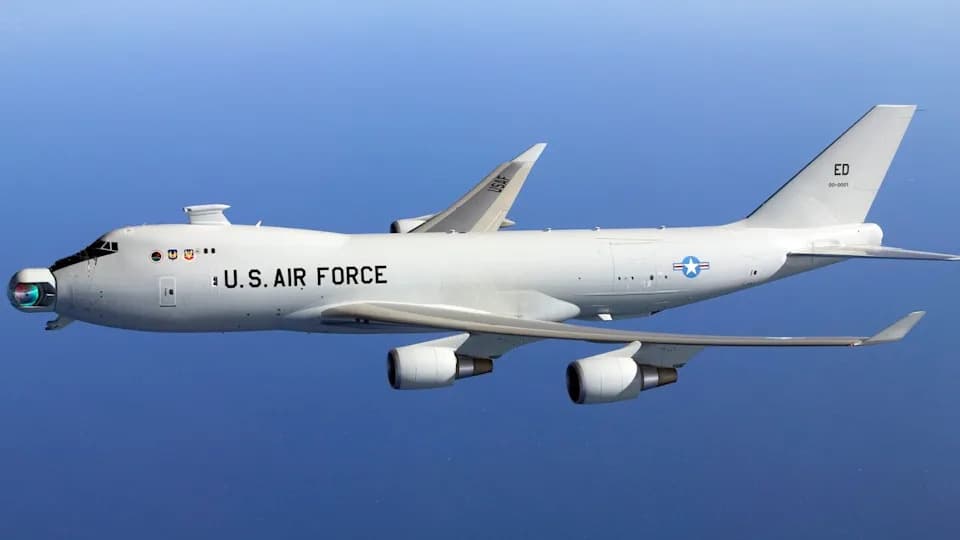
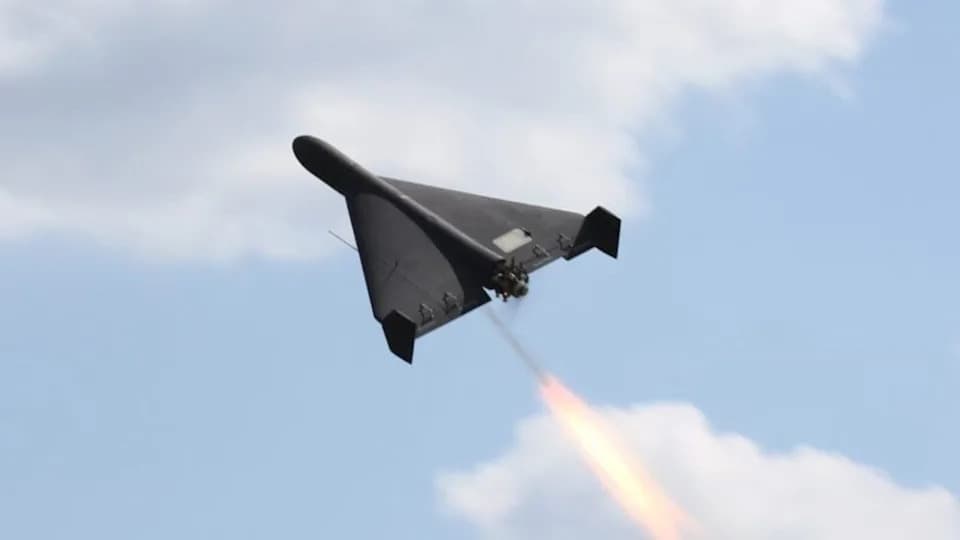
The growing use of low‑cost drones in conflicts—most visibly in Ukraine and the Middle East—is accelerating investment in high‑power laser defenses as a cheaper alternative to missile interceptors. Directed energy weapons can engage targets at ranges up to about 20 kilometers and, once fielded, may operate at a marginal cost close to the price of electricity. Major powers including Russia, China, Britain, France and the United States are developing DEWs, but challenges remain: precision pointing, weather degradation, safety and airspace coordination after a recent accidental shoot‑down near El Paso.
Drones Drive Global Push for High‑Power Laser Defenses as 'Pennies‑Per‑Shot' Promise Meets Technical Hurdles

A laser-based system from Israeli defense group Rafael at a London arms fair in September 2025 (Adrian DENNIS)(Adrian DENNIS/AFP/AFP)
The rapid proliferation of inexpensive drones in conflicts from Ukraine to the Middle East is accelerating a global race to deploy high‑power laser defenses that could destroy unmanned aircraft far more cheaply than conventional interceptors.
What Directed Energy Weapons Can Do
Mounted on ships, armored vehicles or fixed emplacements, so‑called directed energy weapons (DEWs) fire a focused electromagnetic beam at targets at ranges of up to about 20 kilometers (12 miles). Proponents say, after the initial acquisition costs, the marginal expense of firing a laser is essentially the price of electricity—potentially just "pennies per shot."
"Those systems have made a lot of progress in the last 10 to 15 years,"
said Iain Boyd, director of the Center for National Security Initiatives at the University of Colorado.
Several countries are racing to field operational DEWs. Russia is deploying multiple variants in its conflict with Ukraine, which is testing its own systems. Israel has used Rafael's Iron Beam against drones launched by Lebanon's Iran‑backed Hezbollah, but the Israeli Army recently told The Jerusalem Post that Iron Beam is not yet ready for routine use in its current war with Iran. China unveiled the LY‑1 laser system, and Britain, France and the United States are developing or fielding comparable systems such as Lockheed Martin's Helios and Northrop Grumman's Large Weapon System Demonstrator (LWSD).
Cost Advantage—and Caveats
Military planners are attracted to lasers because they could replace very expensive interceptors like Patriot missiles—each of which can cost millions of dollars—when countering drones that may cost only a few thousand dollars. A senior official in Britain's DragonFire program has estimated a per‑shot operational cost of roughly £10 (about $13). An anonymous DEW systems designer quoted by AFP summed up the view: "After the initial investment is made, it's going to be pennies per shot."
At that operating cost, even inexpensive Iranian Shahed drones (reported to cost as little as $20,000) or Ukrainian drone interceptors (reported from about $700) become less attractive as a cost‑effective defense option. Additional advantages for lasers include no physical launcher, adjustable beam intensity, and effectively unlimited "ammunition" as long as power is available.
Governments and private firms have poured billions into this technology. In 2018 the U.S. Navy ordered two DEW prototypes at roughly $75 million each—highlighting both the scale of investment and the development challenges that remain.
Technical And Operational Limits
Despite progress, significant hurdles persist. Precision pointing and beam stabilization are critical: the laser must hold a focused spot on a vulnerable part of a drone long enough to cause structural failure or ignition. As Boyd notes, "If it's sort of moving all over a drone... it's not going to do anything."
Environmental factors also matter—lasers lose effectiveness in fog, heavy rain, dust or smoke. There are safety and regulatory concerns: lasers can endanger nearby aircraft and require strict airspace coordination. In February, the FAA temporarily closed airspace near El Paso, Texas, after a U.S. military laser accidentally shot down a government drone near the Mexican border; reports said the FAA had not approved the laser's use in that incident.
Outlook
Directed energy weapons are moving from prototypes toward operational deployments, particularly on naval platforms and in homeland defense roles. However, adoption will depend on resolving technical issues, reducing system costs, developing rules for safe use near civilian airspace, and integrating lasers into layered air defense networks alongside traditional kinetic interceptors.
Help us improve.