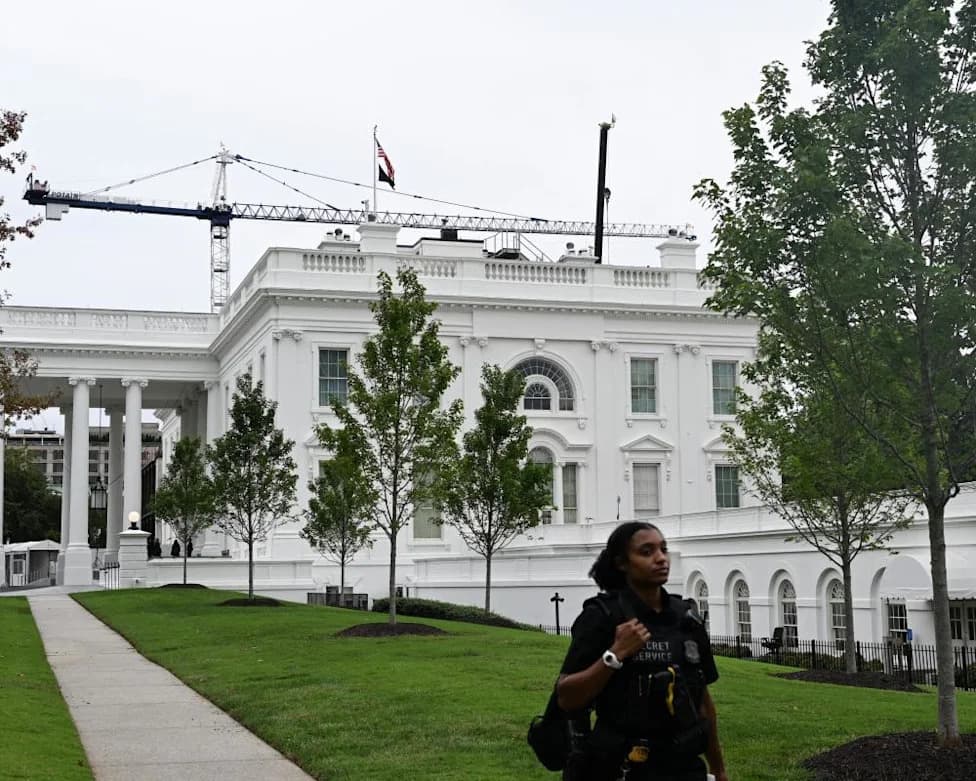
The constitutional referendum in Kazakhstan passed with preliminary results showing over 87% approval and turnout above 73%. Amendments merge the two parliamentary chambers, restore a vice-presidency, create a presidentially appointed People’s Council, and expand the president’s appointment powers. Critics warn the changes could allow President Tokayev to reset presidential term limits and extend his rule; the constitution also defines marriage as between a man and a woman. Rising inflation (11.7% in February) and tax hikes raise the risk of renewed unrest.
Referendum Approves New Kazakh Constitution, Cementing Greater Powers for President Tokayev
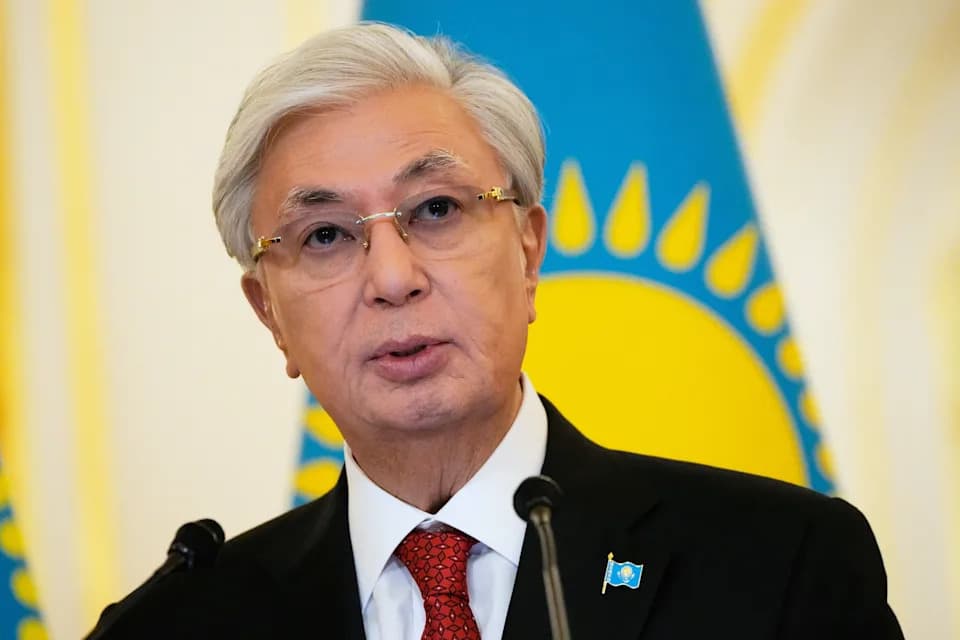
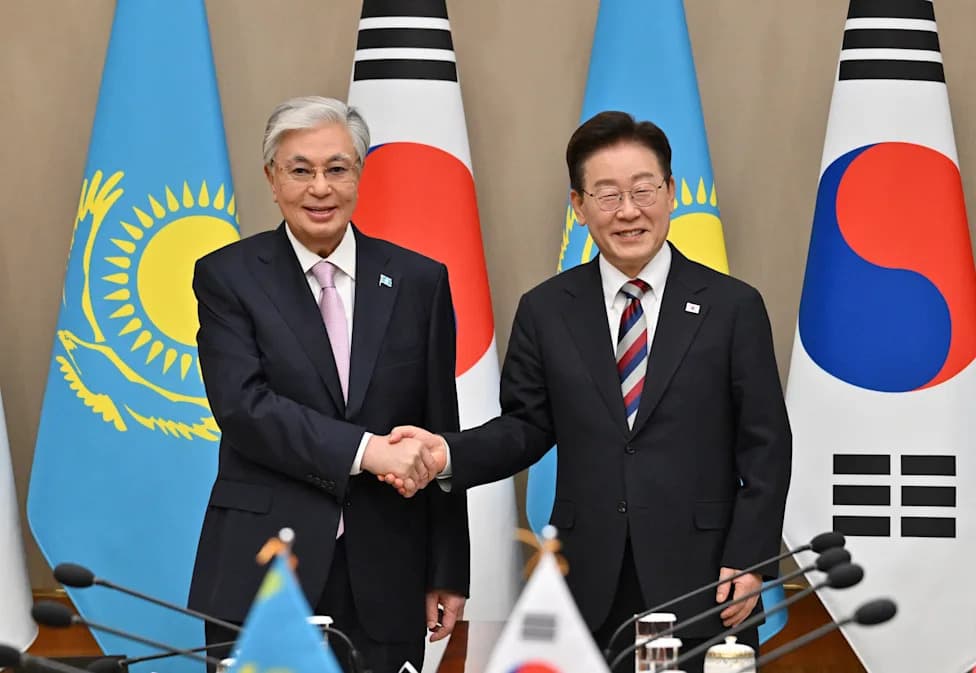
FILE - Kazakhstan's President Kassym-Jomart Tokayev addresses the plenary session of the Russia–Kazakhstan Interregional Cooperation Forum in Uralsk, Kazakhstan, via videoconference during a meeting with Russia's President Vladimir Putin at the Grand Kremlin Palace in Moscow, Wednesday, Nov. 12, 2025. (AP Photo/Alexander Zemlianichenko, File)(ASSOCIATED PRESS)
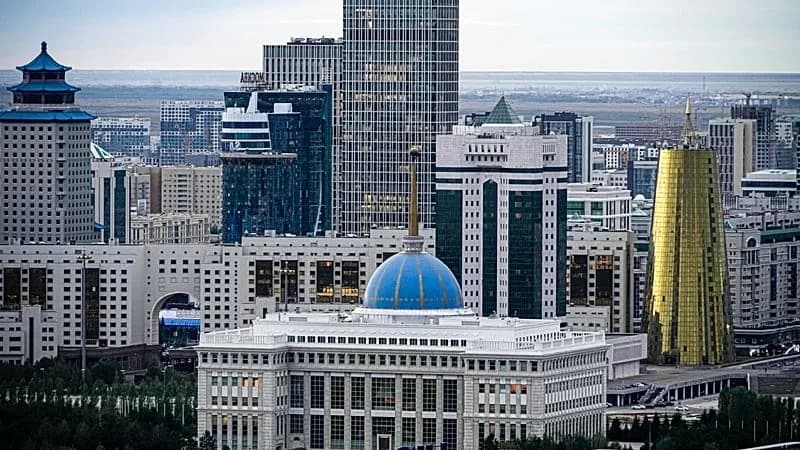
A new constitution that expands President Kassym-Jomart Tokayev’s authority in Kazakhstan won overwhelming preliminary approval in a nationwide referendum, the Central Election Commission said Monday.
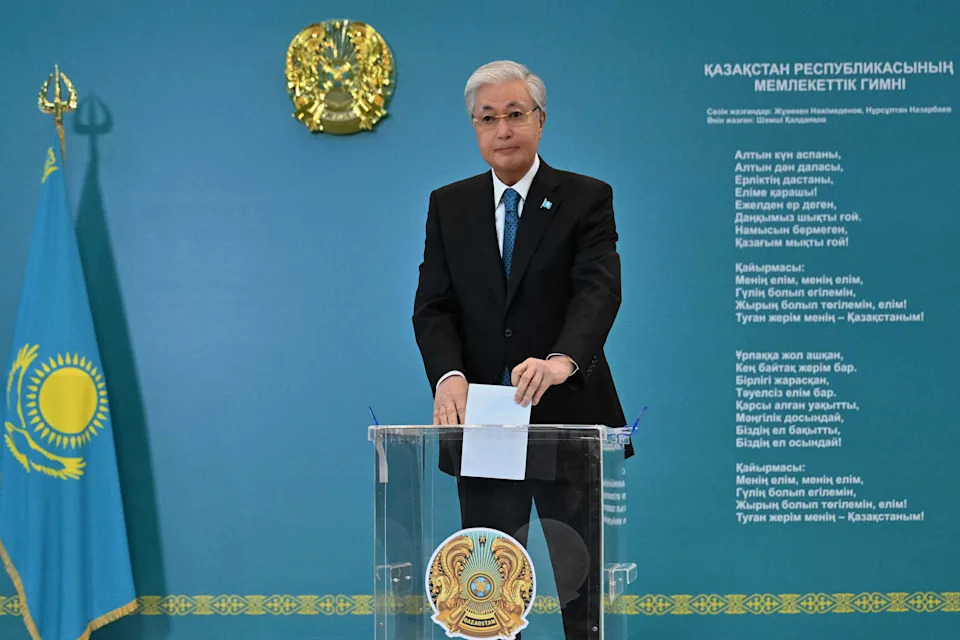
In this photo released by Kazakhstan's President Press Office, Kazakhstan's President Kassym-Jomart Tokayev casts his ballot at a polling station during a referendum on a new constitution, in Astana, Kazakhstan, Sunday, on Sunday, March 15, 2026. (Kazakhstan's President Press Office via AP)(ASSOCIATED PRESS)
Key Results
The commission reported that more than 87% of voters supported the changes in Sunday’s vote, with turnout above 73%. The package of amendments restructures the political system and grants the president broader appointment powers.
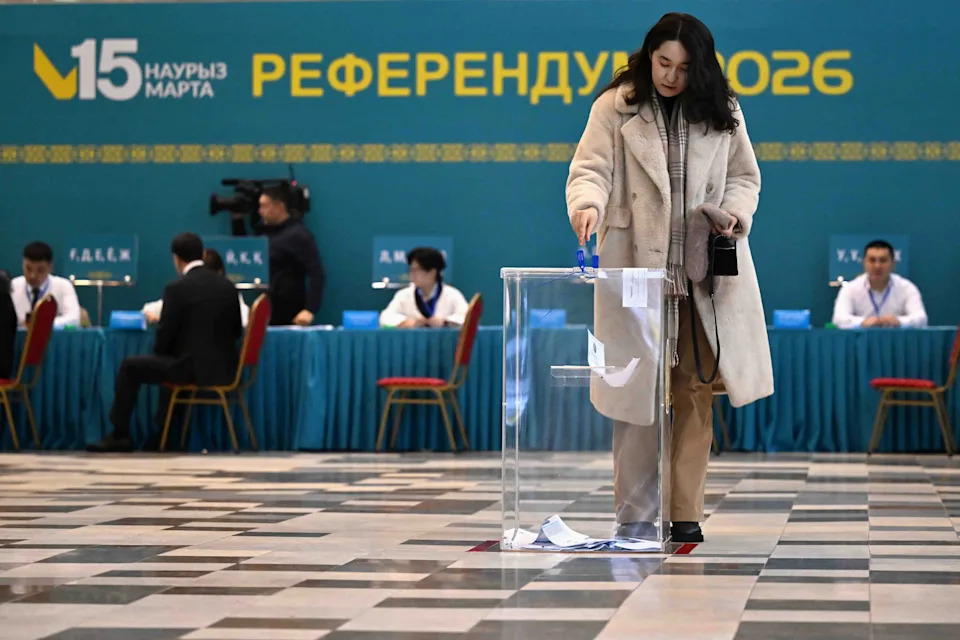
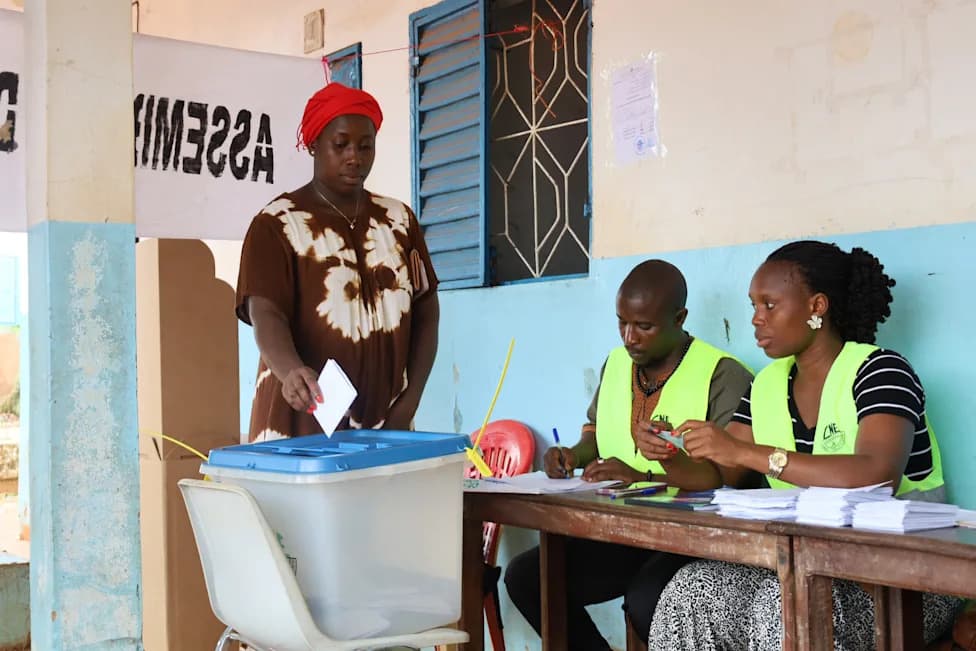
In this photo released by Kazakhstan's President Press Office, a woman casts her ballot at a polling station during a referendum on a new constitution, in Astana, Kazakhstan, Sunday, March 15, 2026. (Kazakhstan's President Press Office via AP)(ASSOCIATED PRESS)
Major Changes
The constitutional amendments merge the parliament’s two chambers into a single legislative body and restore the office of vice president. They also give the president the right to appoint key government officials — subject to parliamentary approval — and create a new People’s Council that will sit alongside the restructured parliament. According to the reforms, members of the People’s Council will be appointed entirely by the president and will have the power to initiate legislation and call referendums.
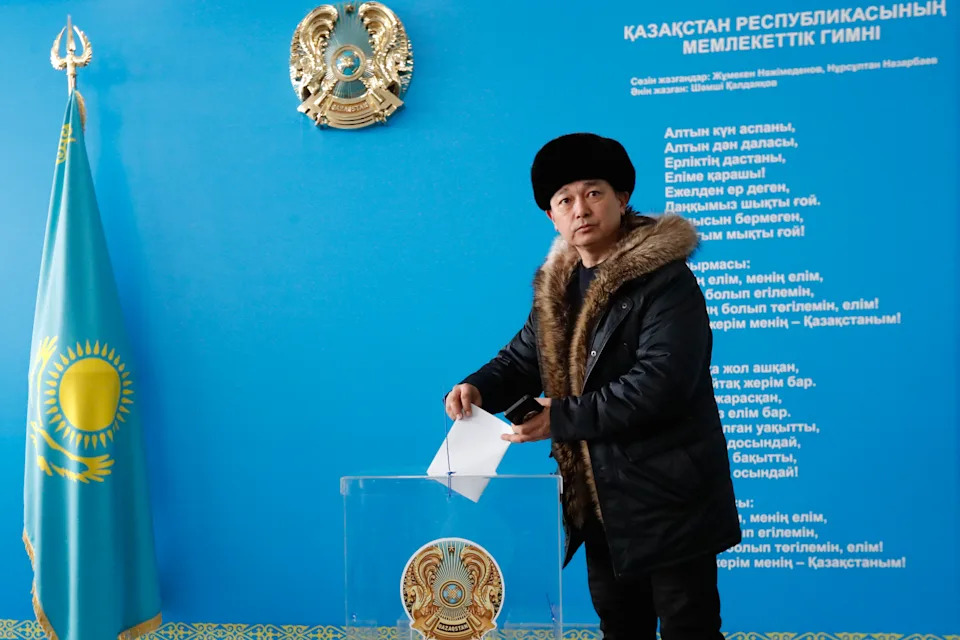
A man poses for a photo as he casts his ballot at a polling station during a referendum on a new constitution, in Astana, Kazakhstan, Sunday, on Sunday, March 15, 2026. (AP Photo)(ASSOCIATED PRESS)
Political Implications
Initiated by Tokayev, this is Kazakhstan’s second constitutional overhaul in four years. Some analysts warn the changes could enable Tokayev to reset presidential term limits and remain in power beyond his current legally permitted single seven-year term, which runs until 2029. Observers point to precedents in other post-Soviet states where constitutional changes have extended leaders’ tenures.
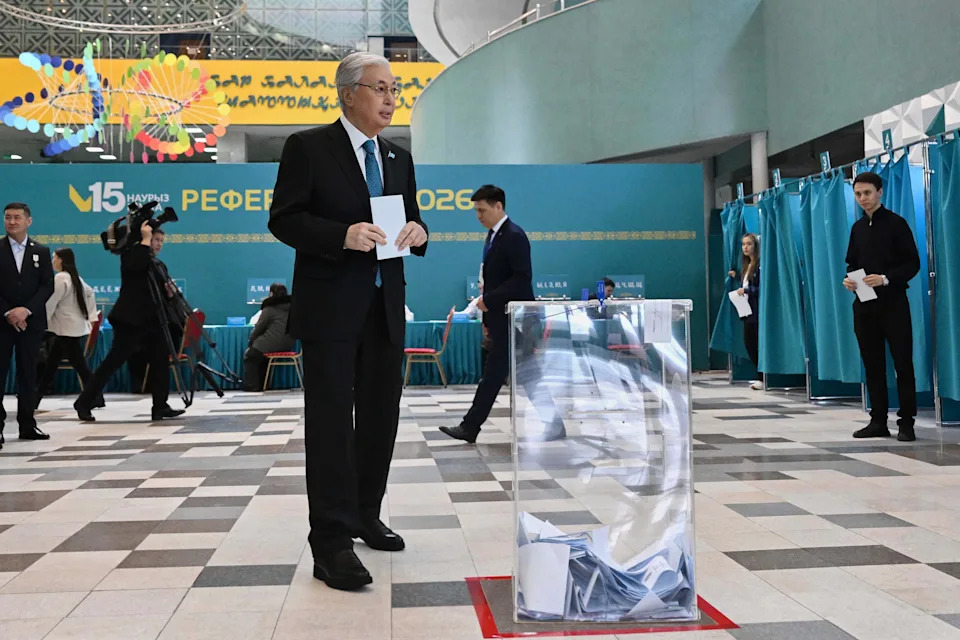
In this photo released by Kazakhstan's President Press Office, Kazakhstan's President Kassym-Jomart Tokayev walks to cast his ballot at a polling station during a referendum on a new constitution, in Astana, Kazakhstan, Sunday, March 15, 2026. (Kazakhstan's President Press Office via AP)(ASSOCIATED PRESS)
"This step is of exceptional importance, especially in the current period when the geopolitical situation is unstable and challenges and threats to national security are becoming increasingly tangible," Tokayev said last week, defending the reforms as a response to mounting security risks.
Social And Economic Context
The new constitution also redefines marriage in the country's fundamental law as a union between a man and a woman, language critics say follows recent legislation that bans what authorities describe as "propaganda" of LGBTQ+ relationships.
The referendum came amid rising economic pressure: inflation reached 11.7% in February, and recent tax increases have fueled public dissatisfaction. Analysts warn these economic strains could spark renewed unrest similar to nationwide protests in 2022, which began over fuel-price hikes and resulted in dozens of deaths among protesters and security forces.
Opposition And Outlook
The opposition remains largely excluded from state institutions and, in the month since the referendum was announced, did not significantly shift public sentiment. How the new constitutional framework will affect Kazakhstan’s domestic politics and its balance between Moscow and the West remains uncertain, but the reforms clearly consolidate authority around the presidency.
Help us improve.