South Korea has convened the presidents of Uzbekistan, Kazakhstan, Turkmenistan, Tajikistan and Kyrgyzstan in the first-ever summit at the heads-of-state level to deepen political and economic ties. Seoul’s 2024 K-Silk Road initiative aims to go beyond raw-material supply by building local processing, manufacturing and technology partnerships. Historical links—most notably the 1937 deportation of more than 170,000 Soviet Koreans (Koryo-saram)—and the rise of K-pop and cultural programmes have strengthened Korea’s influence in the region. Analysts hope the summit will produce a regular cooperation framework, investment commitments and steps toward supply-chain diversification for Korea and industrialisation for Central Asia.
South Korea Hosts First Presidential Summit With Central Asia to Deepen Economic, Strategic Ties
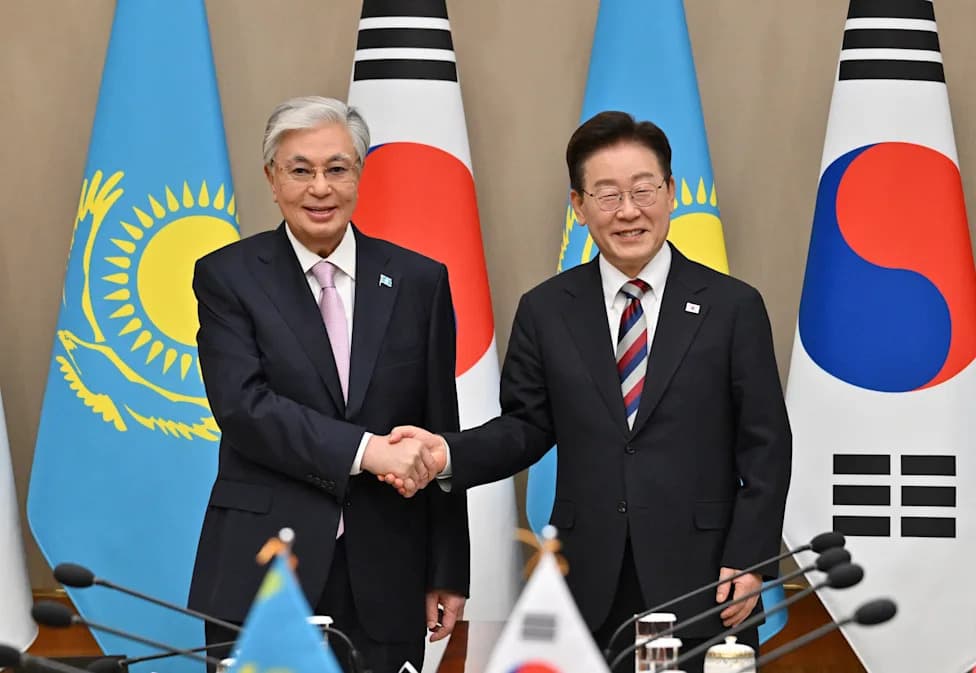
Kazakhstan's President Kassym-Jomart Tokayev shakes hands with South Korea's President Lee Jae Myung at the Blue House in Seoul, South Korea, on September 15, 2026, ahead of the first South Korea-Central Asia summit [Jung Yeon-je/Pool via Reuters]
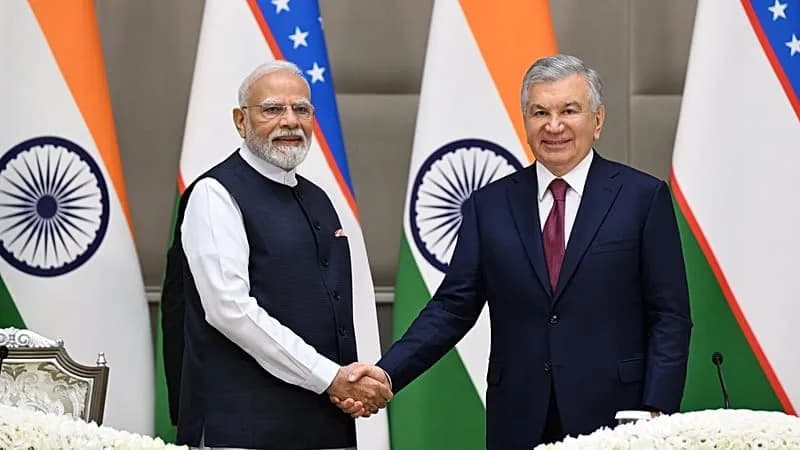
South Korea is hosting, for the first time, the presidents of Uzbekistan, Kazakhstan, Turkmenistan, Tajikistan and Kyrgyzstan in a summit designed to put Seoul's relations with Central Asia on a firmer political and economic footing.
The gathering, preceded by bilateral talks between President Lee Jae Myung and the five leaders, aims to move a diplomatic dialogue that began in 2007 to the heads-of-state level and to produce concrete cooperation on critical minerals, energy, digital technologies and transport.
Goals and Expectations
Analysts say the summit’s immediate political value is raising the profile of relations, but the real measure of success will be a workable agenda for trade, investment and industrial cooperation. Sanat Kushkumbayev of the Kazakhstan Institute for Strategic Studies told Al Jazeera that he expects a framework for regular high-level cooperation, followed by detailed bilateral deals.
"The first expectation is political. The summit will raise a dialogue that has existed since 2007 to the level of heads of state. But the real test is whether it produces a workable agenda in critical minerals, energy, digital technologies and transport," said Sanat Kushkumbayev.
K-Silk Road and Economic Opportunity
Seoul's K-Silk Road initiative, launched in 2024, is intended not only to secure raw materials but to promote processing, manufacturing and technology partnerships with Central Asian firms. Sabina Insebayeva, a political scientist at Nazarbayev University, noted that Central Asia can offer South Korea critical minerals and energy resources while Korea provides technology, capital and industrial expertise.
By the end of 2025, South Korea's cumulative direct investment in Central Asia reached about $6.4 billion, with Kazakhstan accounting for a large share of trade and investment ties. Observers say the difficult step will be translating memorandums and assembly operations into genuine localisation and commercial production.
Historical and Social Links
Beyond economics, deep historical and social ties connect Korea and Central Asia. In 1937, more than 170,000 ethnic Koreans in the Soviet Far East were forcibly relocated to Central Asia under Stalin’s orders. Their descendants, known as Koryo-saram, maintain a distinct cultural identity that has evolved over generations.
"When my grandparents arrived in southern Kazakhstan, it was autumn, and it was already cold, but they had no houses to live in... That winter they lived with local Kazakh people who supported them," recalled Roman Zakharov, a half-Korean artist from Kazakhstan.
After the Soviet collapse, South Korea established cultural centres across the region and, since the 2010s, the popularity of K-pop, K-dramas and Korean consumer brands has strengthened Seoul’s soft power in Central Asia. Embassy-funded festivals, scholarships and cultural programmes have broadened ties—particularly among young people.
Labour, Migration and Practical Links
Central Asian citizens now increasingly view South Korea as a destination for work and study. Special labour programmes, language training and more structured migration pathways have made Korea an attractive alternative to Russia for some migrants, according to regional researchers.
Geopolitical Context and Outlook
Central Asian states—often acting collectively under the informal C5+ grouping—are seeking to diversify partnerships beyond Moscow and Beijing. For Seoul, the region offers opportunities to reduce supply-chain exposure to single-source markets and to secure strategic inputs for advanced industries. Experts expect Seoul’s approach to remain commercially driven and relatively low-key rather than overtly geopolitical.
Ultimately, the summit could yield a regular high-level cooperation framework, targeted investment commitments, and pilot industrial projects that link Central Asian resources and labour with Korean capital and technology—if both sides can move from agreements on paper to sustained localised production and technology transfer.
Help us improve.