Bdelloid rotifers are microscopic freshwater animals that tolerate ionizing radiation at levels roughly 1,000 times higher than the lethal dose for humans. Their exceptional resilience stems from DNA-repair systems evolved to survive complete desiccation (anhydrobiosis), which also fix radiation-induced breaks. Experiments show shattered genomes are reassembled within hours to days, allowing normal function and reproduction to resume. These findings have implications for DNA-repair research, asexual evolution, astrobiology and biotechnology.
Meet the Bdelloid Rotifers: Microscopic Animals That Survive ~1,000× the Radiation That Kills Humans
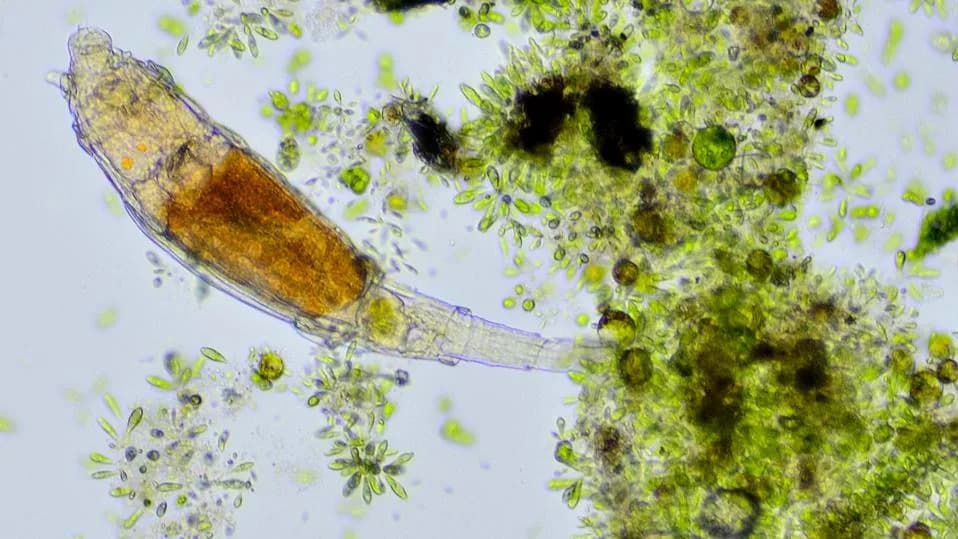
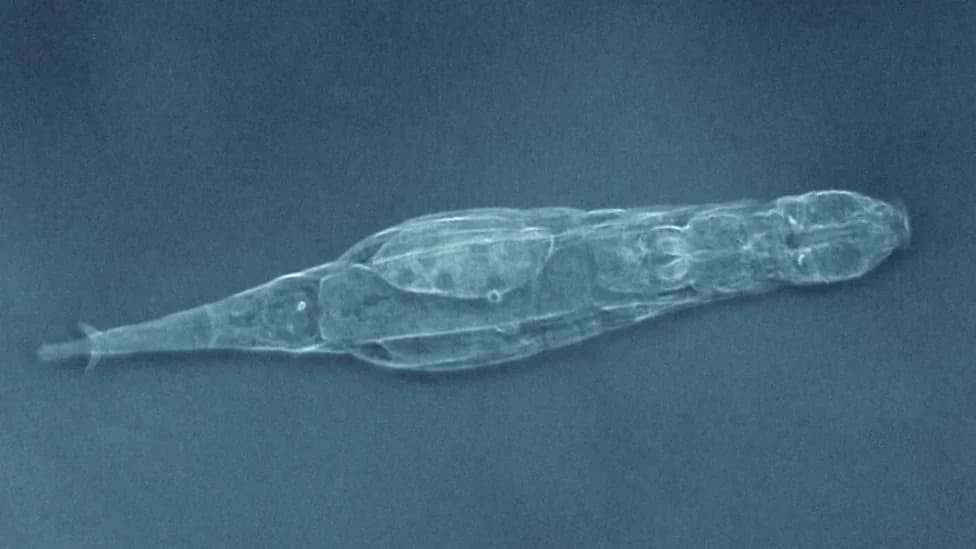
Bdelloid rotifers shrug off radiation doses that would obliterate human cells. Here’s how their resilience reveals deep insights into the limits of biological endurance.getty
Bdelloid rotifers are tiny freshwater animals with an extraordinary talent: they can survive doses of ionizing radiation roughly 1,000 times greater than what is lethal to humans. Studying how these minute animals repair catastrophic DNA damage reveals surprising insights into the limits of life and potential applications for medicine, biotechnology and astrobiology.
What Are Bdelloid Rotifers?
Bdelloid rotifers are typically under a millimeter long and live worldwide in ponds, ephemeral puddles, wet mosses and thin soil films. Under the microscope they are surprisingly complex, with muscular pharynges, rows of cilia for movement and feeding, and multiple organ systems. One striking feature is their apparent ancient asexuality: bdelloids appear to reproduce almost entirely without conventional sexual recombination.
How Extreme Is Their Radiation Tolerance?
Humans exposed to roughly 5–10 grays (Gy) of ionizing radiation in a short period risk life-threatening acute radiation syndrome without intensive medical care. By contrast, bdelloid rotifers can tolerate doses in excess of ~5,000 Gy and still recover normal function and reproduction. That scale—about 1,000 times higher than the human lethal dose—places bdelloids among the most radiation-tolerant multicellular animals known.
Why Can They Survive Such Damage?
Research indicates the rotifers’ radiation resilience is closely linked to their ability to survive complete drying (anhydrobiosis). During desiccation, their metabolism drops nearly to zero and their DNA becomes fragmented. When water returns, they rapidly rehydrate and deploy exceptionally effective DNA-repair systems to restore genome integrity. The same repair machinery that fixes desiccation-induced breaks also handles radiation-induced strand breaks.
Evidence From Experiments
Studies (for example, a 2014 paper in the Journal of Evolutionary Biology and earlier work reported in PNAS in 2008) documented massive DNA fragmentation after stress, followed by reassembly of the genome within hours to days and recovery of normal cellular functions and reproduction. These observations suggest rotifers can rejoin dozens or hundreds of DNA fragments with high fidelity.
How Is This Different From Other Extremophiles?
Certain bacteria (Deinococcus radiodurans) and some tardigrades also withstand extreme radiation. However, bdelloids are notable because they are multicellular, retain reproductive capacity after recovery, and can repair damage while metabolically active—whereas many tardigrades survive extreme stress primarily in cryptobiotic (metabolically suspended) states.
Broader Implications
Understanding DNA Repair: The rotifers’ ability to reassemble heavily damaged genomes can inform research into cancer, aging and genomic maintenance.
Asexual Evolution: Bdelloids have persisted without sex for millions of years; powerful repair systems may help maintain genome stability in the absence of recombination.
Astrobiology and Limits of Life: Studying cross-tolerance to drying and radiation expands our ideas about where life might survive beyond Earth.
Biotechnology: Mechanisms underlying desiccation tolerance could inspire new ways to stabilize vaccines, cells or other biological materials without refrigeration.
Conclusion
Bdelloid rotifers illustrate how evolution can produce elegant solutions to environmental challenges—and how an adaptation to one stress (desiccation) can confer unexpected resilience to another (radiation). By probing their molecular defenses, scientists hope to unlock principles that could benefit medicine, conservation and technology.
Sources: Journal of Evolutionary Biology (2014); Proceedings of the National Academy of Sciences (PNAS, 2008) and subsequent research on desiccation and radiation tolerance in bdelloid rotifers.
Help us improve.