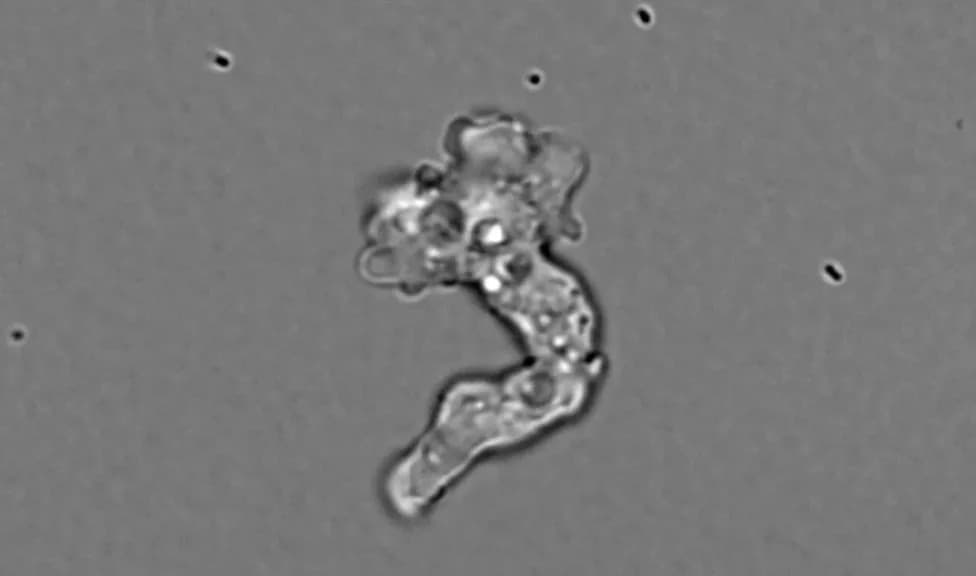
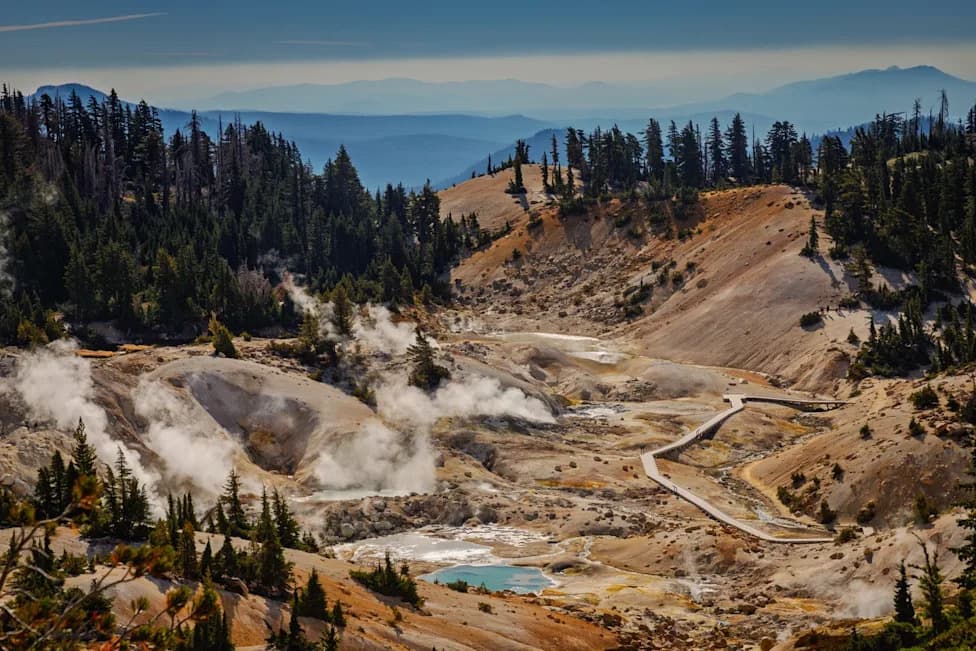
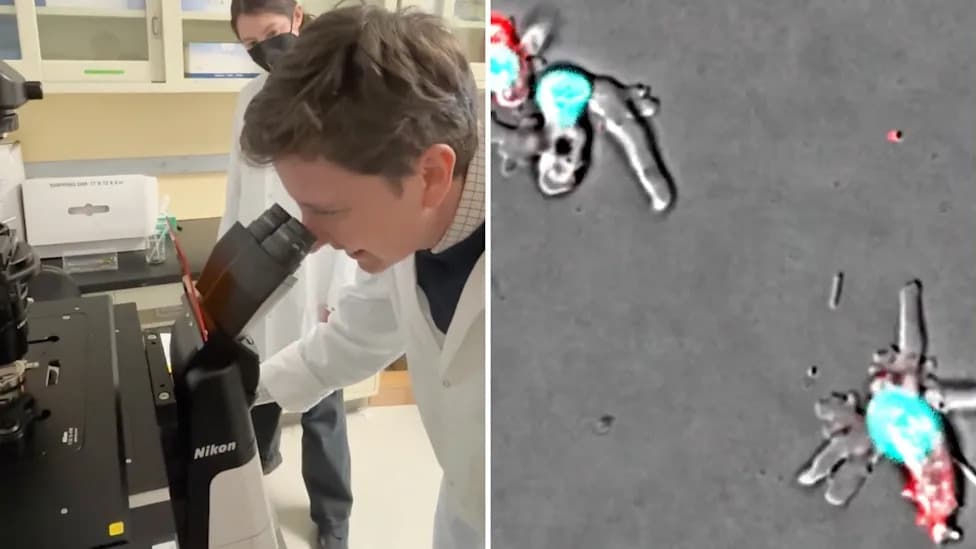
NASA-funded researchers discovered Incendiamoeba cascadensis, the 'fire amoeba,' in hot springs at Lassen Volcanic National Park. The complex eukaryote reproduces at 145°F (63°C) and survives up to 176°F (80°C), exceeding previous reproductive limits near 140°F (60°C). Genetic adaptations appear to protect its DNA and enable temperature sensing. While the finding broadens environments astrobiologists will consider, scientists stress that temperature alone does not make a world habitable.
New 'Fire Amoeba' Redraws Limits of Complex Life — Could Guide Search for Alien Organisms

NASA-funded researchers have identified a heat-loving eukaryote that challenges long-held assumptions about the temperatures at which complex life can survive and reproduce. The organism, Incendiamoeba cascadensis — nicknamed the "fire amoeba" — was collected from the hot springs of Lassen Volcanic National Park in California.
Researchers observed that the amoeba can reproduce by cell division at 145°F (63°C). Although it stops reproducing at higher temperatures, individuals remain viable up to about 176°F (80°C). These findings exceed earlier estimates that complex eukaryotes could only reproduce up to roughly 140°F (60°C).
Why This Matters
Previously, much thermophile research emphasized single-celled prokaryotes because eukaryotes were thought to be more vulnerable to heat. Eukaryotic cells contain a nucleus and membrane-bound systems that can be damaged at high temperatures. The discovery of I. cascadensis shows that some complex cells possess adaptations that extend those limits.
Genetic Resilience
Investigators report that the key to the fire amoeba's resilience appears to be genetic: the organism carries molecular adaptations that protect DNA from heat-induced damage and features that help it sense and respond to environmental temperature changes.
'In part, studies on eukaryotes may have been limited because of assumptions about membrane stability,' said Beryl Rappaport, lead author of the study and a graduate student at Syracuse University. 'We hope the discovery of I. cascadensis encourages others to keep searching for high-temperature eukaryotes.'
Alison Olcott, program scientist for Exobiology at NASA Headquarters, added that studying extremophiles like the fire amoeba helps define the biochemical and physiological limitations of life on Earth and refines the range of conditions astrobiologists consider when hunting for life elsewhere.
Limits and Caveats
Scientists caution that temperature is only one axis of habitability. Even if a complex organism can tolerate extreme heat, other factors — such as pH, oxygen levels, pressure, water availability and nutrient sources — are required for a species to thrive. As Rappaport noted, I. cascadensis depends on interactions with other life and environmental conditions found on Earth.
This discovery reshapes our understanding of where complex life might persist on Earth and improves the models and target environments used in the search for extraterrestrial life, while underscoring that multiple conditions must align for habitability.
Help us improve.