UCL researchers recorded activity from individual neurons in mice visual cortex and used retrained computational models to reconstruct 10‑second videos the animals watched. By using a blank grey baseline and iteratively updating pixels based on neuronal differences, they improved reconstruction correlations from a prior 0.301 benchmark to as high as 0.569. Temporal accuracy outperformed spatial detail, and the team plans further work to improve resolution. The study advances understanding of visual processing but raises ethical and privacy questions.
Scientists Reconstruct What Mice Saw — Rebuilding 10‑Second Videos From Brain Activity

(Argument/iStock/Getty Images Plus)
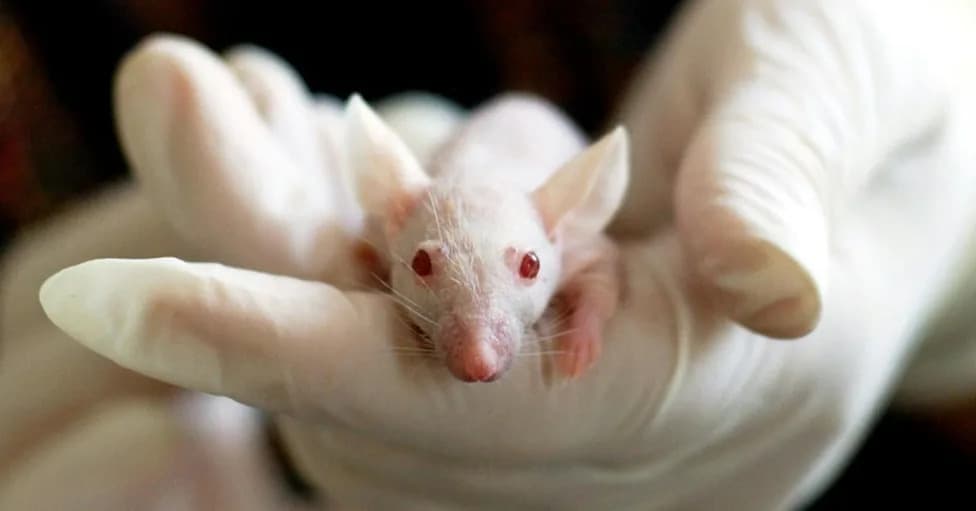
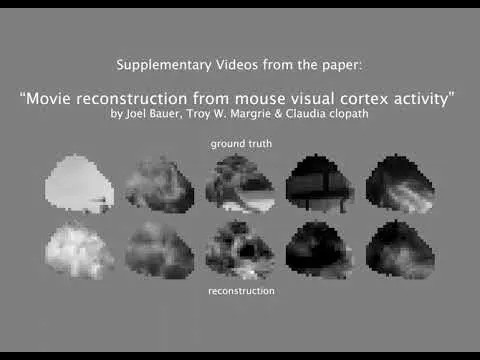
Researchers at University College London (UCL) have taken a striking step toward decoding visual experience by using patterns of neuronal firing to reconstruct short videos that mice watched. The team recorded activity from individual neurons in the visual cortex, fed those signals into a retrained computational model, and iteratively rebuilt 10‑second clips pixel by pixel.
How the Study Worked
The project began with a dynamic neural encoding model developed by another group — a model that predicts which neurons should fire in response to specific video input. That model also incorporated behavioural variables recorded while the mice watched footage, including running speed and both pupil position and diameter.
YouTube Thumbnail
UCL researchers retrained seven variants of the model using a blank grey screen as a baseline. By computing the difference between the baseline neuronal activity and the actual recorded responses, they updated the blank image iteratively until the reconstructed clip resembled the original footage. After training, the team showed five mice a previously unseen 10‑second video and used the animals' neuronal activity to reconstruct the clip.
"Using this approach, we were able to achieve high‑quality reconstructions of 10‑second video clips," said Joel Bauer, a neurobiologist at UCL and lead author of the study.
Results and Limitations
Earlier work with the encoding model reported a correlation of 0.301 between predicted and recorded (ground truth) neuronal activity. In the new experiments the reconstructed videos matched the originals with correlations as high as 0.569, a substantial improvement. Performance varied by clip: temporal alignment of pixel changes (timing) matched best, while spatial detail and coverage lagged behind.

Subscribe to ScienceAlert's free fact-checked newsletter
The researchers emphasized that improvements in the number of recorded neurons and in spatial resolution will likely raise reconstruction fidelity in future work.
Why It Matters — And Why It Raises Questions
The ability to infer visual experience from brain activity is important for understanding how the brain encodes and transforms sensory input. As Bauer explains, "We don't have a perfect representation of the world in our heads. The visual processing pipeline skews and warps our representation in a way that modifies information. This deviation between reality and representations in the brain is not necessarily an error but a feature, reflecting how our minds interpret and augment sensory information."
At the same time, the work raises ethical and privacy concerns. Previous human studies have used EEG or fMRI to recover words or narrative structure from brain signals, and the prospect of decoding perceptual or mental content prompts questions about consent, misuse, and safeguards.
The study, which the authors say is primarily intended to explore visual processing rather than to create surveillance tools, was published in the journal eLife.
Help us improve.