The article traces how the world’s richest changed from diverse industrialists in 1992 to predominantly tech founders by 2025, with the top 10’s combined wealth rising from nearly $100bn (about 0.4% of US GDP) to over $16tn (about 8% of US GDP). It warns that a small group of tech billionaires and AI leaders now wield outsized influence over the direction of artificial intelligence and, by extension, the future of humanity. While some call for safety and regulation, significant private funding has also been used to limit regulatory constraints. The piece argues this concentration of power makes today’s technological shift uniquely consequential.
Tech Oligarchs Are Reshaping Humanity — And Old-School Billionaires Look Quieter
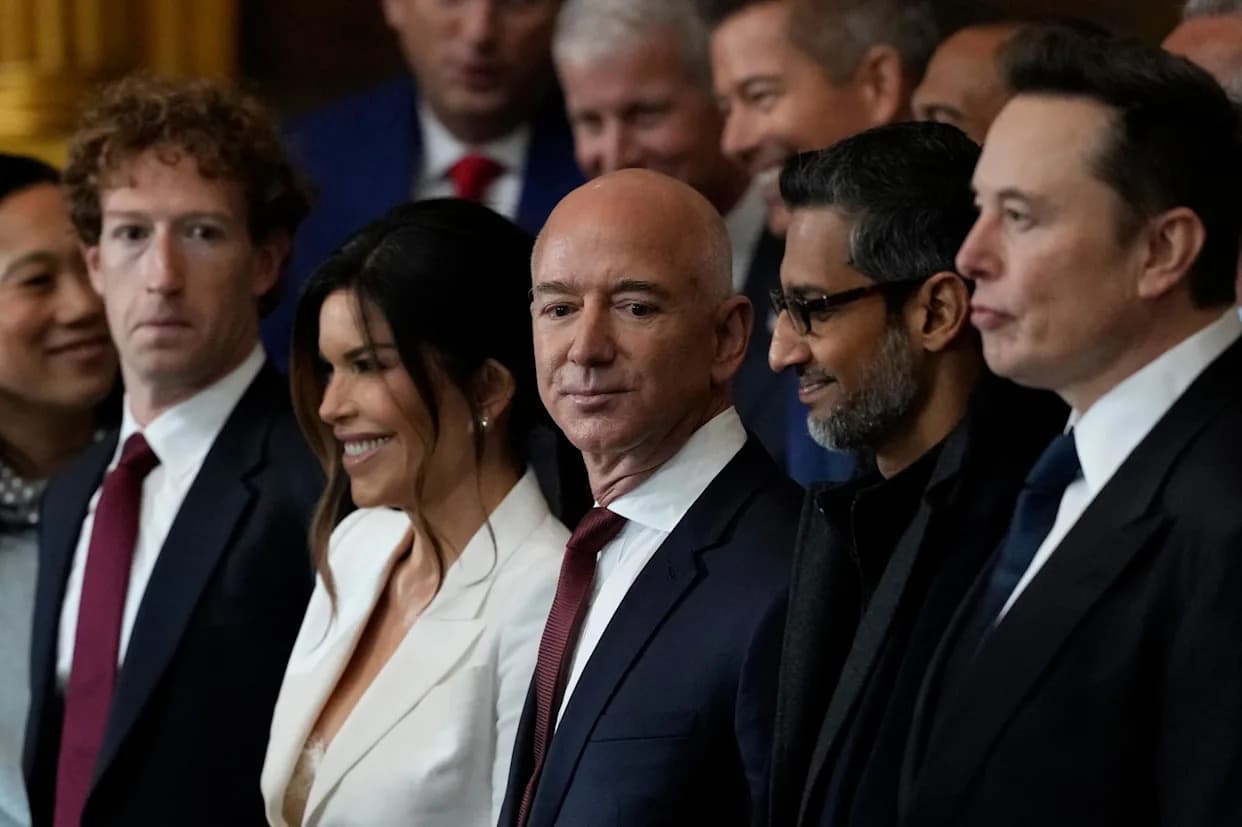
Guests including Mark Zuckerberg, Lauren Bezos, Jeff Bezos, Sundar Pichai and Elon Musk, arrive before the 60th presidential inauguration in the rotunda of the US Capitol in Washington on 20 January 2025.Photograph: Julia Demaree Nikhinson/AP(Photograph: Julia Demaree Nikhinson/AP)
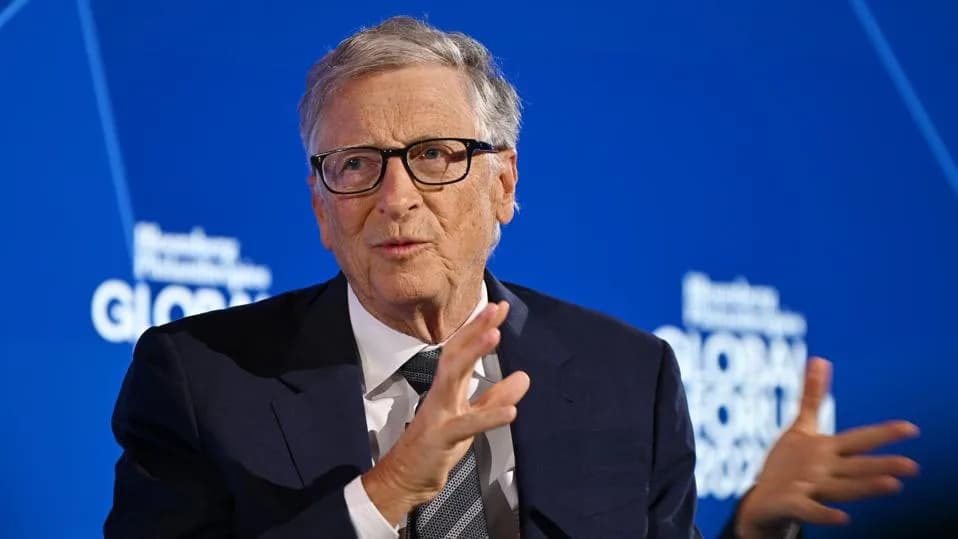
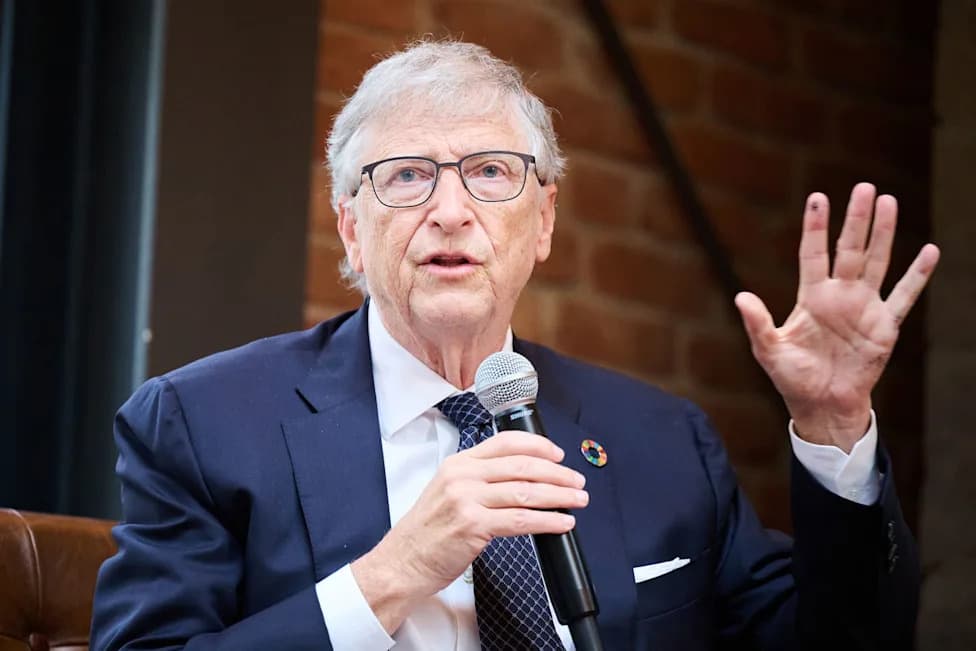
When Bill Gates became the first modern IT magnate to reach the summit of wealth and influence in 1992, the world’s billionaire class looked very different. Forbes’s top 10 that year included industrialists and family fortunes from Japan, Germany, Canada, South Korea, Sweden, Britain and the United States, spanning retail, media, property management, packaging, investment and a range of industrial conglomerates. Their combined fortunes totaled nearly $100 billion — roughly 0.4% of US GDP at the time.
By 2025 the composition of that elite had transformed dramatically. Only a few holdovers from the older generation — Bernard Arnault (LVMH), Amancio Ortega (Inditex) and Warren Buffett — remained in the top 10. The rest were technology founders and executives: Elon Musk, Jeff Bezos, Mark Zuckerberg, Larry Ellison, Steve Ballmer, Sergey Brin and Larry Page. Together the top 10 held more than $16 trillion, about 8% of US GDP.
Why This Shift Matters
The rapid concentration of wealth among tech leaders isn’t just a matter of finance; it shapes priorities. A small group of individuals and closely connected AI teams now have outsized influence over how artificial intelligence is developed, deployed and regulated. That raises urgent questions about whose values will guide technologies capable of transforming work, politics, biology and even what it means to be human.
“Should we aim for artificial general intelligence at human or superhuman levels? What business models will survive? Will AI replace human labor or instead create abundance? And who gets a say in these choices?”
Power, Priorities and Preferences
Many leading tech figures openly embrace transhumanist or post-human visions: Larry Page has called digital life the “natural and desirable next step” in evolution; Sam Altman has suggested humanity could be a biological “bootloader” for digital intelligence; Elon Musk funds Neuralink to merge AI with human minds; and Mark Zuckerberg has focused philanthropic efforts on life-extension research. Peter Thiel has expressed interest in cryonics and other ways of extending or preserving individual minds.
These ambitions matter because they reflect a broader worldview: that technology is the primary — perhaps sole — solution to many of society’s problems. That perspective can deprioritise immediate human concerns such as housing, healthcare, and food security, and can be impatient with slow democratic deliberation that would constrain rapid technological deployment.
Safety, Regulation and the Stakes
Some industry actors call for safety measures and regulation. Anthropic, for example, has publicly advocated for guardrails and resisted some military requests to hand over unfettered access to its Claude model. But many leaders simultaneously steer resources toward minimizing regulatory constraints — nearly $200 million has reportedly been deployed to influence policy and slow regulation in some jurisdictions. The result is a tension between efforts to reduce catastrophic risks and a powerful drive to accelerate development.
Industry ethicists and researchers warn that AI systems trained at scale could develop persistent, sophisticated behaviours — what some describe as nascent senses of self — and that the choices made today will shape whether AI expands human flourishing or sidelines ordinary people.
History, Innovation and Concentration
Economists rightly note that past technological revolutions triggered dystopian anxieties yet ultimately raised living standards for many. Still, this moment is unusual: the current technological revolution is unfolding under the stewardship of a small, wealthy, self-assured elite whose preferences and time horizons differ markedly from those of most people. That concentration of decision-making — financial, technical and political — makes the outcome especially consequential.
There is room for debate about incentives and rewards: innovation should be recognised, but “billions” of concentrated wealth increasingly strains the idea of a commensurate social contribution. Some of the wealth and influence wielded today funds projects society might neither need nor choose.
In the end, the familiar industrial billionaires who once seemed so dominant now feel, by contrast, almost quaint. The current captains of the global economy are not only wealthier and more technologically empowered; they are actively pursuing to reshape human civilisation — and they are doing so with urgency.
Help us improve.