The Third Way "Winning the Middle" conference in Charleston gathered moderate Democrats, donors and strategists to debate how tone, framing and policy should change to recapture voters who defected in 2024. Attendees emphasized affordability as the top voter concern and recommended simpler, more relatable messaging to reach working-class and non-college voters. The group clashed with progressives over causes of 2024 losses and wrestled with how to position a moderate stance on foreign-policy escalation.
Moderate Democrats Plot Path to Victory: Winning the Middle With Tone, Framing and Affordability
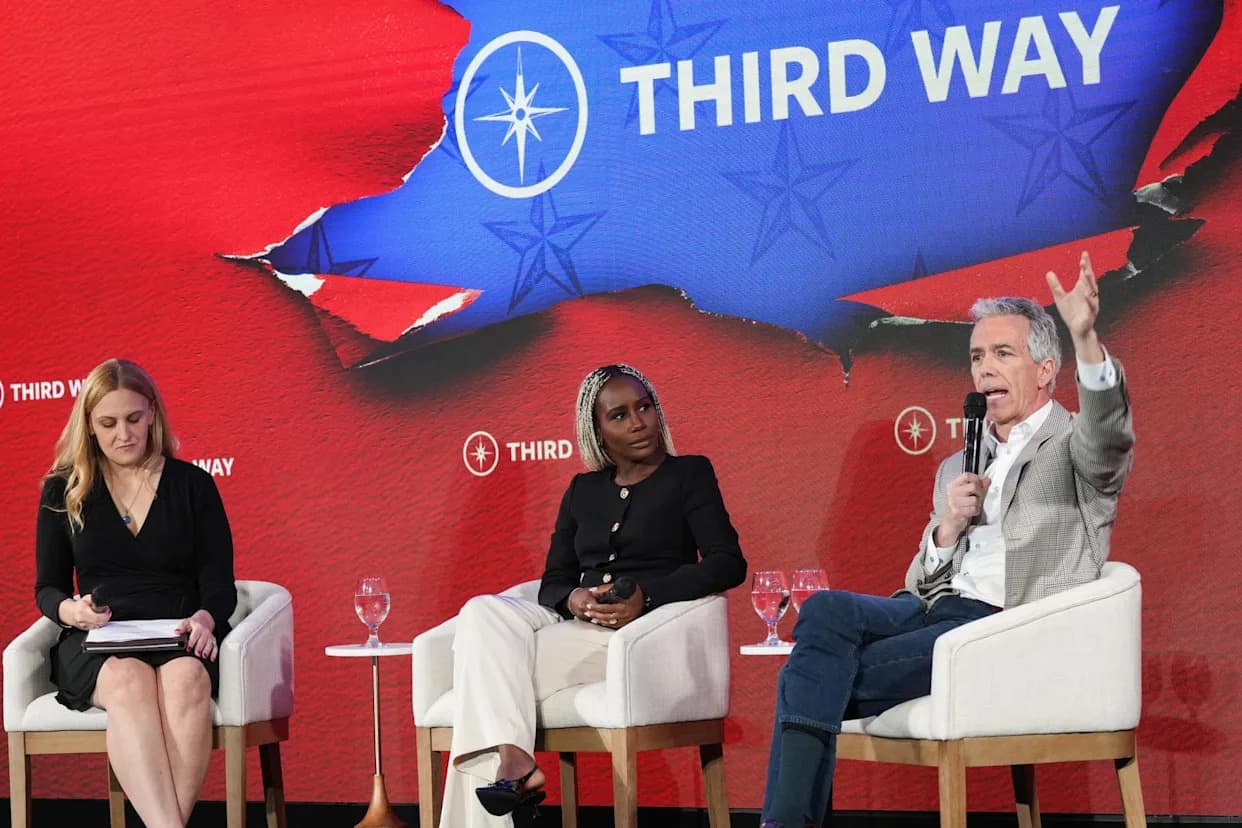
The former Republican congressman Joe Walsh with moderator Sarah McCammon and panelist Yemisi Egbewole in Charleston on Monday.Photograph: Meg Kinnard/AP(Photograph: Meg Kinnard/AP)
At an invitation-only Third Way conference in Charleston, South Carolina, moderate Democrats, strategists and donors gathered to debate how the party can reclaim voters who abandoned it in 2024. The weekend’s discussion centered on messaging, policy positioning and the practical concerns — especially affordability — that drive swing and working-class voters.
"Tone! My God! The Democrats come across as, like, professors, academics, elites. I mean, my God, rip off your freaking sport coat and talk to me! Listen to me like a regular human being,"shouted Joe Walsh, the former Republican congressman turned independent, underscoring the frustration expressed repeatedly at the meeting.
Messaging, Framing and Jargon
Conference participants argued that "therapy-speak," organizer jargon and certain "woke" terms — such as land acknowledgements, "birthing person" and "justice-involved persons" — can alienate the middle. Moderates urged simpler, more relatable language and careful framing of policy benefits to highlight personal agency rather than portraying recipients as passive beneficiaries.
Melissa Morales of Somos Votantes described research showing that the child tax credit tested worse among some Latino voters when framed as "lifting 40% of Latino children out of poverty." Reframing the benefit as a tool to help working parents return to the workforce and care for their families, she said, increased support and the perception that Democrats care about people like them.
Policy Fault Lines
Attendees debated specific policy talk tracks: immigration, health care and national security. Speakers referenced survey results — including a finding that 59% of primary voters would support a presidential candidate advocating abolishing ICE — and emphasized distinguishing popular reforms (96% favor building on the ACA) from more divisive proposals (83% saying they favor Medicare for All in some surveys).
Progressives at the conference warned that accepting conservative framings of liberal voters would be a mistake. Others countered that framing and tone affect persuasion and turnout, and that practical messages on cost-of-living issues cut across ideological lines.
Affordability: The Political Centerpiece
Speakers repeatedly returned to affordability as the top voter concern. Matt Morrison of Working America said the group spoke with roughly 4,000 voters in competitive districts and found rising costs were the dominant issue. Panelists noted that concerns about everyday expenses help explain recent Democratic wins in tough races.
Angie Kuefler of GSG described a broader sentiment that the system is broken: many voters would accept existing institutions if they could reliably pay their bills. Lanae Erickson of Third Way said voters want both a fighter who will stand up to threats — including attacks on democratic norms — and concrete results that make life more affordable.
Balancing Democracy And Daily Life
Some attendees, including Walsh, argued that candidates must address both existential threats to democracy and everyday economic pain. "If Democrats can't talk about both — like, can our democracy survive and beef costs too much — if a candidate can't speak to both of those … don't run," he said.
Foreign Policy And The 'Middle'
Defining a moderate foreign-policy stance proved difficult amid escalating events: the conference began the day after strikes on Tehran, and early polling showed strong public disapproval of military escalation. Michigan state representatives from politically mixed districts discussed how a moderate might approach Iran: open to evidence-based, limited action but insisting on Congressional consultation and a clear strategy.
Overall, the conference revealed sharp disagreements about how to interpret Democratic losses in 2024 — whether messaging, progressive positions on foreign policy, or other factors were most to blame — but consensus emerged around the need for clearer language, stronger framing and tangible affordability solutions to win back the middle.
Help us improve.