Remote Kapisillit, Greenland, relies on two ageing undersea cables and limited satellite service for essential healthcare, schooling and social ties. Geopolitical tensions since 2025 and concerns about foreign influence have shaped Nuuk’s decision to fund a third undersea cable and to contract Eutelsat over US-based options such as Starlink. High monthly costs and fragile infrastructure leave isolated settlements vulnerable to prolonged outages and social strain.
Fragile Cables, Rising Tensions: How Kapisillit’s Lifeline Could Be Severed
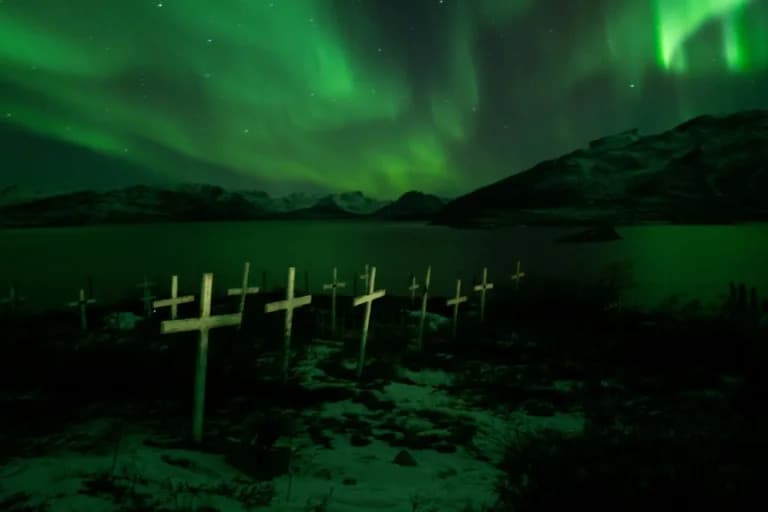
A cemetery in Kapisillit, Greenland, illuminated by the northern lights on February 14 (Florent VERGNES)(Florent VERGNES/AFP/AFP)
In Kapisillit, a tiny Greenlandic settlement of about 30 people, villagers gathered for an urgent meeting around a single table and two chairs to discuss a frightening possibility: being cut off from the outside world.
Vanilla Mathiassen, a 64-year-old Danish teacher, raised fears about renewed talk of Greenland's strategic importance since the return of US President Donald Trump to the White House in 2025 and the possibility that communications could be disrupted or weaponized.
Village chief Heidi Nolso has formally requested a satellite phone to ensure emergency contact with Nuuk, the capital. The concern is acute: Kapisillit lies some 75 kilometres from Nuuk, reachable only by boat, dependent on hunting and fishing, and reliant on an ageing, costly telecom network for health care, education and family ties.
Connectivity At The Edge
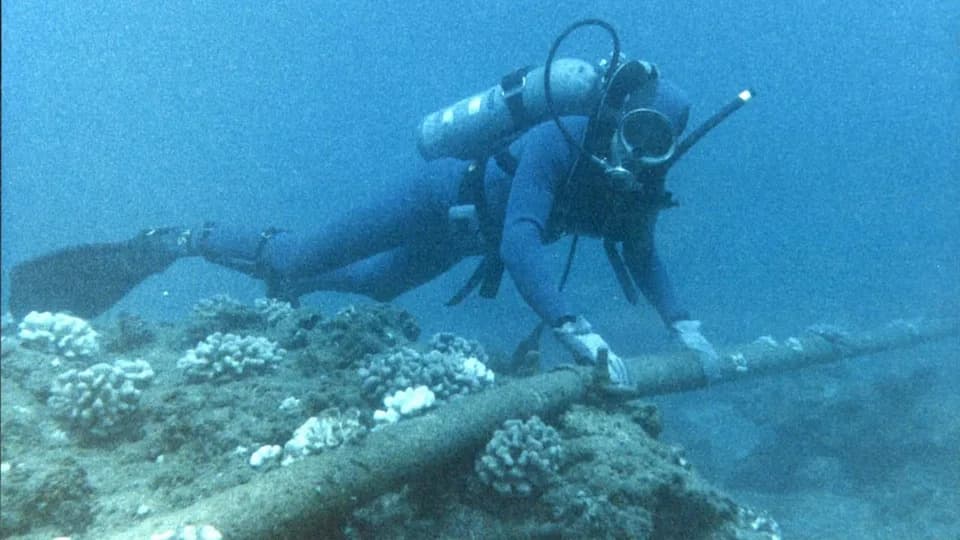
Greenland’s internet and phone links depend primarily on two undersea fibre-optic cables to Canada and Iceland plus limited satellite coverage in the north and east. Experts warn these cables are approaching the end of their service life and that a simultaneous failure—like disruptions seen in 2019—could leave communities offline for months.
Signe Ravn-Hojgaard of the Danish think tank Digital Infrastruktur calls Greenland "the most vulnerable country in the Arctic" for connectivity. Researcher Michael Delaunay adds that as the Arctic becomes a geopolitical hotspot, networks may face greater risk of targeting or disruption.
Daily Life Strained By Outages
Kapisillit’s red schoolhouse, with its bell and small library, now houses dusty tablets from an abandoned online learning project. Teacher Mathiassen instructs two pupils in person after recurrent network cuts made remote lessons impractical. The village relay tower has been unstable and was offline for days recently, damaging education plans and complicating medical consultations and emergency evacuations by helicopter.
Access is also expensive: internet subscriptions run roughly $173 a month, putting reliable service out of reach for many pensioners and low-income residents. Social media is a vital lifeline: families, officials and daily life now depend heavily on platforms such as Facebook and Messenger, raising new concerns about misinformation, fake accounts and political influence.
Geopolitics And Local Choices
In October 2025, Nuuk secured Copenhagen funding for a third undersea cable to strengthen resilience. At the same time, the national operator Tusass, which holds a telecoms monopoly, banned direct use of SpaceX’s Starlink terminals and contracted French operator Eutelsat rather than an American partner—partly due to geopolitics and concerns about foreign influence. Officials argue Tusass’s pricing model, which has residents in larger towns subsidize remote communities, could be undermined by unrestricted competition.
Local residents link these technical decisions to broader strategic anxiety. Some fear intervention or presence of foreign ships; others worry about the social consequences if communications fail. Kapisillit has already felt the impact of extreme weather: a two-day storm in February 2025 destroyed houses and briefly isolated the settlement.
Society On A Knife Edge
Beyond infrastructure, Greenland faces deep social fragility. A photo album in the school recalls classmates from 1997—many of whom later died by suicide, a painful reminder of the island’s ongoing public-health challenges. Youth typically leave for Nuuk at 14 to continue schooling, and few return, contributing to demographic decline in small settlements.
Officials and residents say they want stronger, more affordable connections for health, education and social cohesion. Yet decisions about providers and technology are now being shaped as much by geopolitics as by technical merit—leaving remote communities anxious about who will control the next lifeline.
What’s Next: Nuuk’s third undersea cable funding is a positive step, but until new links are in place and affordability improves, communities like Kapisillit remain vulnerable to outages, rising geopolitical pressure and the social consequences of isolation.
Help us improve.