The Sturtian "snowball Earth" (~717 million years ago) likely hosted dark, anoxic subglacial seas that the new study estimates averaged −15°C ± 7°C and may have been up to four times saltier than modern oceans. Researchers inferred these conditions using iron isotope thermometry supported by strontium and barium isotope measurements. Experts welcome the novel approach and independent lines of evidence but caution that the precise temperature remains uncertain.
Study Suggests Sturtian 'Snowball Earth' Oceans Were Far Below Freezing — As Cold As −15°C
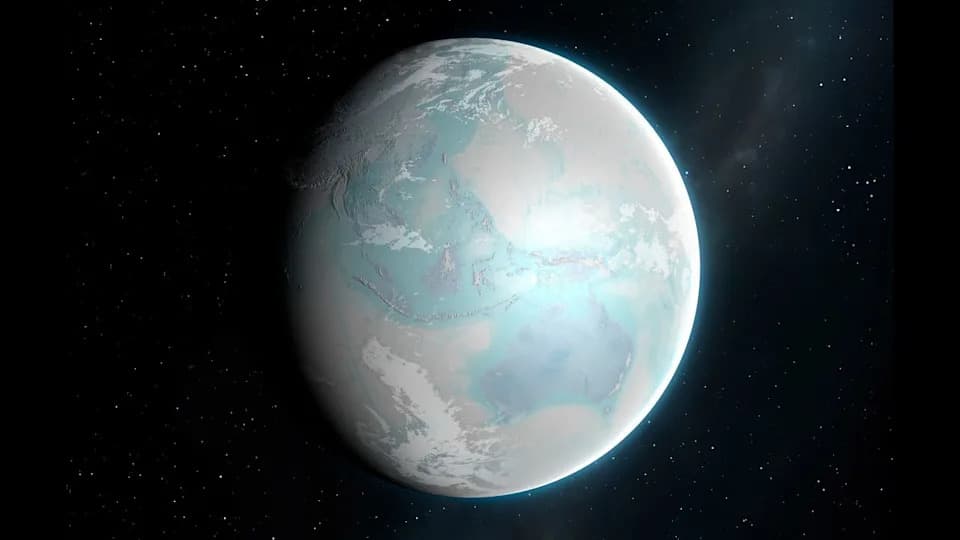
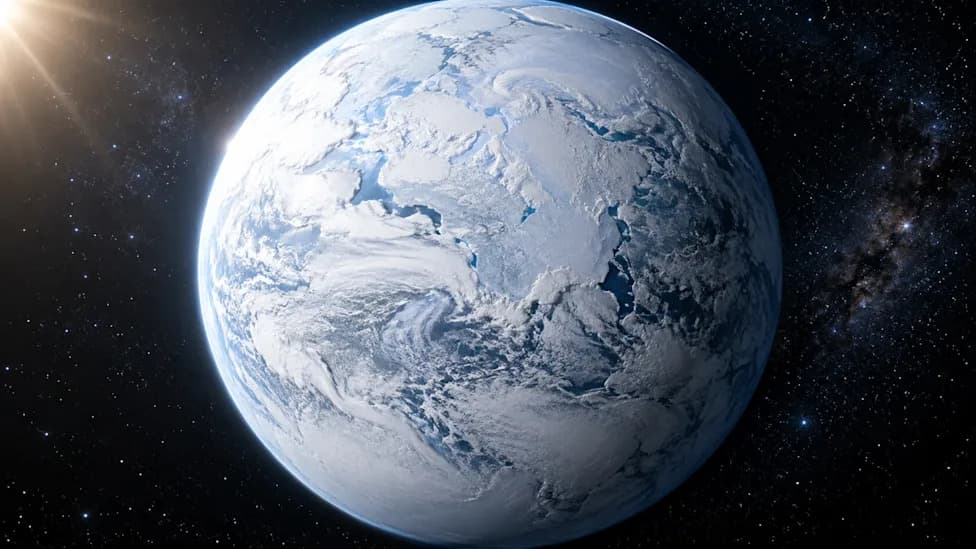
During the ice ages, Earth could turn into an inhospitable snowball. | Credit: MARK GARLICK/SCIENCE PHOTO LIBRARY
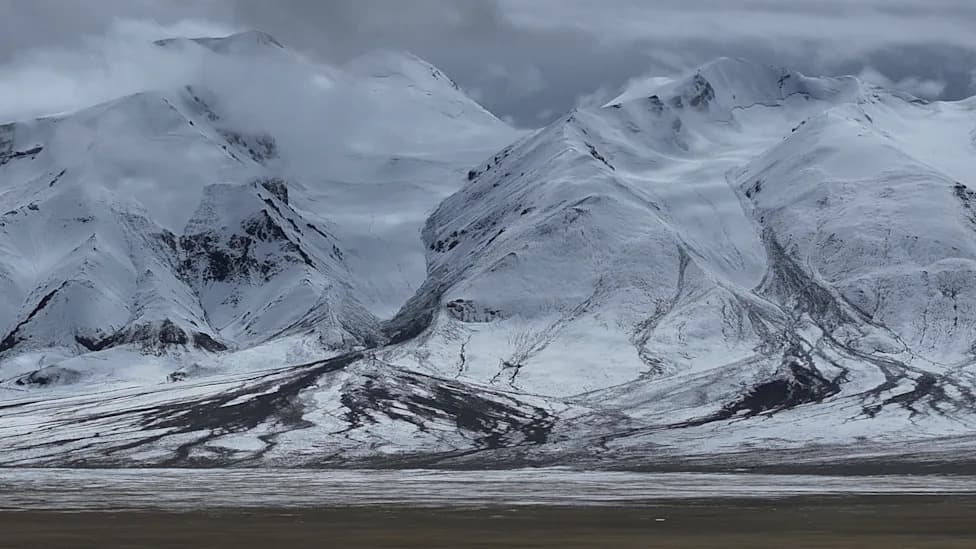
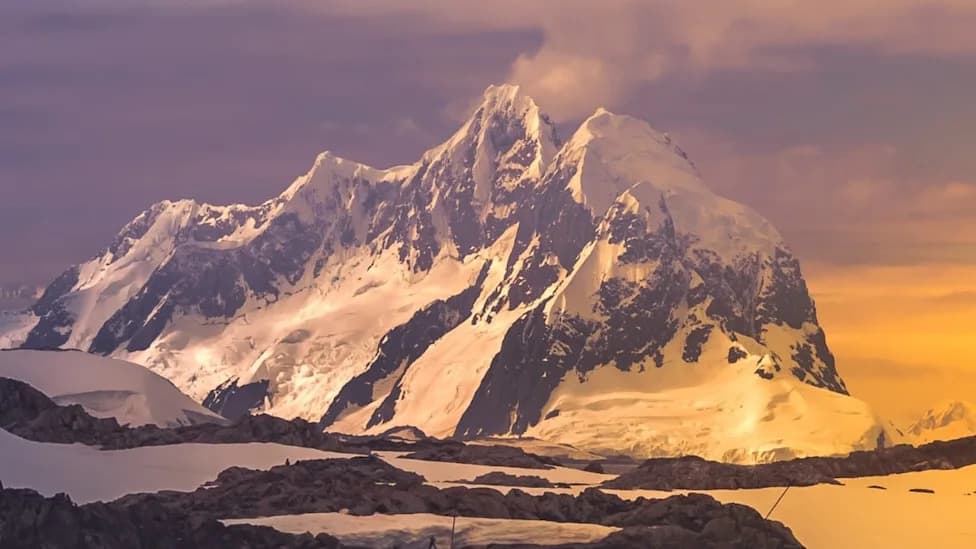
About 717 million years ago, during the Sturtian glaciation, ice sheets advanced from the poles to the equator and the oceans beneath that ice were dark, anoxic and isolated from the atmosphere. A new study in Nature Communications reports the first direct estimate of subglacial seawater temperature during that episode: −15°C ± 7°C. If confirmed, this would be the coldest measured ocean temperature in Earth's history.
How Rocks Became a Thermometer
The research team used a novel geochemical approach based on ancient iron formations—rusty, red sediments that accumulated where continental ice met ice-covered seas. These iron-rich layers form when dissolved ferrous iron (Fe2+) in oxygen-poor waters oxidizes to ferric iron (Fe3+) and precipitates as iron oxides when oxidizing conditions occur.
Iron has several stable isotopes. During partial oxidation cycles, the lighter isotope (iron-54) is preferentially removed into solid minerals, leaving dissolved iron relatively enriched in heavier isotopes. The newly studied Sturtian iron formations are isotopically heavier than even many Archean iron deposits, and the authors show that temperature-dependent fractionation can explain much of that difference: iron minerals that form in colder water tend to be isotopically heavier.
Salinity, Brines and Liquid Water Below Zero
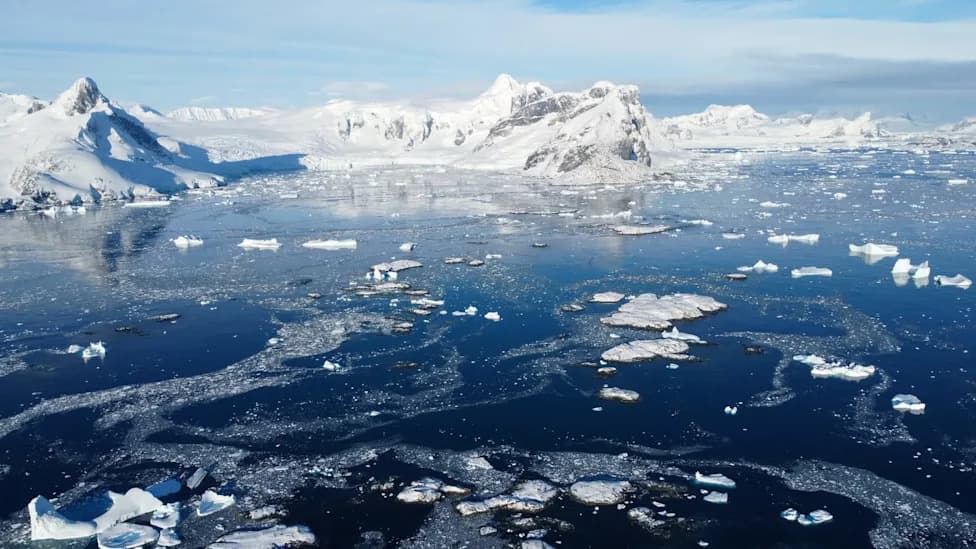
For seawater to remain liquid at tens of degrees below 0°C it must be highly saline. The team complemented the iron-isotope thermometer with strontium and barium isotope data and concluded that some pockets of Sturtian seawater were likely up to four times saltier than modern oceans. Such hypersaline brines would have depressed the freezing point and allowed subzero, liquid water to persist under the ice.
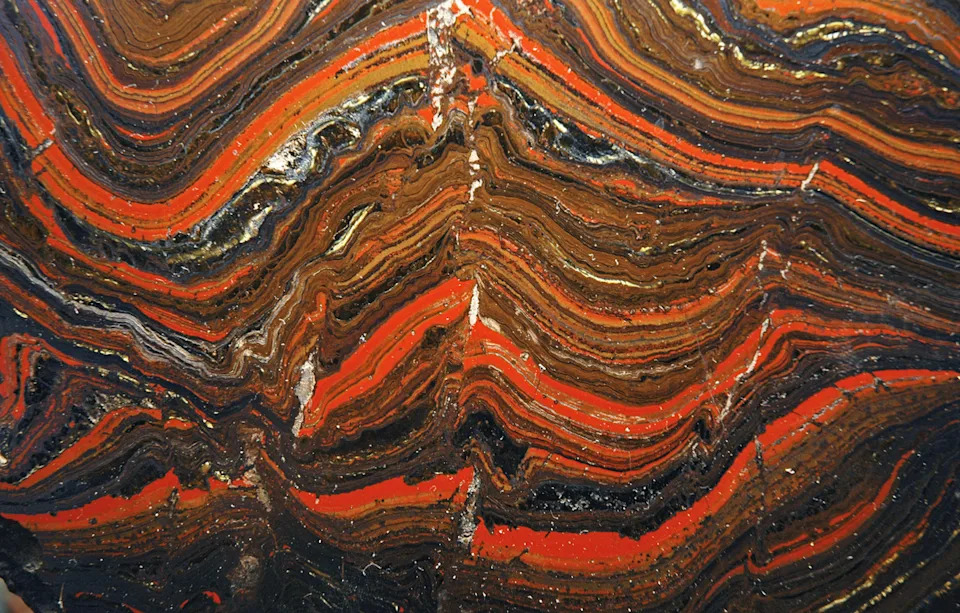
Scientists used information about the iron in formations like this one to estimate the temperature of Earth’s ocean 717 million years ago. | Credit: James St. John/Flickr, CC BY 2.0
“We’re dealing with salty brines,” said Ross Mitchell (Institute of Geology and Geophysics, Chinese Academy of Sciences). He compared them to Antarctic subglacial brines, noting that snowball-era waters could have been even colder than the roughly −13°C slush under Lake Vida.
Context and Caveats
The Sturtian event likely represented runaway glaciation driven by the ice–albedo feedback and may have lasted about 57 million years, with glaciers possibly up to a kilometer thick. To translate isotope differences into a temperature, the authors used a previously published Archean seawater estimate of about 25°C as a baseline and inferred Sturtian waters were roughly 40°C colder, producing the −15°C estimate (±7°C).
Independent experts praised the study’s creative approach but urged caution about overprecision. Andy Heard (Woods Hole Oceanographic Institution) called the method “interesting and novel” and suggested the result is strongest as qualitative evidence that the oceans were extremely cold, rather than as a single exact temperature. Jochen Brocks (Australian National University) noted that separate salinity estimates from Australian sediments point to similarly hypersaline brines that could have remained liquid to about −7°C, lending independent support to the overall picture.
The new work combines iron, strontium and barium isotope systematics to paint a consistent picture of dark, anoxic, very cold and highly saline subglacial seas during the Sturtian snowball Earth. Future laboratory experiments and additional field data will help refine the temperature and salinity estimates and test how widespread such brines were beneath the global ice cover.
For more: See the original report in Nature Communications and the summary at EOS.
Help us improve.