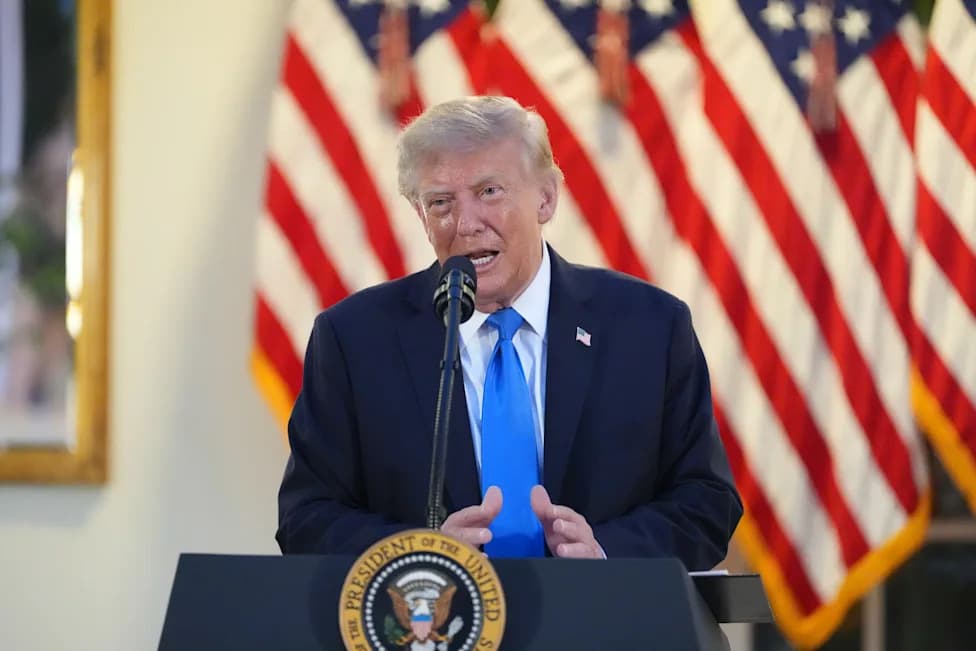
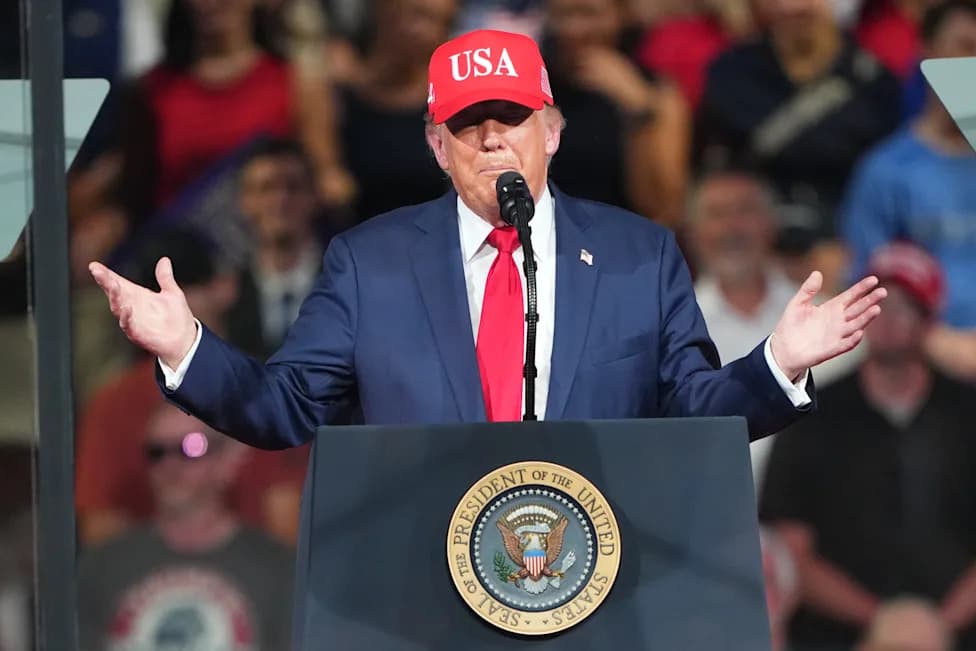
President Trump delivered a long, combative address outlining broad conservative priorities while explicitly asking Congress not to move on his tariffs after a Supreme Court ruling. He pushed measures from banning institutional purchases of single-family homes to outlawing congressional stock trading, but many proposals face steep partisan and procedural obstacles. The speech included heated exchanges, protests, and mixed reactions from Republican lawmakers about how to proceed.
Trump Presses Congress With Broad Agenda — But Urges Lawmakers Not To Act On Tariffs
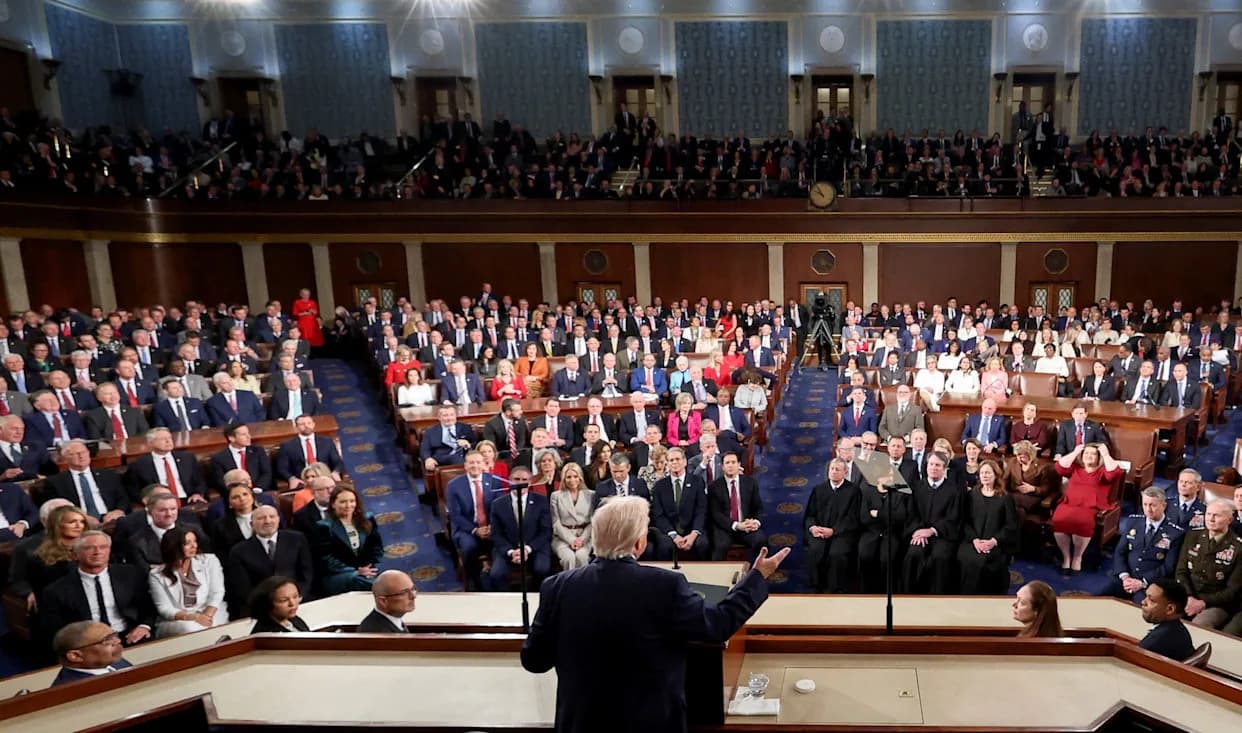
President Donald Trump used a lengthy State of the Union-style address to present an ambitious list of legislative priorities to a Republican Congress — while explicitly asking lawmakers not to take action on his controversial tariffs after a recent Supreme Court setback.
Key Proposals
Trump asked GOP leaders to pursue several high-profile items: bar institutional investors from buying single-family homes, codify his drug-pricing executive actions, prohibit lawmakers from using insider information to profit from stock trades, and redirect Affordable Care Act premium subsidies into consumers' health savings accounts. He also pushed for a national voter ID requirement, the end of so-called sanctuary cities, and restrictions on commercial driver’s licenses for people in the country illegally.
Tariffs And The Courts
After the Supreme Court curtailed his tariffs "in their original form" last week, Trump called the decision "disappointing" but told Congress that "congressional action will not be necessary" to preserve his trade measures. Some Republicans, however, urged Congress to assert its authority by codifying tariffs into law — a proposal Trump appeared to sidestep.
Political Reality And Legislative Pathways
Republican leaders acknowledged the agenda faces steep political and procedural hurdles. Several GOP senators said many priorities will require reconciliation to pass on party-line votes, while others doubted bipartisan support would materialize as the midterms approach. Democrats broadly criticized the lack of outreach for compromise and questioned Trump’s commitment to follow-through on populist proposals such as limits on institutional home-buying and caps on credit card interest.
Heated Exchanges And Protests
The address featured visible friction between parties: jeers, shouted retorts, and protests inside the chamber. Representative-level protests included chants and banners; some Democrats staged off-site demonstrations or silent protests at the urging of House Minority Leader Hakeem Jeffries. The speech also drew applause and heckling over proposals like banning congressional stock trading — with Democrats insisting any ban should cover the president and Cabinet as well.
What Comes Next
With primaries underway and midterm politics already accelerating, lawmakers are debating whether to prioritize smaller bipartisan measures or attempt major party-line bills. Republican senators pointed to a modest housing bill as one potential starting point, while others warned the broader agenda will be difficult to enact without substantial negotiation or the use of reconciliation procedures.
Bottom line: Trump laid out a wide-ranging legislative wish list and took the unusual step of asking Congress not to act on his tariffs — but partisan divisions, procedural limits and midterm politics make many of his proposals uncertain.
Help us improve.