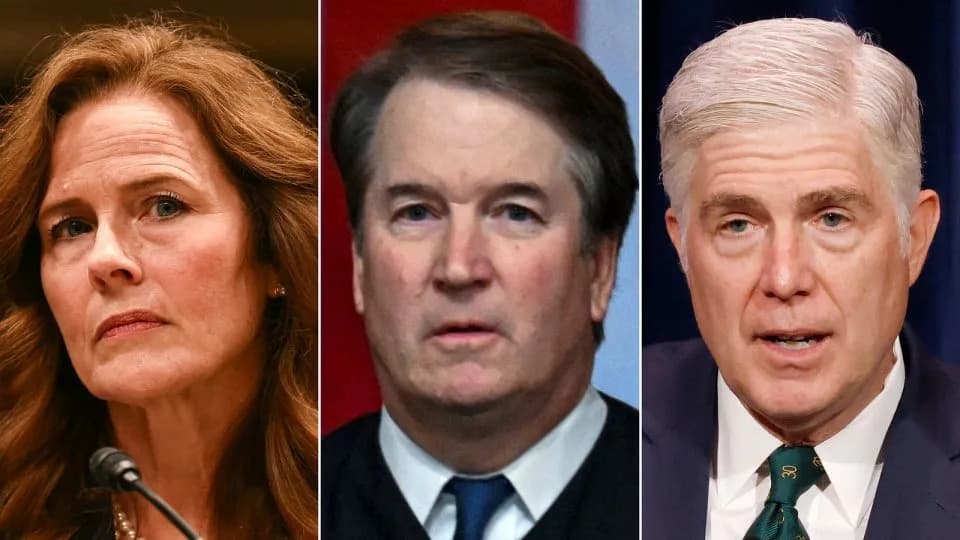
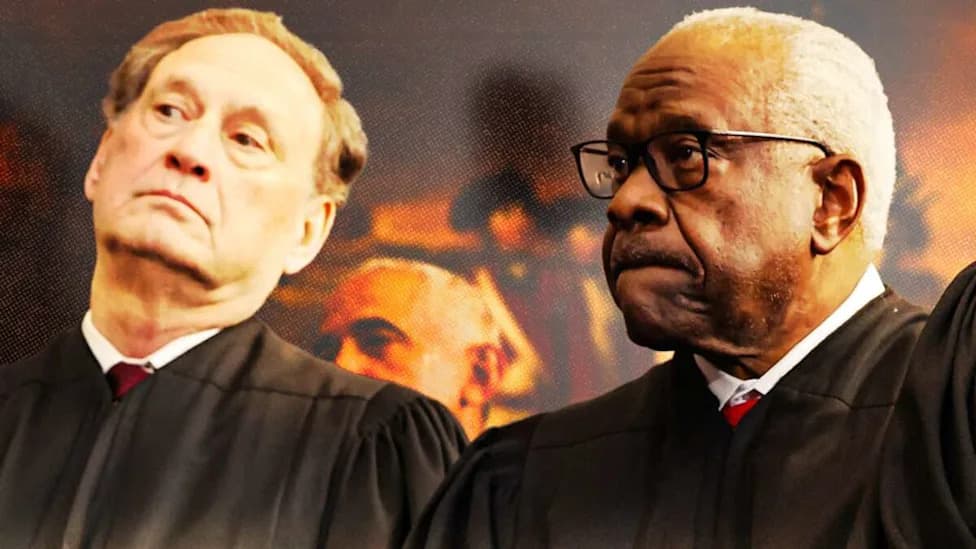
President Trump used the State of the Union to call the Supreme Court’s 6-3 decision blocking his use of a 1970s emergency law for broad tariffs “very unfortunate,” while four justices — Roberts, Kagan, Kavanaugh and Barrett — sat silently nearby. Trump, who previously called the ruling a “disgrace,” shook hands with the attending justices and sought to minimize the ruling’s practical impact. The moment echoed past tense interactions between presidents and justices, including Obama’s rebuke over Citizens United and visible bench reactions.
Trump Calls Supreme Court Tariff Ruling "Very Unfortunate" During State of the Union as Justices Sit Silently
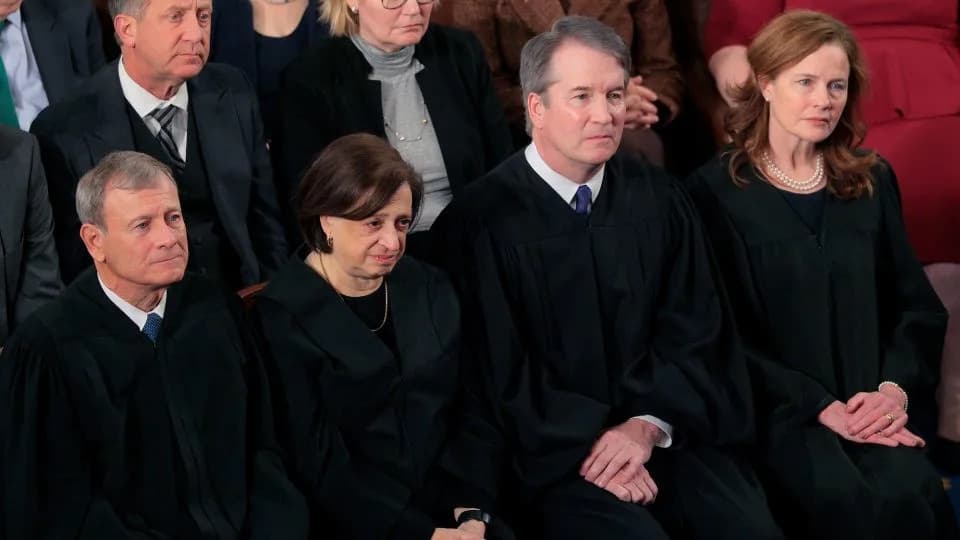
Supreme Court Chief Justice John Roberts, left, Justice Elena Kagan, Justice Brent Kavanaugh and Justice Amy Coney Barrett attend the State of the Union address at the US Capitol on February 24, 2026. - Chip Somodevilla/Getty Images
President Donald Trump used his State of the Union address to criticize the Supreme Court’s recent 6-3 decision that blocked his ability to rely on a 1970s emergency statute to impose broad tariffs. Standing with four justices seated a few feet away, Trump called the outcome “very unfortunate,” while also seeking to downplay its immediate economic impact.
“It just came down. Very unfortunate ruling,”
Four justices attended: Chief Justice John Roberts and Justices Elena Kagan, Brett Kavanaugh and Amy Coney Barrett. Of those present, Roberts, Kagan and Barrett were in the majority against the tariffs; Justice Kavanaugh — a Trump appointee — wrote the dissent.
Context and Reaction
The president’s brief public rebuke at the podium was milder than remarks he made at a White House press conference the previous Friday, when he called the decision a “disgrace” and suggested, without evidence, that justices who voted against him may have been influenced by foreign interests. At Tuesday’s address he nonetheless reiterated his displeasure before emphasizing that many countries and companies would likely honor existing agreements.
Before the speech, Trump walked through the House chamber and exchanged handshakes with all four justices. He later framed the ruling’s practical impact as limited: “The good news is that almost all countries and corporations want to keep the deal that they already made,” he said.
Why Justices Attend (Reluctantly)
Members of the Court have long signaled discomfort with the State of the Union’s partisan atmosphere. Justices traditionally sit stone-faced and silent amid the applause and jeers of lawmakers. Chief Justice Roberts has questioned the role himself, noting that, “To the extent the State of the Union has degenerated into a political pep rally, I’m not sure why we’re there.”
The scene recalled other tense moments in presidential speeches — notably when President Barack Obama criticized the Court’s Citizens United decision in 2010 and Justice Samuel Alito visibly reacted. That episode led Alito to avoid subsequent addresses.
What the Ruling Means
The Court’s 6-3 decision prevents the president from using that specific emergency statute to impose sweeping tariffs unilaterally. It did not bar the administration from pursuing other legal routes to raise tariffs, though alternative paths often carry procedural requirements and limitations.
This episode highlights both the limited but symbolic power of Supreme Court rulings in high-profile policy disputes and the awkward rituals that surround the justices’ attendance at political events.
Help us improve.