The New York Times and other outlets have documented a pattern in which large donations to MAGA Inc. were followed by administration actions that benefited the donors. Detroit billionaire Matthew Moroun donated $1 million on Jan. 16, met with senior officials on Feb. 9, and that evening President Trump reversed his earlier support for the Gordie Howe International Bridge — a decision that benefits Moroun. Coupled with recent reports of a pardon and a staffing‑rule reversal after donations, critics say the sequence raises troubling pay‑for‑play questions.
New Reporting: $1M Super PAC Donation Raises Pay‑For‑Play Questions in Trump ‘Bridgegate’
New reporting has intensified scrutiny over a pattern in which large donations to MAGA Inc., the super PAC aligned with former President Donald Trump, were followed by administration actions that benefited the donors. The New York Times and related outlets have highlighted three recent episodes — a pardon, a policy reversal, and a high‑profile infrastructure dispute — that critics say together create the appearance of pay‑for‑play.
What Happened
According to public filings and reporting, Detroit‑area billionaire Matthew Moroun — whose family owns and operates the Ambassador Bridge linking Detroit and Windsor, Ontario — donated $1 million to MAGA Inc. on Jan. 16. Less than a month later, on Feb. 9, Moroun met with senior administration officials to press his opposition to the Gordie Howe International Bridge, a new publicly backed crossing between Michigan and Ontario. That evening, President Trump announced he would block the bridge from opening unless unspecified demands were met — a reversal from his earlier public support for the project.
Context: A Troubling Pattern
Observers point to two other recent episodes reported by The New York Times: a Venezuelan‑Italian banker who faced serious felony charges received a presidential pardon soon after his daughter made a large donation to MAGA Inc., and officials abandoned a Biden‑era nursing‑home staffing rule after the industry directed sizable contributions to the same super PAC. Taken together, these stories have prompted critics to say the sequence creates an appearance of influence trading.
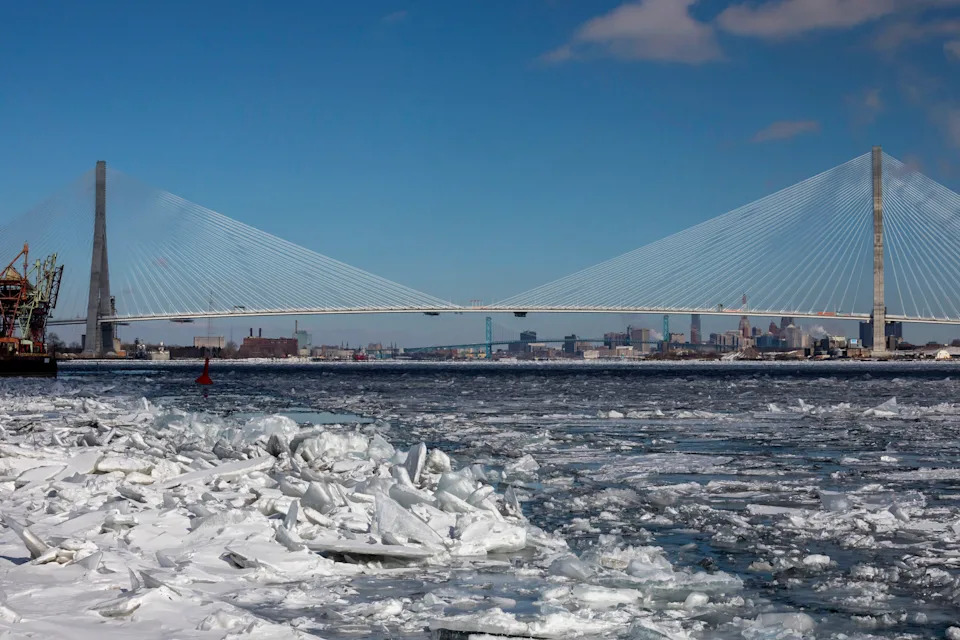
The Gordie Howe International Bridge on Feb. 8, 2026, in Detroit.(Jim West / UCG / Universal Images Group via Getty Images)
Timeline
- Jan. 16: Matthew Moroun donates $1 million to MAGA Inc., according to campaign‑finance filings.
- Feb. 9, midday: Moroun meets with senior administration officials to press his opposition to the Gordie Howe International Bridge.
- Feb. 9, evening: President Trump reverses his earlier support and announces steps that would block the bridge’s opening unless conditions he specified are met.
Responses
Spokespersons for MAGA Inc. and the White House have denied any connection between the donation and the president’s change of position. Supporters argue donations to independent super PACs should not be presumed to influence official actions. Critics counter that, amid other recent examples, the timing makes the pattern difficult to ignore.
Why It Matters
The Gordie Howe International Bridge is a major international infrastructure project expected to improve trade and border traffic between Michigan and Ontario. Moroun’s privately owned Ambassador Bridge is the existing major crossing; preventing or delaying the new bridge preserves the economic advantages of his privately held toll facility. The episode has therefore drawn attention not only because of donation timing, but also because of the clear financial stakes for the donor.
Bottom Line
Whether the events amount to illegal activity is a separate, legally complex question. But the sequence of donation, lobbying, and immediate policy reversal has heightened concerns about the appearance of influence in this administration and renewed calls for stronger transparency and safeguards around political contributions and official decision‑making.
Update: This story updates earlier coverage on related donations and policy changes.
Help us improve.