Democrats are turning the Supreme Court's rebuke of President Trump's tariff authority — and his quick move to pursue a 15% global tariff under another legal route — into a central midterm argument about rising costs. Party leaders and potential 2028 contenders are demanding refunds, preparing ad buys and staging State of the Union counterprogramming to spotlight the tariffs' impact on households and swing-state economies. The GOP defends the policy as pro-growth, but slowing growth and persistent inflation keep affordability a top voter concern.
Democrats Call Trump’s Tariff Push a Midterm ‘Gift’ — Plan Ads, Refund Demands and SOTU Counterprogramming
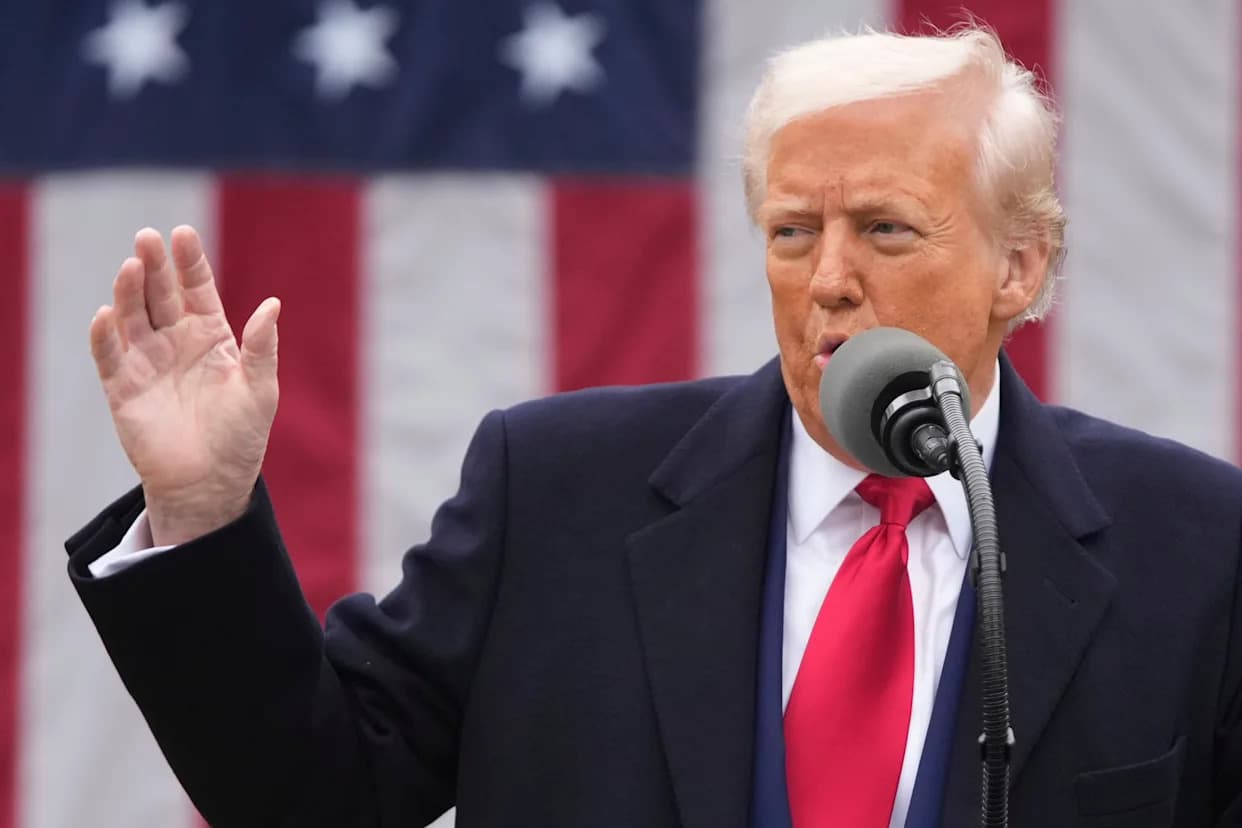
Democrats are seizing on the fallout from President Donald Trump’s tariff moves to sharpen an affordability message heading into the midterms. The party had already planned to attack Republicans on the economy; the Supreme Court’s recent ruling that Mr. Trump exceeded his authority on tariffs — followed by his effort to impose a 15 percent global tariff under a different legal theory — has intensified that strategy.
Party strategists and officials describe the sequence of events as a political boon. "It's such a gift," one Democratic strategist told POLITICO. "The gift of it is how politically inept it is." Doug Herman, a California-based Democratic strategist, called the renewed tariff talk "tailor-made" for an affordability pitch: "Every American has borne the cost of these Trump tariffs," he said. "It’s the kind of thing that everybody needs to take advantage of in their campaigns."
Quick, high-profile responses: Potential 2028 Democratic contenders moved quickly to shape the narrative. Illinois Gov. J.B. Pritzker issued an "invoice" demanding that the White House return what he calculated as more than $8.6 billion in owed tariff revenue — roughly $1,700 per family in his state. Transportation Secretary Pete Buttigieg wrote on X that "The President owes you an apology — and a refund." California Gov. Gavin Newsom said Mr. Trump "should return that money immediately." Veteran strategist James Carville told POLITICO: "They imposed a sales tax on the American people. What did you get? Nothing."
Democrats plan to frame the tariffs as effectively illegal levies that have raised costs for households and small businesses, an argument they expect to feature heavily in ad buys and campaign messaging. "I wouldn't be surprised if tariffs made it in 50 percent of our paid advertising," one Democratic strategist working on House campaigns said. A separate strategist working on Senate races said teams are preparing to ramp up affordability ads tied to the tariffs as well.
Strategists note the political geography matters: several states hit hardest by tariff-related disruptions are home to competitive Senate contests. "We’ve not only lost our markets and gotten lower prices selling corn and soybeans, particularly soybeans, but we have also, at the same time right now, we have the misfortune of having very high inputs, a lot of uncertainty," Iowa Democratic Party Chair Rita Hart told POLITICO. "We’re talking about real hardship where people are going to be really negatively affected financially."
Although President Trump is not on the ballot this November, Democrats say they will target Republicans who defended the tariff policies. "It’s this very, very easy to understand action that the president took, and that congressional Republicans backed," a Democratic strategist working on Senate races said. The pitch to voters will be simple: "This is where my opponent is not fighting for you."
Republicans push back: The RNC defended the president, saying the Supreme Court decision "does not change the reality: President Trump’s trade agenda is working," and arguing tariffs have helped lower inflation, raise wages and spur investment in U.S. manufacturing and energy. The White House likewise dismissed Democratic claims, citing trade renegotiations, lower drug prices and new manufacturing investments as wins.
Still, recent economic data showed slowing growth and rising inflation, with polls continuing to place costs and the economy near the top of voters' concerns. Mr. Trump has traveled to battleground states to pitch his economic record but has struggled to acknowledge cost-of-living worries; in Georgia the week before the court ruling he declared he had "won affordability" and called his tariffs "the greatest thing that's happened in this country."
With the president set to deliver the State of the Union address, Democrats are preparing a wave of counterprogramming: anti-SOTU rallies, targeted ad campaigns and high-profile guests in the gallery, including small business owners affected by the tariffs. "House Republicans rubber stamped President Trump’s tariffs and are responsible for the painful affordability crisis they have unleashed on American families," DCCC Chair Suzan DelBene (D-Wash.) said in a statement. "Voters will not soon forget Republicans are the reason everything is more expensive."
Help us improve.