James Hundley was removed by the Justice Department hours after federal judges unanimously appointed him interim U.S. attorney for the Eastern District of Virginia. Deputy Attorney General Todd Blanche said the White House — not district judges — chooses U.S. attorneys, highlighting a legal dispute over interim appointment authority. The dismissal deepens turmoil in the office after contested appointments, a forced departure of a veteran prosecutor, and a judge’s finding that a prior interim appointee was unlawfully installed.
Justice Department Fires Judge-Selected U.S. Attorney For Virginia Amid Appointment Clash
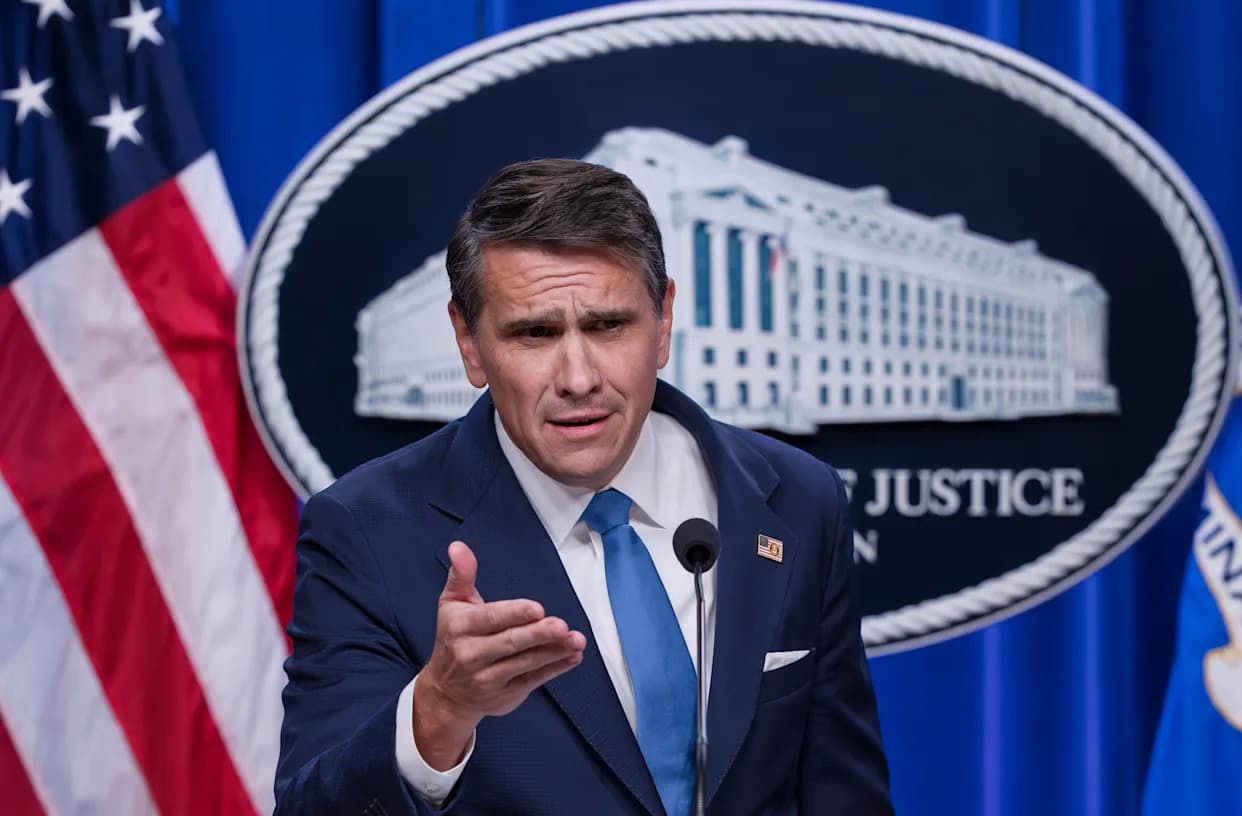
Deputy Attorney General Todd Blanche takes a question from a reporter during a news conference after the Justice Department announced the release of three million pages of documents in the latest Jeffrey Epstein disclosure in Washington, Friday, Jan. 30, 2026. (AP Photo/J. Scott Applewhite)(ASSOCIATED PRESS)
The Justice Department abruptly removed James Hundley on Friday after federal judges had unanimously appointed him to serve as interim U.S. attorney for the Eastern District of Virginia. Deputy Attorney General Todd Blanche announced the dismissal on social media, framing the action as a dispute over who has authority to fill the post when a temporary appointment lapses.
Background: The Eastern District of Virginia — one of the Justice Department's most prominent trial offices — has been in turmoil since September, when a long-serving prosecutor left amid pressure from the Trump administration to pursue cases against prominent critics of the president, including former FBI Director James Comey and New York Attorney General Letitia James. That prosecutor, Erik Siebert, was effectively forced out and replaced by Lindsey Halligan, a White House aide who later secured indictments in those politically charged matters. A judge subsequently found Halligan's appointment unlawful, leading to dismissal of those cases; the Justice Department has appealed.
After Halligan resigned last month amid continued judicial skepticism about her appointment, district judges unanimously selected Hundley, a veteran lawyer with more than 30 years of criminal and civil experience. Within hours, however, the department removed him.
Todd Blanche (on X): "EDVA judges do not pick our US Attorney. POTUS does. James Hundley, you're fired!"
The dispute centers on competing interpretations of the law governing interim U.S. attorney appointments. Statutes permit district courts to appoint a U.S. attorney when an initial temporary appointment expires, but the Justice Department under the Trump administration has contended that the authority to fill the office rests solely with the executive branch. In recent months, the department's efforts to retain temporary appointees or to contest judges' appointments have generated multiple court challenges and rulings finding some appointments unlawful.
This is not an isolated incident: last week, the Justice Department also fired a lawyer whom judges in northern New York had appointed to be U.S. attorney after the district declined to keep the administration's interim pick once his 120-day term expired.
What Comes Next: The firing intensifies scrutiny over appointment practices and raises fresh questions about the independence of local U.S. attorney offices, the boundaries between judicial and executive appointment powers, and ongoing appeals tied to prior dismissals. For now, the Eastern District of Virginia remains without a confirmed Senate-approved U.S. attorney, and the legal and political fight over interim appointments is likely to continue to move through courts and Washington.
Help us improve.