Purdue University is accused by students, faculty and alumni of informally blocking applicants from China and other U.S.-designated "adversary" nations after congressional scrutiny. Multiple international applicants say funded offers were rescinded without explanation, while Purdue denies any formal ban. Critics warn such practices could violate civil-rights law, undermine academic freedom and deepen a chilling effect on U.S.-China academic exchange.
Purdue Accused of Secretly Blocking Chinese Applicants After House Committee Probe
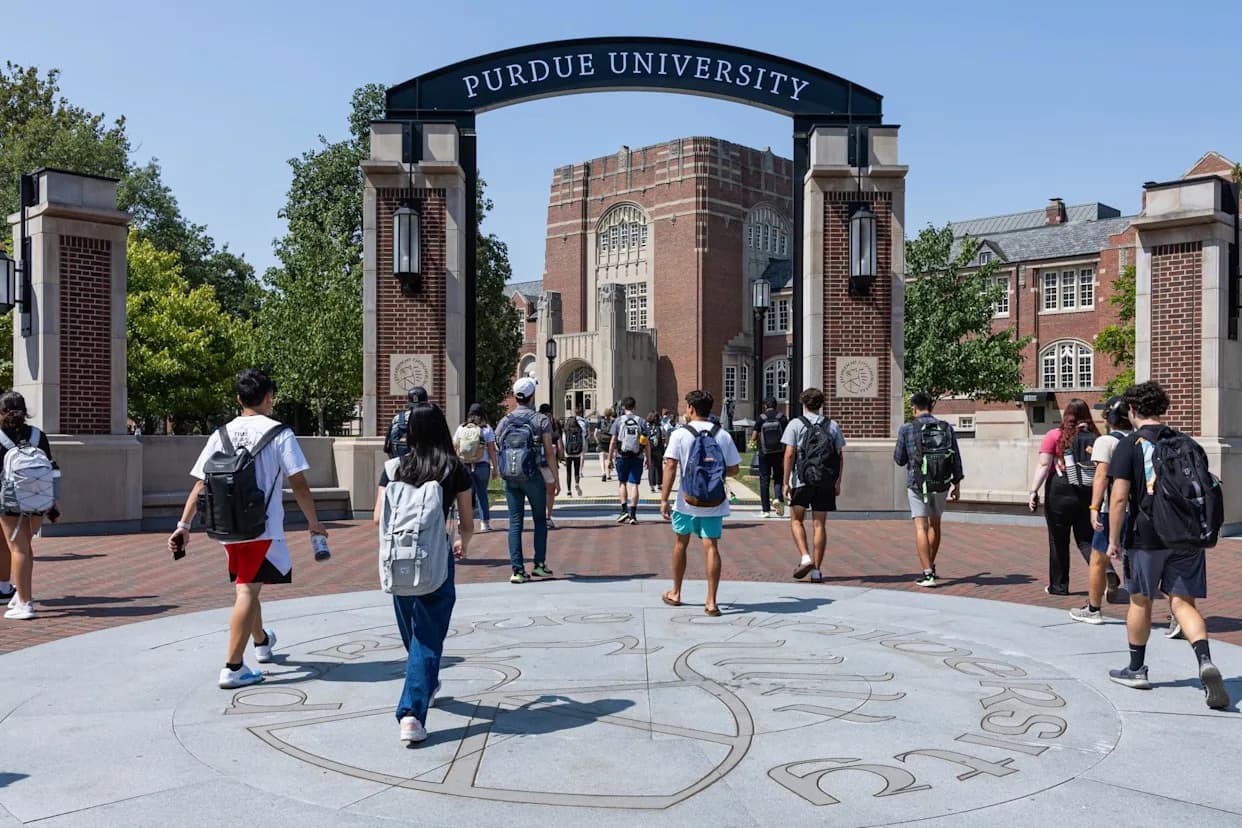
Students and faculty at Purdue say an unofficial policy is in effect to automatically reject students from China and a number of other countries.Photograph: Michael Hickey/Getty Images(Photograph: Michael Hickey/Getty Images)
Faculty, students and alumni at Purdue University in Indiana say the public institution has effectively adopted an unwritten practice of rejecting applicants from China and several other U.S.-designated “adversary” nations. The allegation follows a letter from the U.S. House’s Select Committee on the Chinese Communist Party requesting data on Chinese students at six universities; the Lafayette Journal & Courier and the Guardian first reported on the claims and related rescinded offers.
Allegations and Student Accounts
Multiple international applicants reported receiving funded offers from Purdue departments only to have those offers rescinded weeks later with little or no explanation. Some said they had already declined other offers and signed leases in Lafayette before the reversals. One affected student from China told reporters, “I was shocked. I thought maybe they sent the rejection to the wrong guy.” Another said a faculty contact later told them verbally that there was an internal requirement not to admit Chinese students, though no written policy was produced.
University Response
Purdue denies instituting a nationality-based ban. Erin Murphy, a university spokesperson, told the Guardian: "There is no ban." The university also adopted in June a policy restricting certain faculty and staff interactions with nations designated as U.S. adversaries, but that policy does not explicitly mention barring students. Purdue has not publicly provided detailed explanations for the rescinded offers cited by students and has cautioned faculty and staff against speaking with the press.
Context: Congressional Pressure And Broader Trends
The reported shift at Purdue came after the House committee on the Chinese Communist Party demanded student data from six U.S. universities, citing national-security concerns about technology transfer and research access. Other institutions, including the University of Illinois Urbana-Champaign and Columbia University, have reviewed or curtailed partnerships and programs with Chinese institutions after congressional scrutiny, though none have been reported to enact a blanket admissions block.
Legal And Ethical Concerns
Critics — including the Federation of Asian Professor Associations — called the alleged practice "unethical" and warned it may violate Title VI of the Civil Rights Act of 1964, which bars federally funded institutions from discriminating on the basis of race, color or national origin. Advocates and legal experts say categorical exclusions based on nationality would substitute risk-avoidance for individualized compliance and could expose universities to legal and reputational risks.
“National security fears are eclipsing decades of academic collaboration,” said Valentina Dallona of Justice Is Global.
Wider Impacts
Observers link these developments to a broader chill affecting U.S.-China academic exchange. During the Trump administration, actions such as Proclamation 10043 and the China Initiative tightened visa and research rules for some Chinese scholars; although the China Initiative ended in 2022, concerns about visa restrictions and funding remain. Students and organizers report a palpable chilling effect: prospective applicants are now more often advised to seek graduate study in Europe, Canada or Australia, and some say the decline in international talent threatens the long-term competitiveness of U.S. research.
What We Still Don’t Know: Whether any directive at Purdue is formal and who authorized rescinded offers. Purdue denies a formal ban and has not disclosed documentation backing the alleged internal instructions described by students and some faculty.
Sources: Reporting by the Lafayette Journal & Courier and the Guardian; statements from Purdue and groups representing faculty and students.
Help us improve.