Summary: George Wallace, barred from consecutive terms as Alabama governor, installed his wife Lurleen as a political stand-in in 1966. Doctors had found cancerous tissue in Lurleen in 1961 but informed only George, who allegedly withheld the diagnosis and delayed treatment. Lurleen won the election with 63.4% of the vote, served largely ceremonial duties, championed mental-health funding, and died on May 7, 1968; the episode remains part of Wallace’s controversial legacy and is alluded to in Lynyrd Skynyrd’s "Sweet Home Alabama."
He Engineered His Wife’s Rise — Then Hid Her Cancer to Protect His Power
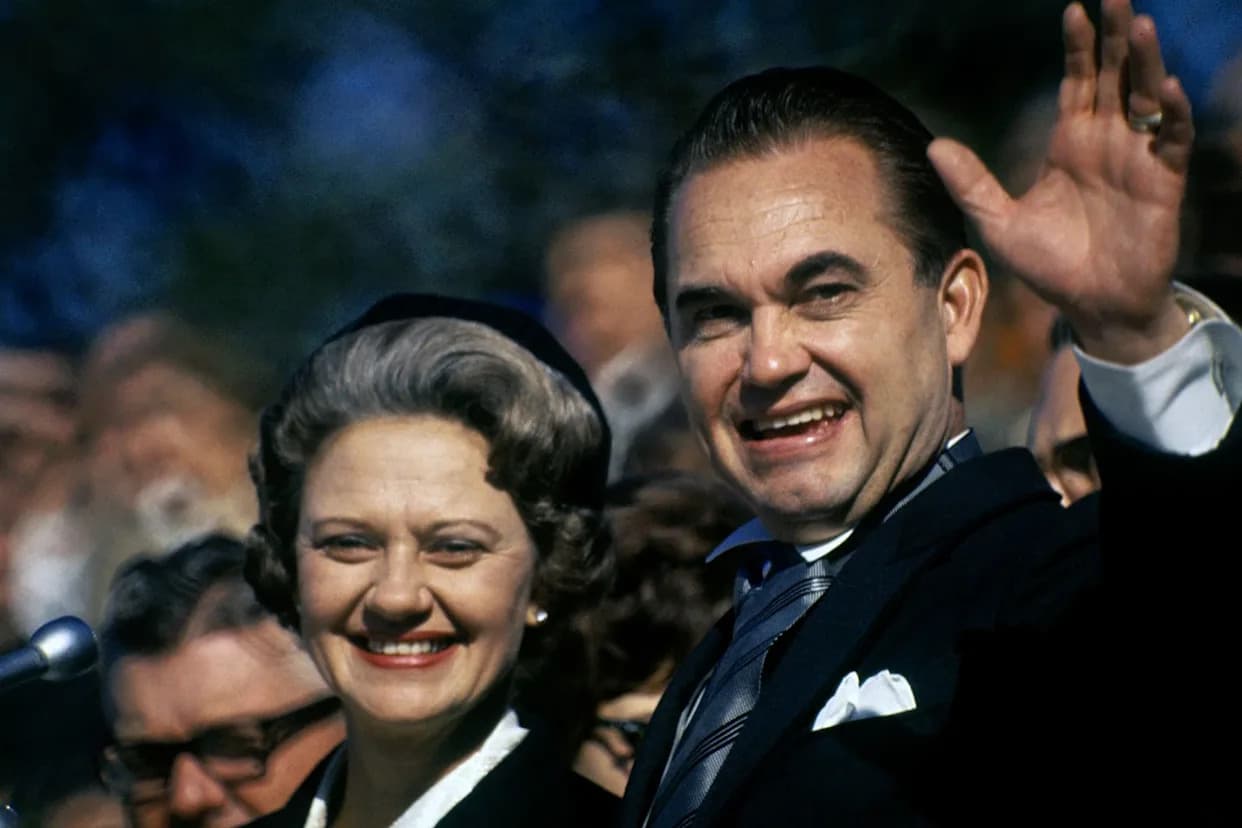
Lurleen Wallace, standing beside husband George Wallace, smiles at her inauguration as Alabama governor in 1967Bettmann/Getty
The story of George and Lurleen Wallace is one of the most striking and disturbing episodes in 20th-century American politics: a staged political succession, a concealed cancer diagnosis, and a marriage reshaped around ambition and control.
George Wallace, the polarizing segregationist who first became Alabama’s governor in January 1963, was prevented by state law from serving consecutive terms. Determined to keep influence over the governor’s office, he persuaded his wife, Lurleen Wallace, to run as his political proxy in 1966. The campaign ran openly on that premise: Lurleen campaigned as "Mrs. George C. Wallace" under the slogan "Two Governors, One Cause."
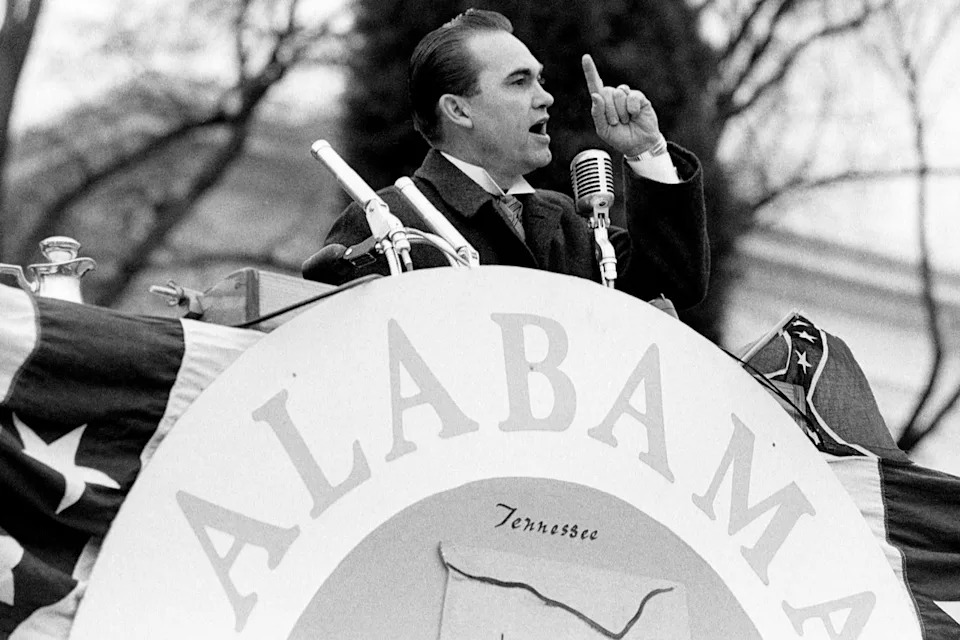
Alabama Gov. George C. Wallace delivers his inaugural address in January 1963Bettmann/Getty
Despite Lurleen’s personal inclination toward family life and privacy — and a prior episode in which she had considered divorce over George’s suspected infidelity — she agreed to run. She won the Democratic nomination against nine rivals and carried the general election with 63.4% of the vote, winning every Alabama county except two.
Medical Betrayal: In a deeply troubling episode, doctors discovered cancerous tissue after Lurleen gave birth to the couple’s fourth child in 1961 but, following then-common practice, informed only her husband. George Wallace was told of the uterine cancer and, according to contemporary accounts, insisted that Lurleen not be told and did not pursue timely treatment on her behalf. Lurleen only learned of her diagnosis shortly before the 1966 election, by which point the disease had progressed.
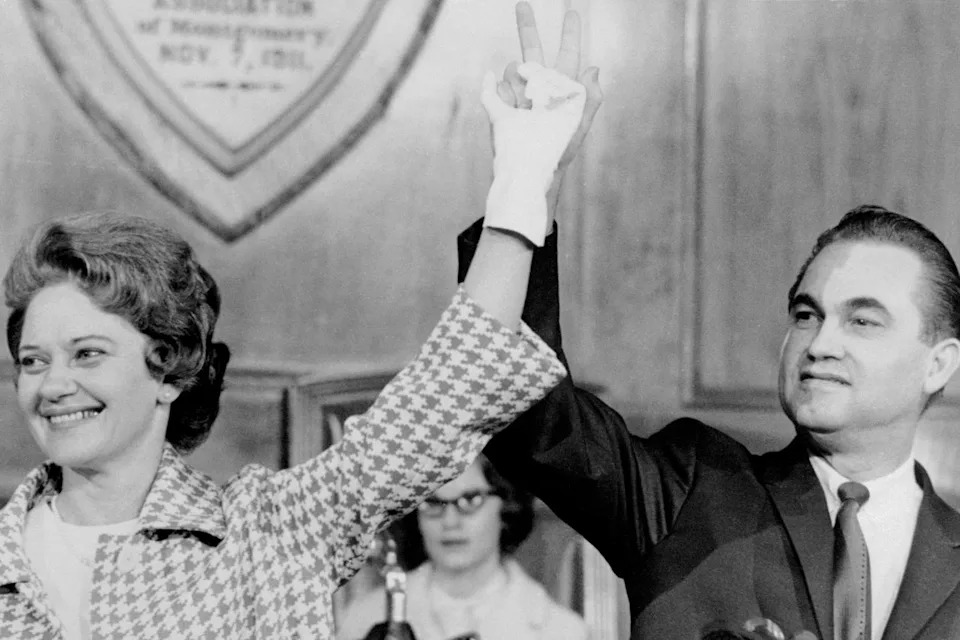
Lurleen Wallace stands with her husband, Alabama Gov. George Wallace, after announcing her campaign to succeed himBettmann/Getty
She was inaugurated in January 1967 and served largely as a ceremonial governor while George Wallace worked from an office across the hall and continued to drive policy behind the scenes. Though her duties were limited, Lurleen used her position to press for at least one substantial cause: increased funding for Alabama’s mental-health facilities after she was shocked by their conditions during a visit.
Lurleen Wallace underwent treatment — traveling regularly to Houston — but the delay in diagnosis and treatment proved fatal. She died on May 7, 1968, while George Wallace was campaigning for president. During that campaign he repeatedly misrepresented her condition, at times claiming she had "won the fight" against cancer; after her death, he sent the couple’s underage children to live with relatives and returned to campaigning.

Lynyrd Skynyrd performs, circa 1976Michael Ochs Archives/Getty
Aftermath and Cultural Echoes: George Wallace returned to the Alabama governorship in later years and remarried. The couple’s story remains entwined with cultural memory: Lynyrd Skynyrd’s 1974 anthem "Sweet Home Alabama" famously references "the governor" with a backing "boo, boo, boo." Band members later indicated that the refrain signaled disdain for Wallace rather than praise, though interpretations of the song’s meaning remain contested, especially after the deaths of several band members in a 1977 plane crash.
"In the name of the greatest people that have ever trod this Earth... segregation now, segregation tomorrow, segregation forever." — Line associated with George Wallace’s 1963 inaugural rhetoric
This episode — political maneuvering, a withheld medical diagnosis, and a first lady used as a proxy — underscores the personal costs of power and the ethical failures that can accompany political ambition.
Photo credits: Bettmann/Getty, Michael Ochs Archives/Getty (as reported in original accounts).
Help us improve.