The National Institute of Anthropology and History (INAH) has uncovered a Zapotec tomb in the Oaxaca Valley dating to about 600 CE, a find President Claudia Sheinbaum and officials call the most significant archaeological discovery in Mexico in the last decade. The tomb features an owl carving above the antechamber, a painted ancestral portrait, calendrical inscriptions and polychrome murals showing a procession carrying copal. An interdisciplinary INAH team is conducting conservation and ceramic, iconographic, epigraphic and physical anthropology studies to learn more about Zapotec funerary practices and social organization.
600 CE Zapotec Tomb Unearthed in Oaxaca — Called Mexico’s Most Significant Archaeological Find This Decade
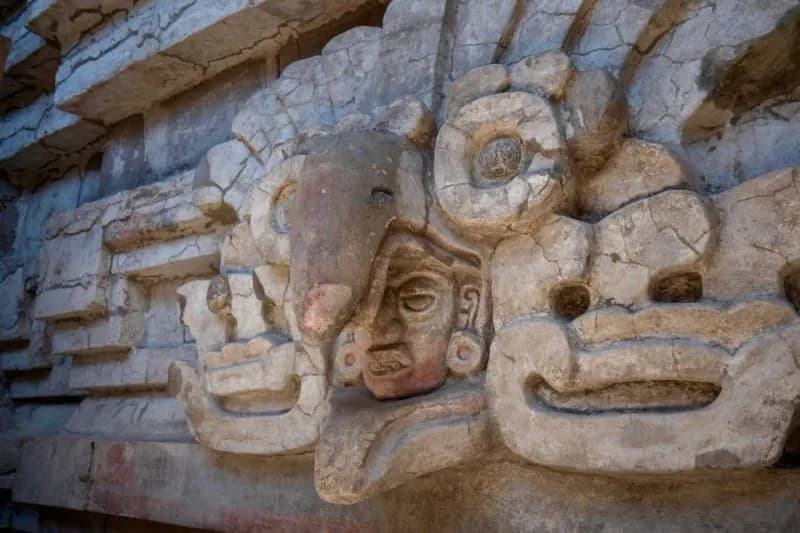
Owl carving above the entrance to a Zapotec tomb from 600 CE in the Oaxaca Valley, Mexico, February 14, 2026. (photo credit: Screenshot/X/@ccurieldeicaza)
A well-preserved Zapotec tomb dating to about 600 CE has been uncovered in the Oaxaca Valley by Mexico’s National Institute of Anthropology and History (INAH). The discovery, announced publicly by President Claudia Sheinbaum, has been described by officials as the most significant archaeological find in Mexico in the last decade.
Details of the Discovery
INAH archaeologists documented elaborate architectural and artistic elements preserved within the tomb, including a carved owl above the antechamber entrance, painted human faces, calendrical inscriptions on the lintel, and relief figures on the jambs. The owl motif — associated in Zapotec iconography with night and death — has a curved beak that partially covers a painted face believed to represent a Zapotec lord or ancestral figure.
“This is an exceptional discovery due to its level of preservation and the insights it provides into Zapotec culture: its social organization, funerary rituals and worldview,” Culture Minister Claudia Curiel de Icaza wrote, underscoring the tomb’s rarity and research value.
Mural Paintings and Iconography
The burial chamber contains polychrome murals painted in ochre, white, green, red and blue. Conservators report an in situ procession scene depicting figures carrying bundles of copal — a resin used in ritual offerings — walking toward the tomb entrance. INAH noted calendrical names carved into the threshold and reliefs of a male and female figure on the jambs, likely serving as guardians of the burial space. Each guardian is shown wearing a headdress and holding ritual objects.
Conservation and Research
An interdisciplinary INAH Oaxaca Center team is leading stabilization and preservation work at the site. Conservators are prioritizing a fragile mural threatened by root intrusion, insect activity and abrupt environmental fluctuations. Parallel studies underway include ceramic, iconographic and epigraphic analyses, along with physical anthropology examinations to learn more about the individuals buried there and the funerary practices associated with the tomb.
Researchers are also comparing this tomb with other known Zapotec funerary complexes to deepen understanding of the civilization’s social structure, artistic traditions and symbolic systems.
Context
The Zapotec civilization flourished in the Oaxaca region from around 700–500 BC until the Spanish conquest. Today, Zapotec peoples remain an important and living indigenous community in Oaxaca, and this tomb offers a rare window into their ancient cultural and ritual life.
Help us improve.