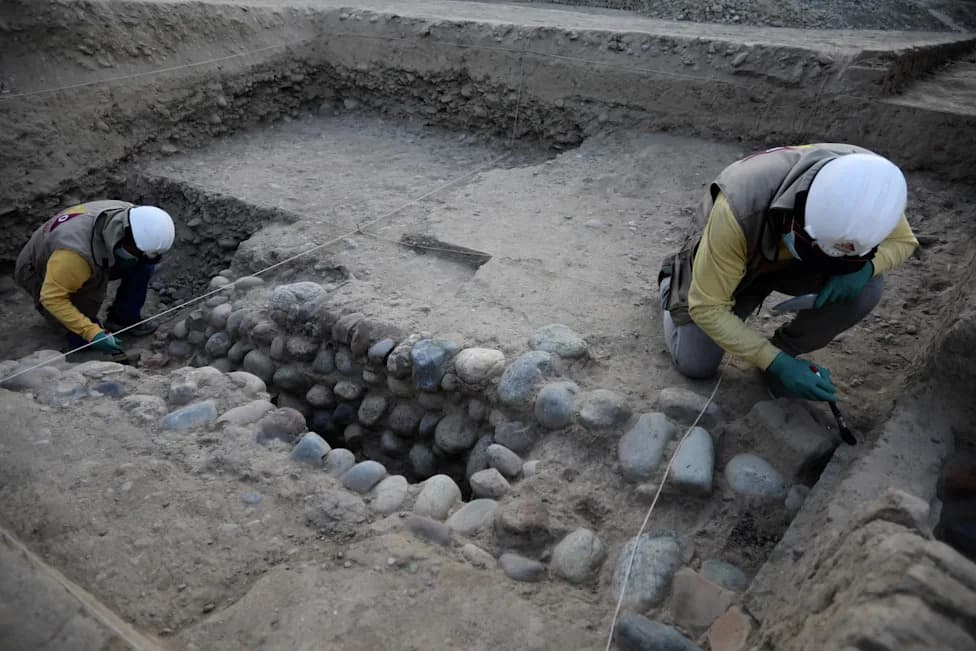
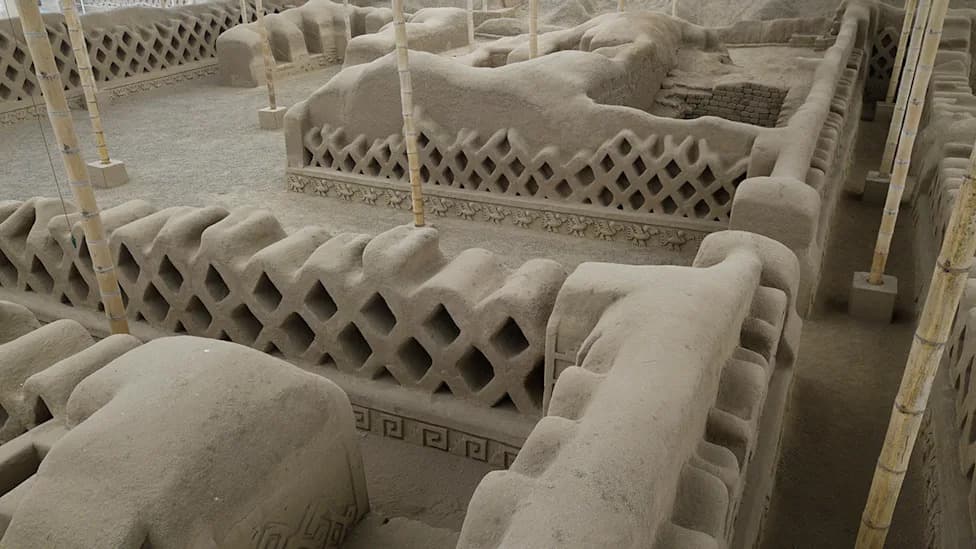
An untouched Chimu mausoleum was uncovered beneath adobe ruins at Chan Chan, marking the first undisturbed tomb found at the ancient site near Trujillo. Archaeologists recovered 38 bodies, including a central elite burial marked with bright red pigment likely to be cinnabar, and a western chamber holding roughly 20 individuals and many artifacts. Grave goods include jewelry, weapons, heavy beads and a painted wooden chest containing colorful textiles. The 55×55 ft mausoleum dates to about 600 years ago, around the mid-1400s, and excavation and analysis are ongoing.
Untouched Chimu Mausoleum Unearthed at Chan Chan Reveals 38 Burials and Rich Grave Goods
An Ancient Mausoleum Was Just Discovered Along the Peruvian Coast
Archaeologists announced this week the discovery of an untouched mausoleum complex beneath ruined adobe walls at Chan Chan on Peru's northern coast. This is the first undisturbed tomb found at the sprawling ancient city near Trujillo, the former capital of the Chimu Kingdom.
Site and Dating
The mausoleum measures roughly 55 feet on each side and stands about 16 feet high. Radiocarbon and contextual evidence place the structure at approximately 600 years old, dating it to the mid-1400s—around the time the expanding Inca empire encountered the Chimu.
What Excavators Found
Excavators exposed a stairway that descends about eight feet into a central chamber flanked by larger rooms on either side. The central chamber held a single burial marked with a bright red pigment; the eastern room was nearly empty, while the western room contained a cache of artifacts and the remains of about 20 people. Archaeologists located 18 additional human remains elsewhere in the complex, bringing the total to 38.
"It was a feeling of anxiety and urgency, to know if we were really in front of a chamber that had never been looted," said archaeologist Jorge Meneses, who is directing the excavations. "In that moment we realized that the chamber had not been looted."
Grave Goods and Ritual Indicators
Researchers identified a bright red pigment on a skull and other bones in the central chamber and on a funeral platform; specialists believe the pigment is likely cinnabar (mercury sulfide), a mineral with deep spiritual and ritual significance often reserved for high-ranking individuals in Chimu society.
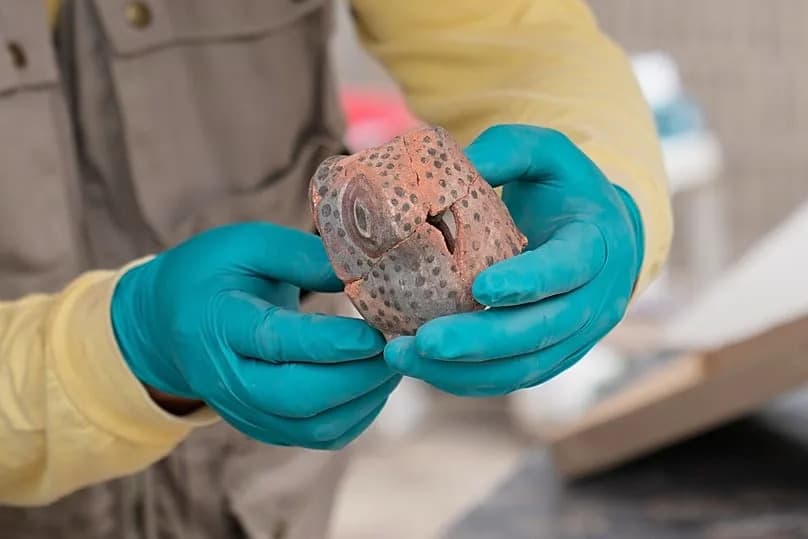
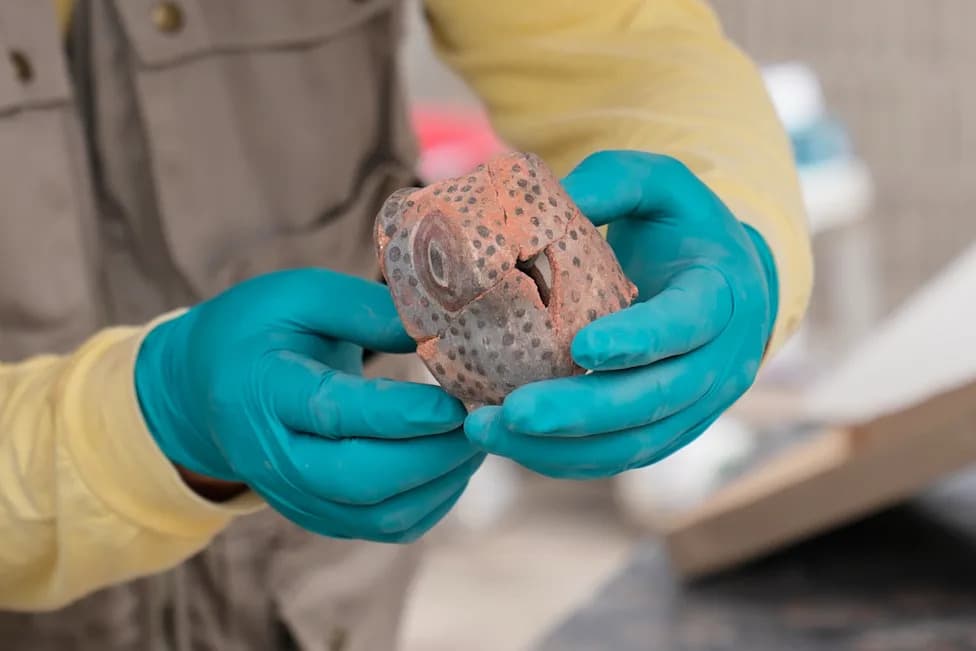
Recovered offerings include ear ornaments, necklaces plated with silver or copper, jewelry made from quartz, shells and semiprecious stones, numerous metal weapons and heavy beads, and a wooden chest painted with seabird and monkey motifs that contained vividly colored textiles.
Gabriel Prieto, a University of Florida anthropologist not involved in the dig, noted that the tomb architecture and Chimu art suggest these mausoleums were "designed to be open," and that the Chimu sometimes removed remains or offerings from burials to display them publicly in plazas as venerated ancestors.
Significance and Next Steps
Because the tomb appears undisturbed, archaeologists say it offers a rare—and rich—opportunity to study Chimu funerary practice, social hierarchy and material culture at a pivotal moment in Andean history. Excavation work is ongoing and the recovered remains and artifacts are undergoing further laboratory analysis to better understand chronology, social status, and ritual use.
Help us improve.