Israeli President Isaac Herzog’s state visit to Australia prompted sharply divided responses: official condolences after the Dec. 14 Bondi Beach attack that killed 15 people, and mass protests over Israel’s conduct in Gaza. Up to 30 demonstrations were planned nationwide, with as many as 5,000 expected in Sydney. The visit revived international legal debates — including 2024 ICC arrest warrants for Israeli leaders and a U.N. inquiry alleging incitement — though Australian authorities say Herzog has diplomatic immunity. The trip has deepened tensions within Australia’s Jewish community and raised concerns about national social cohesion.
Herzog’s Visit Splits Australia: Condolences at Bondi and Mass Protests Over Gaza
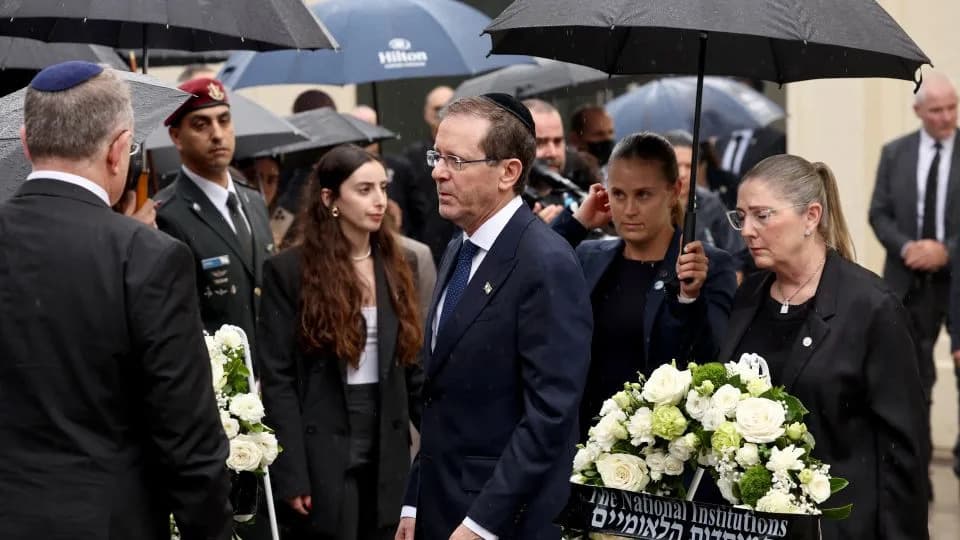
Israeli President Isaac Herzog and his wife Michal arrive to lay a wreath for the victims of the December 14, 2025 gun attack at the Bondi Pavilion, in Sydney, on February 9, 2026. - David Gray/AFP/Getty Images
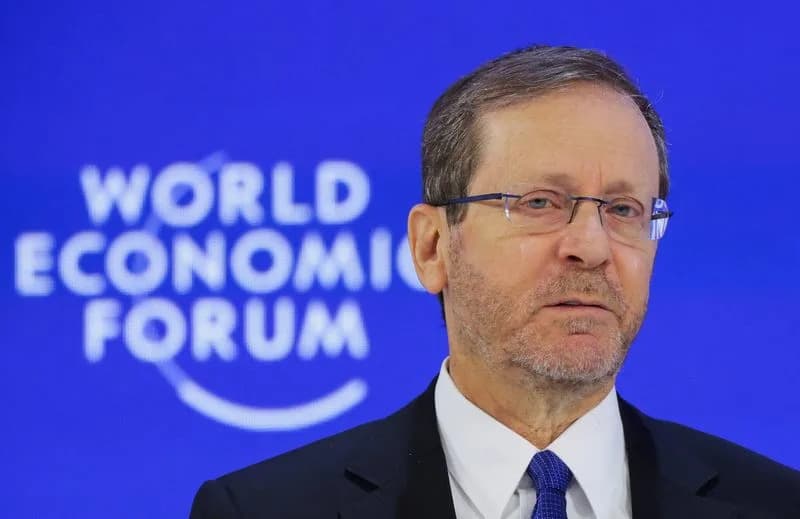
Israeli President Isaac Herzog arrived in Sydney on Monday to sharply contrasting receptions: an official welcome meant to show solidarity with a grieving Jewish community and large street protests by activists who accuse Israel’s leadership of war crimes.
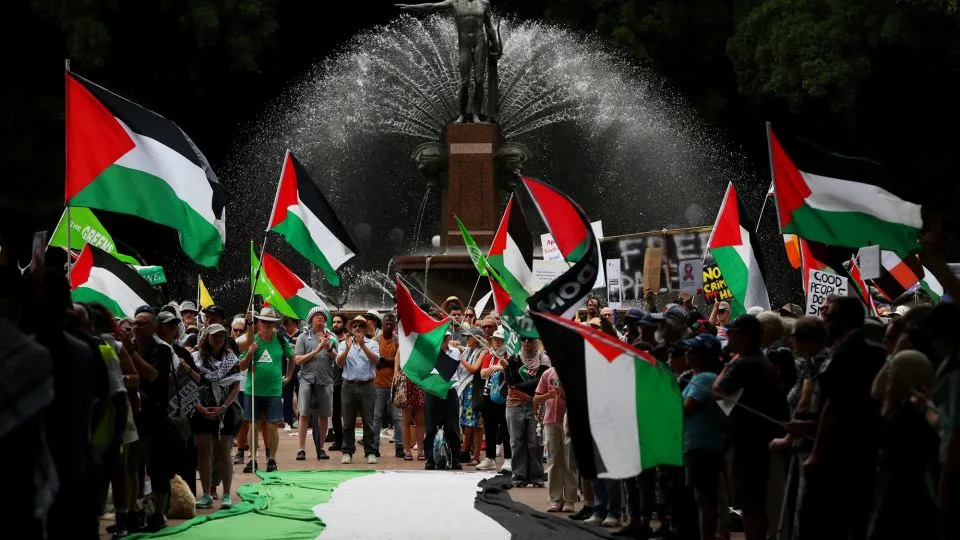
Protesters carry flags and placards during a rally against Israeli President Isaac Herzog's upcoming Australian visit on February 1, 2026 in Sydney, Australia. - Lisa Maree Williams/Getty Images
Visit, Protests and Security
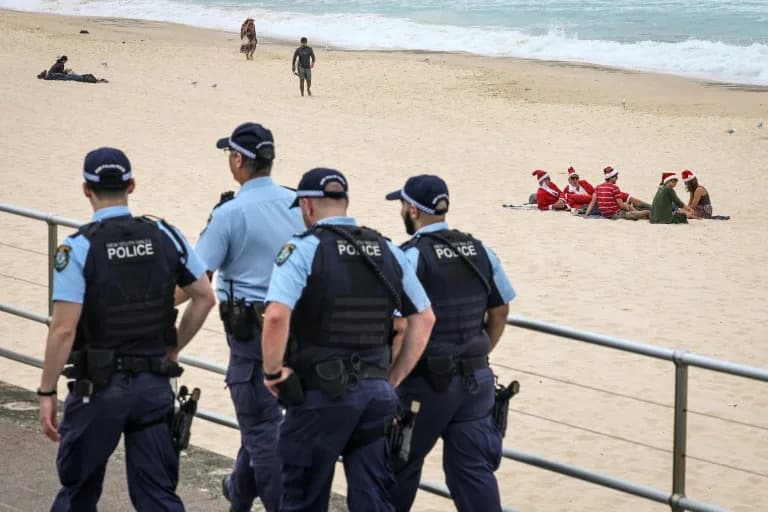
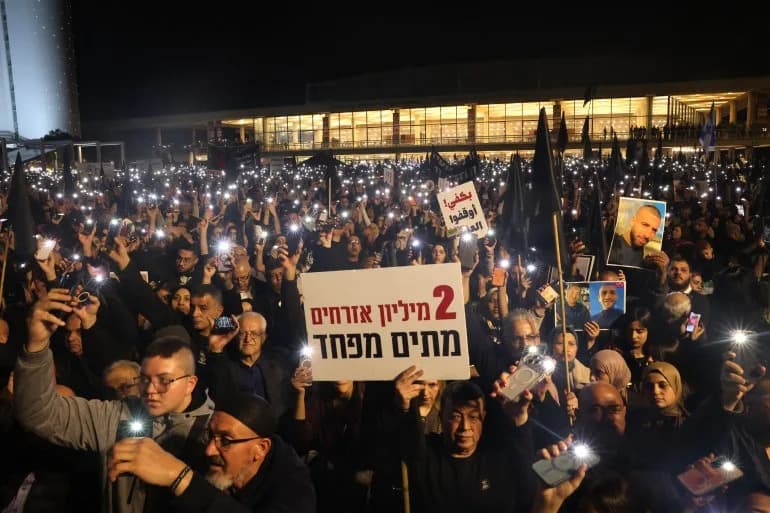
After touching down, Herzog laid a wreath at Bondi Pavilion near the site of the December 14 Hanukkah festival attack that killed 15 people — Australia’s deadliest terror attack in recent memory. Authorities and organisers said as many as 30 demonstrations were planned around the country during his visit, with the largest expected outside Sydney Town Hall where up to 5,000 pro-Palestinian protesters were forecast to gather under a heavy police presence.
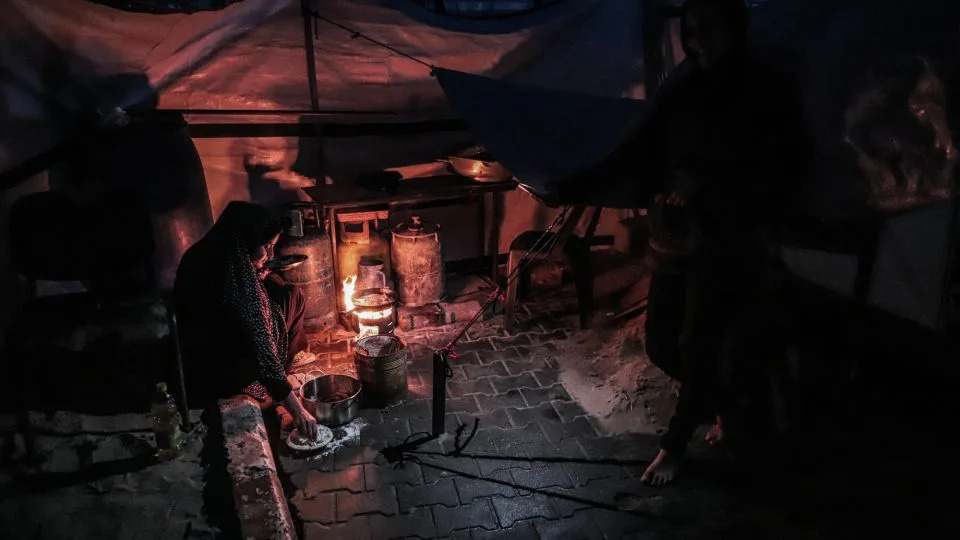
A displaced Palestinian woman prepares food over a fire inside a makeshift shelter near Gaza Seaport in the western part of Gaza City on January 6, 2026. - Abood Abusalama/Getty Images
Legal And Human Rights Controversies
The visit has reignited international legal and human rights debates. In 2024 the International Criminal Court issued arrest warrants for Prime Minister Benjamin Netanyahu and former Defense Minister Yoav Gallant on allegations of war crimes and crimes against humanity. An independent U.N. inquiry published last September said Netanyahu, Gallant and Herzog had "incited the commission of genocide," citing remarks Herzog made shortly after the October 7 attacks. Herzog and his office have rejected those findings.
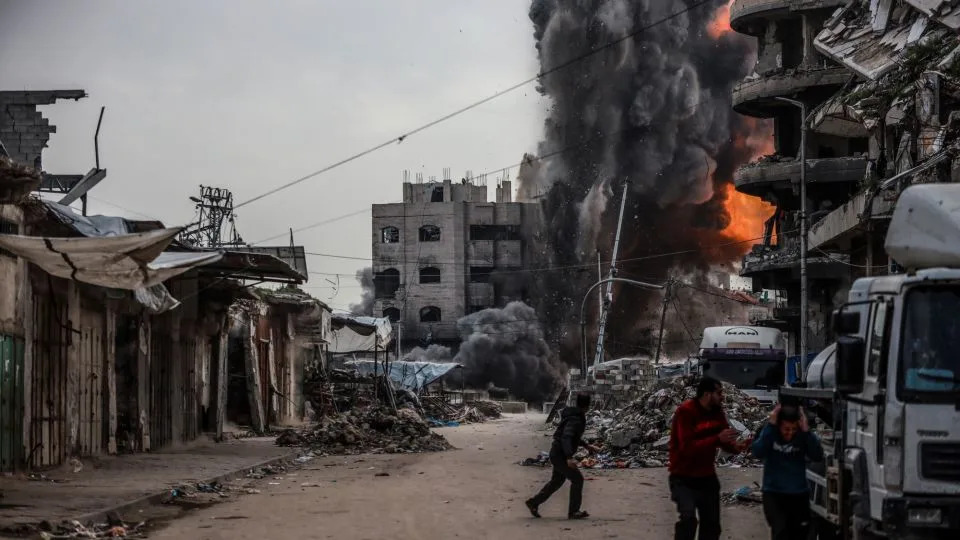
Smoke and flames rise after an Israeli attack on a three-story building in the Zeitoun neighborhood in Gaza City on Friday, February 6, 2026. - Ali Jadallah/Anadolu/Getty Images
Some legal experts, including a co-author of the U.N. report, urged Australian authorities to detain Herzog if warranted. Australian Federal Police confirmed Herzog is covered by diplomatic immunity for the trip, and Australian officials say assurances were provided that he would not be arrested during the state visit.
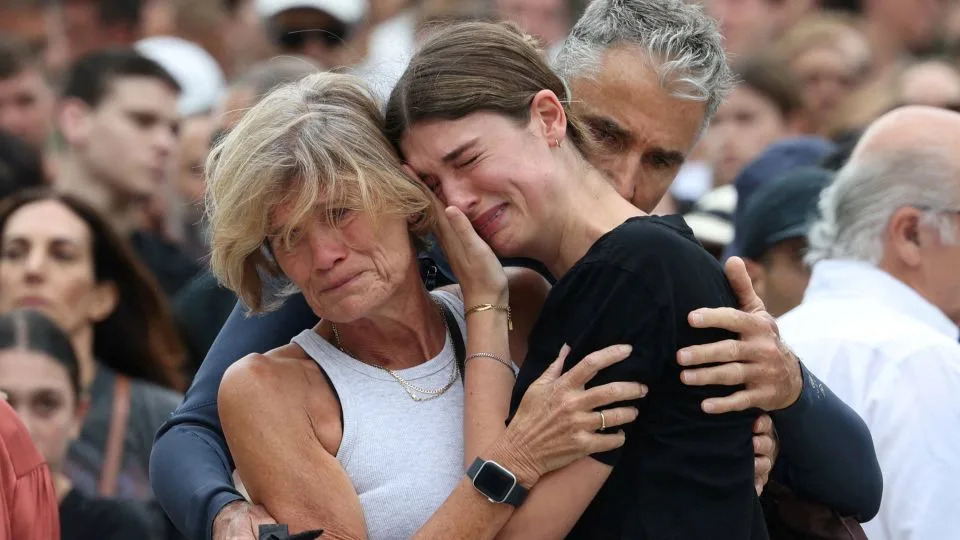
A woman pays her respects at Bondi Pavilion to victims of a shooting during a Jewish holiday celebration at Bondi Beach, in Sydney, Australia, December 15, 2025. - Hollie Adams/Reuters
Separately, Doron Almog, chairman of the Jewish Agency and a member of Herzog’s delegation, is the subject of a formal complaint lodged with Australian authorities by several legal groups. Lawyers say Almog does not have diplomatic immunity and that he canceled a planned South Africa trip amid arrest concerns.
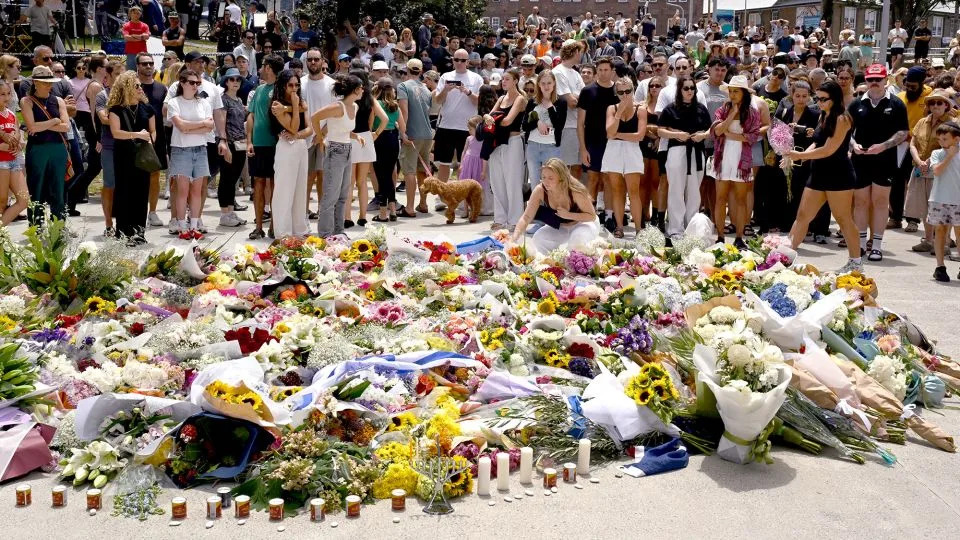
Mourners gather by floral tributes at the Bondi Pavillion in memory of the victims of the shooting at Bondi Beach, in Sydney on December 15, 2025. - Saeed Khan/AFP/Getty Images
Reactions Within Australia’s Jewish Community
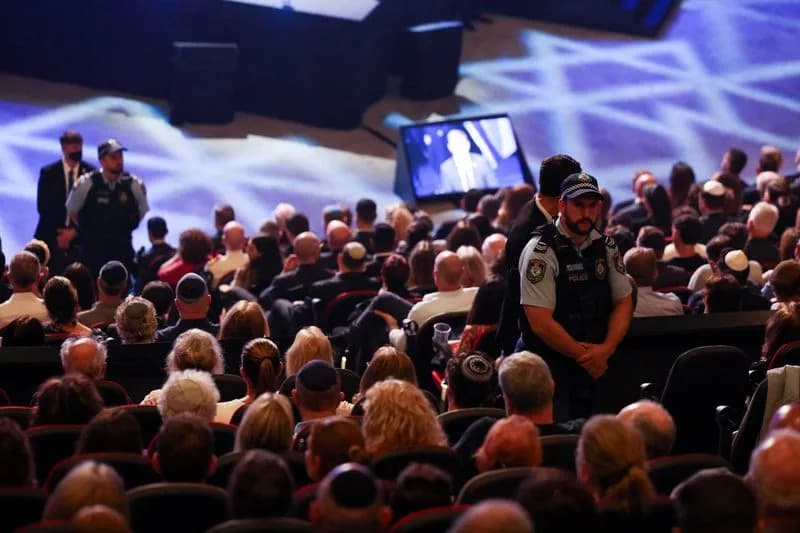
Major Jewish organisations, including the Executive Council of Australian Jewry and the Australian Jewish Association, welcomed Herzog’s visit and condemned planned protests. For some survivors of the Bondi attack, Herzog’s presence was a source of comfort. "It means we’re not alone," one survivor, who gave only her first name, Yvonne, said.
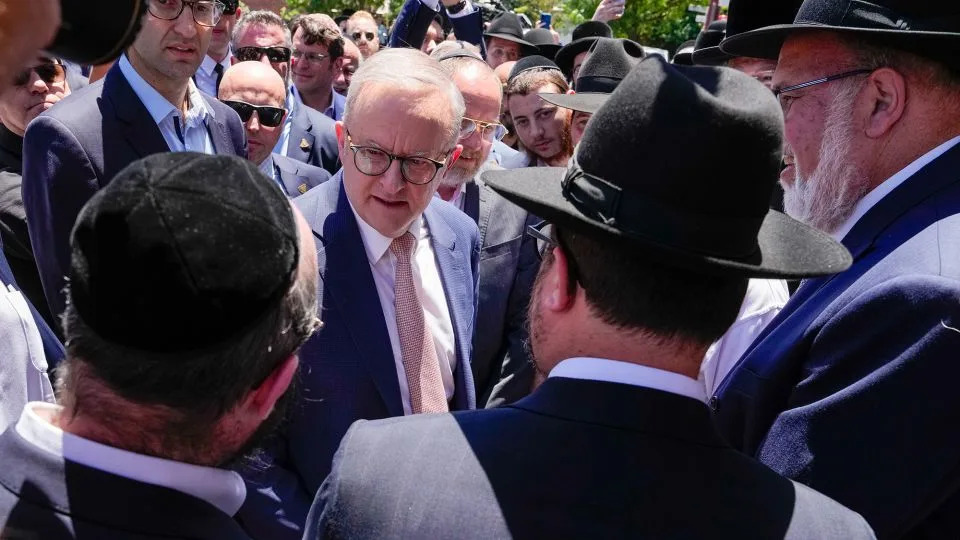
Australian Prime Minister Anthony Albanese speaks to members of the local Jewish community on December 10, 2024 in Melbourne, Australia. - Asanka Ratnayake/Getty Images
However, progressive Jewish voices, notably the Jewish Council of Australia, criticized Prime Minister Anthony Albanese for using the visit as a diplomatic symbol and warned it could dangerously conflate Jewish identity with the policies of the Israeli state. A full-page open letter published in national newspapers and signed by hundreds of Jews declared that Herzog did not represent them.
Background: Bondi Attack And Policy Response
Authorities say the Bondi attack was carried out by a father and son who embraced Islamic State ideology. In response, the Australian government introduced sweeping new gun laws, tightened hate-speech rules, and expanded powers for the home affairs minister to cancel visas on character grounds. Opponents urged a parliamentary recall and a federal inquiry; the government instead extended a formal invitation to Herzog as an act of solidarity with the Jewish community.
Jewish groups reported more than 3,700 anti-Jewish incidents in Australia in the two years up to September 2025, including attacks on synagogues and antisemitic vandalism, prompting many communities to increase security. Meanwhile, the Palestinian Ministry of Health’s toll from the Gaza conflict — cited in public debate — remains a focal and contested figure in discussions about the broader international context of the protests.
What Comes Next
Police engaged with protest organisers ahead of Herzog’s visit to try to narrow potential flashpoints and agree on protest locations. Observers warn the trip could deepen social divisions in Australia at a tense moment, while supporters say the visit was necessary to show solidarity with victims and the Jewish community.
Note: This article summarizes reporting and public statements around Herzog’s state visit, legal controversy and domestic reactions in Australia.
Help us improve.