House Republicans subpoenaed Bill and Hillary Clinton in the Jeffrey Epstein probe, and many Democrats have chosen not to mount a strong defense. Younger progressives emphasize congressional oversight and accountability, while other Democrats worry about political risks and GOP theatrics. The Clintons deny knowledge of Epstein’s crimes and have submitted sworn declarations; they are set to testify later this month. The episode highlights a generational and strategic divide inside the Democratic Party.
Clintons Subpoenaed in Epstein Probe — Democrats Largely Stand Aside as Generational Shift Deepens
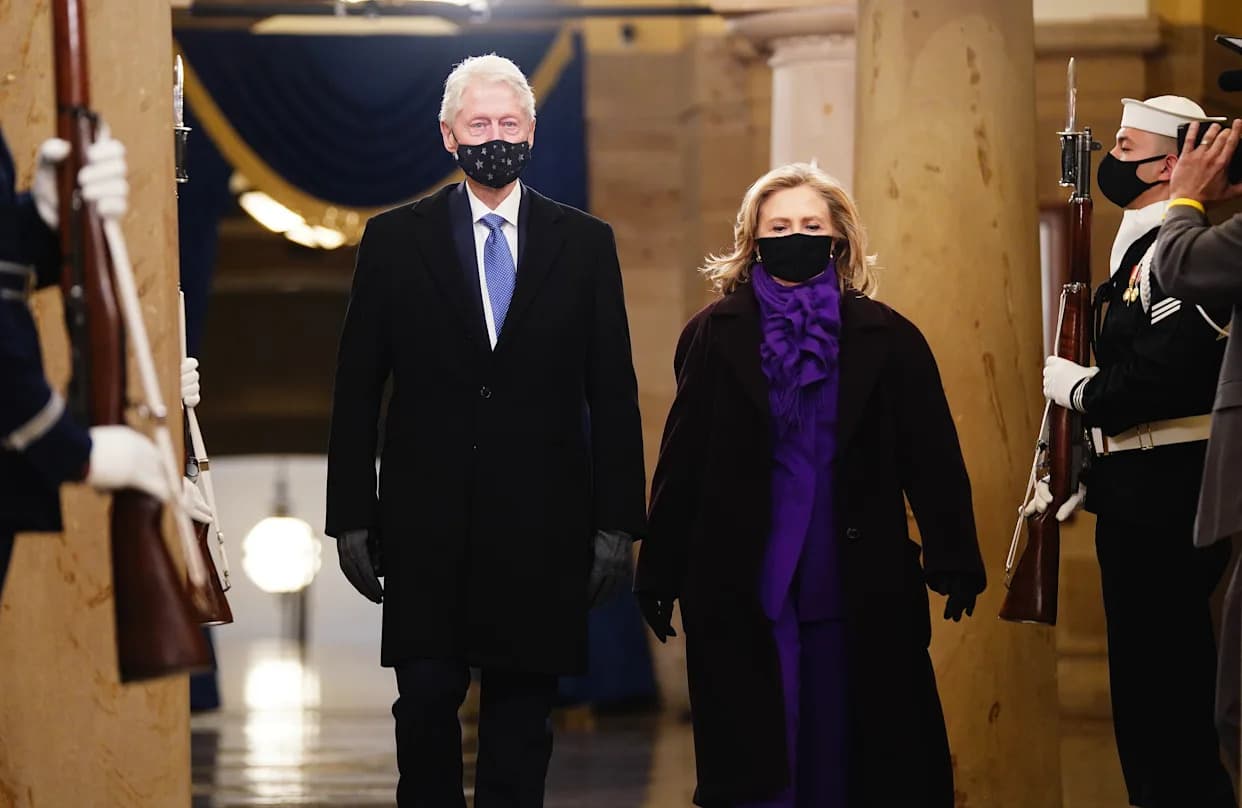
WASHINGTON, DC - JANUARY 20: Former President Bill Clinton (L) and former Secretary of State Hillary Clinton arrive in the Crypt of the US Capitol for President-elect Joe Biden's inauguration ceremony to be the 46th President of the United States on January 20, 2021 in Washington, DC. During today's inauguration ceremony Joe Biden becomes the 46th president of the United States. (Photo by Jim Lo Scalzo-Pool/Getty Images)(Pool via Getty Images)
House Republicans have subpoenaed Bill and Hillary Clinton as part of a probe into the Jeffrey Epstein files, but many Democrats — particularly younger progressives — have declined to mount a vigorous defense. The party’s response underscores a widening generational and strategic divide over whether to prioritize institutional oversight, political risk management or loyalty to longstanding party figures.
Last week, nine House Democrats joined Republicans to vote to hold former President Bill Clinton in contempt for defying a subpoena tied to the panel’s Epstein-related investigation. On a comparable vote involving former Secretary of State Hillary Clinton, three House Democrats broke with the majority.
Why Many Democrats Are Reluctant
Younger lawmakers, including Rep. Maxwell Frost (D-Fla.), 28, and Rep. Alexandria Ocasio-Cortez (D-N.Y.), 36, said their votes and public posture reflect a commitment to Congress’s oversight role rather than personal animus toward the Clintons.
“We want to be more aggressive and find the truth … it’s less about allegiances to individuals, and more about what’s best for our party and what’s best for this country,” said Rep. Maxwell Frost.
Other Democrats framed the issue as one of accountability: Sen. Elissa Slotkin (D-Mich.) emphasized that alleged abuses should be investigated regardless of title or party, and Rep. Sara Jacobs (D-Calif.) said there is broad agreement that anyone named in the Epstein files should face scrutiny.
Concerns About Political Risk
Many potential 2028 Democratic presidential contenders and party leaders have stayed publicly silent, wary of tangling with the Clintons’ electoral baggage. Some Democrats and allies warn that cooperating with a GOP-led process risks playing into partisan theatrics designed to embarrass the party — a criticism voiced by longtime Clinton advisers and former aides.
“The punishment never fit the crime,” said Philippe Reines, a longtime Clinton adviser, calling last week’s committee vote a “self-inflicted wound.”
Former strategist James Carville dismissed the GOP focus as theatrics and predicted forcing the Clintons to testify could backfire on Republicans.
What the Clintons Say
The Clintons have submitted sworn declarations to the Oversight Committee denying knowledge of Epstein’s crimes. Bill Clinton says he was an acquaintance of Epstein who stopped communicating with him at least two decades ago and has not been accused of wrongdoing in the matter. Their spokesperson said they negotiated in good faith and look forward to testifying later this month.
Chairman James Comer (R-Ky.) has pushed for testimony — including a private hearing — which some Democrats worry could allow Republicans to mischaracterize testimony publicly.
Broader Political Context
Commentators note the episode highlights long-running tensions within the Democratic coalition. Some critique Clinton-era policies such as the 1994 crime bill and NAFTA, which have become liability issues among newer Democrats; others argue that distancing from the Clintons risks alienating the voters the party once won in the 1990s.
Public polling shows Bill Clinton’s approval rating has softened over time: Gallup data cited in reporting shows a drop from 69% ahead of his 2012 DNC speech to 48% in January 2025.
As the Clintons prepare to testify, Democrats will continue to weigh competing priorities — defending party figures, protecting institutional norms and avoiding political traps — while Republicans advance an aggressive oversight calendar.
Contributors: Jason Beeferman, Elena Schneider, Sam Sutton and Adam Wren.
Help us improve.