Todd Blanche, Deputy Attorney General, told CNN the Justice Department does not plan to pursue additional charges in the Jeffrey Epstein matter after reviewing millions of pages of documents, saying the material does not meet prosecutorial standards. He said many allegations in the files came from anonymous or unverifiable sources. Blanche also said DNI Tulsi Gabbard was not part of the grand jury probe during a Fulton County search and defended the DOJ’s decision to charge Don Lemon, saying there was probable cause and that standard legal processes were followed.
Deputy AG: No New Epstein Charges; Gabbard’s Role Limited in Georgia Search, Lemon Arrest Defended
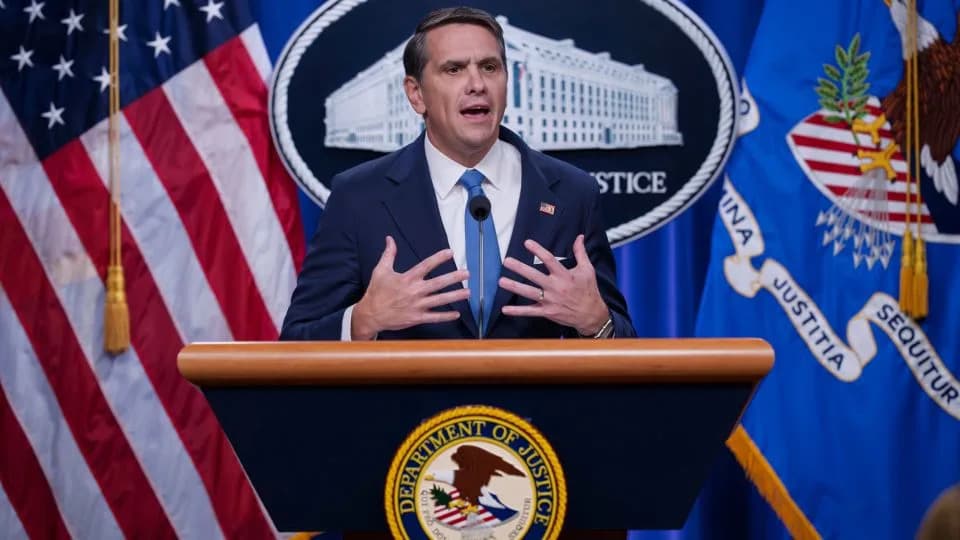
Deputy Attorney General Todd Blanche meets with reporters as the Justice Department announces the release of three million pages of documents in the latest Jeffrey Epstein disclosure in Washington, Friday, Jan. 30, 2026. - J. Scott Applewhite/AP/File
Deputy Attorney General Todd Blanche defended the Justice Department’s handling of several high-profile matters in a Sunday interview on CNN’s State of the Union, saying the DOJ does not plan to pursue additional charges in the Jeffrey Epstein investigation, downplaying Director of National Intelligence Tulsi Gabbard’s involvement in a Fulton County election records search, and defending the decision to charge former CNN anchor Don Lemon.
No New Charges In Epstein Matter, Blanche Says
Blanche reiterated that the department reviewed millions of pages of documents tied to Epstein and determined that the material did not provide a legal basis for additional prosecutions. "I can’t talk about any investigations, but I will say the following, which is that in July, the Department of Justice said that we had reviewed the files, the Epstein files, and there was nothing in there that allowed us to prosecute anybody," he told host Dana Bash. "The entire world can look at and see if we got it wrong."
He acknowledged the files include disturbing correspondence, emails and photographs, but stressed that shocking content alone does not meet the legal threshold for criminal charges. "There’s a lot of horrible photographs that appear to be taken by Mr. Epstein or people around him, but that doesn’t allow us necessarily to prosecute somebody," Blanche said.
On Mentions Of Former President Trump
Blanche noted that President Donald Trump is referenced frequently in the files, but said many allegations stem from anonymous or unverifiable tips. "It turns out, there was a number of claims made by either … anonymous people or somebody, for example, calling and saying, 'I used to have a roommate who told me this sensational story.' So just, you know, obviously that’s not something that can be really investigated," he said.
Gabbard’s Presence During Fulton County Search
Asked about Tulsi Gabbard’s presence at an FBI search of the Fulton County elections office, Blanche said he did not know why she was there and emphasized she is "not part of the grand jury investigation." At the same time, he described the director of national intelligence as "a key part of our efforts at election integrity," while cautioning against overstating her role. The search was related to efforts to obtain voting data as part of an inquiry into alleged fraud in the county.
Defense Of Don Lemon Charges
Blanche defended the DOJ’s decision to bring charges against Don Lemon and another independent journalist in connection with a protest at a church in St. Paul, Minnesota. He said there was "absolutely probable cause that a crime had been committed" and pointed to the grand jury process as central to indictments. When asked whether Lemon’s actions might be protected by the First Amendment, Blanche said the allegations "go beyond routine journalistic conduct" and noted that the accused have the right to counsel and a defense.
On Political Motivations
Blanche pushed back against claims that these cases reflect political targeting. "We’re not making examples of people," he said, adding that the department follows established legal processes, including FBI investigations and grand jury decisions.
Context: The remarks come amid heightened public interest in the Epstein files and renewed scrutiny of investigations tied to the 2020 election and high-profile public figures. The DOJ’s stance, as described by Blanche, emphasizes legal standards and investigative thresholds rather than public or media reaction to released materials.
Help us improve.